Evan Michaels
The Reincarnationist PapersEvan Michaels is a man whose memories refuse to stay within a single lifetime. As he learns that his experiences belong to Vasili Blagavich Arda and Bobby Lynn Murray as well as to his present self, his central problem changes: what first feels like an assault on his identity becomes a route toward a community that can recognize it. His passage into the Cognomina gives that search a destination, even as the book’s closing frame places him far from home, recording his life in prison.
Identity and Background
Evan’s identity takes shape through three lives linked by memory. He understands his timeline as uninterrupted from 1892 to the present: his current life, Vasili’s, and Bobby’s. The sequence is not immediately clear to him. Objects and fragments—including an enamel basin, a crude crutch, a McTaggart, and a cane—begin to cohere around Graciela L. Cruz’s monument, where he realizes that the lives he has experienced are connected. Graciela would have been three years older than Vasili. In that moment, Evan sees Poppy watching him and recognizes that he has begun to understand what she has been trying to show him.
Vasili’s life begins in 1892 in a small Bulgarian farming village northwest of Varna. An only child, he works alongside his father, with farming apparently his expected future. At twenty-three, when Bulgaria enters the war against the Allies, the village’s single men are pressed into military service against the Greeks. Vasili remains in the army until the Great War ends. Evan does not receive this life as a complete, orderly biography; its language, experience, and memories arrive in fragments that he must learn to interpret.
Bobby is a different kind of inheritance. Evan describes the memory associated with him as unusually powerful and uncontrolled, arriving during Evan’s last week in Minnesota and continuing to intrude into his present life. It comes from Macon, Georgia, in 1976, and is seen through the eyes of a young child. Evan says he inherited relatively few memories from Bobby, but this one is stronger than the others. A three-hour search in a municipal cemetery leads him to a plain state-issued headstone: Bobby Lynn Murray lived from October 18, 1969, to July 3, 1976; Judith Anne Murray, whose name is carved beside his, lived from April 2, 1948, to July 3, 1976. The dates make the childhood memory part of a documented family history rather than an unexplained vision.
Memories and the Work of Learning
The memories first take the form of strange dreams and waking visions. At first they seem random; gradually they form a sequence and disclose themselves as memories belonging to another person. Evan’s early experiences of Vasili’s life come from the Bulgarian countryside. During the Minnesota winter they grow longer, more vivid, and more frequent. He repeatedly reviews them, gaining enough control to learn practical skills, including language and music. By that summer he can read, write, and speak Bulgarian and play the organ. The memories become tangible evidence to him, although their early suggestion of a consciousness separate from his own also makes him question his grasp of reality.
Learning to read Vasili’s writing takes a separate, sustained effort. In the fall, Evan begins to understand the strange script: its N’s and R’s are reversed, it includes unfamiliar letters, and it omits some familiar ones. He practices for a full year before he can read and write it functionally without slipping back into Vasili’s past. The labor matters because memory alone does not make the past transparent. Evan has to acquire the means to approach it, and the name Vasili Blagavich Arda becomes knowledge earned through that process.
The inherited memories can also preserve sharply specific scenes. In one remembered moment from the Bulgarian campaign, Vasili watches Captain Hoxa at the instant before a cannon fires. Lightning illuminates Hoxa’s face as he mouths the command; the following thunder seems to issue from his open mouth. Vasili fixes on the caked mud on Hoxa’s brow, his set jaw, and his steady, wrathful eye. For Evan, the past is not merely a set of facts about another life. It can return with the precision of a witnessed scene, carrying details that make the boundary between remembrance and present experience difficult to maintain.
Family, Isolation, and the Cognomina
As the older lives become legible, Evan’s sense of family changes. He has known three families: his own, Vasili’s, and Bobby’s. The memories of those earlier families affect his relationship with his present parents; by the time he speaks with them before leaving, the current family has itself become a memory. In the vault with Poppy, he recognizes that he has been yearning for a lasting form of belonging—not another fragile, transitory relationship marked by misunderstanding, but acceptance of the person he has become.
This longing helps explain why the Cognomina matters to him beyond the promise of answers. After leaving Minnesota, Evan watches the car pull away from the terminal and admits to himself that he does not know enough about the people he is approaching. He wants to know more about them and about himself nonetheless. The sudden departure feels like a change that has carried him out of old routines and forced him to question whether he had ever had a direction. His hope is not simply to verify that the memories are real; it is to find somewhere within the reality they disclose.
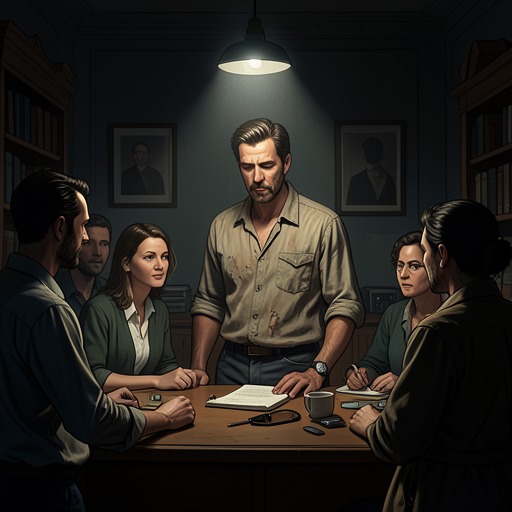
Poppy is the person who makes that possibility concrete. She presents Evan to the Cognomina’s panel as a newcomer who claims to be a Palingenesist, says that she believes him, and explains that he wishes to become a candidate for Ascension. Evan’s expectation of the group’s judgment is bound up with his need for a family that will not disappear when one lifetime ends. Another member, Samas, tests the claim by asking whether Evan remembers the name of the judge who convicted him as Vasili in 1946. The review also has an external, documentary dimension: officials might check a Texas speeding ticket, Bobby’s mother’s driver’s-license application, or Bulgarian military records for a Vasili in the 138th under Captain Hoxa in the fall of 1918. Personal recollection must stand alongside facts that can be checked beyond the candidate himself.
Ascension and Membership
The Cognomina’s Ascension is described as a trial that members undergo in each successive incarnation before reentering the group. The candidate must prove to people who knew him before that he is the same person in a new body. Evan’s own examination begins after Poppy leads him down an old stone staircase into a grotto. The brass tip of his cane clicks against the steps; he descends between seventy-five and one hundred of them by torchlight. The setting makes the passage from newcomer to candidate physical as well as procedural: he enters the earth and proceeds toward a gathered panel whose judgment will determine whether he can rejoin the community.
Asked for the name of his first incarnation, Evan answers Bobby Lynn Murray. At the hearing, he explains his experience through the image of a cowbird that lays its eggs in a robin’s nest. The host birds feed and protect the young bird until it matures and its difference becomes visible; then they reject it. Evan uses this story to describe the isolation of growing up without knowing where he came from or why he felt unlike those around him. His account turns a private sense of estrangement into something the panel can understand, while also giving form to the years before he knew the Cognomina existed.
The panel rules four to one that Evan is what he claims to be and welcomes him into the Cognomina as a brother. The verdict is decisive, but it does not complete the rite. Poppy tells him that he is not home yet: he still needs the tattoo. She offers a fingerless leather gauntlet that laces beneath the hand, with black ink worn into the edges of an Embe-shaped template. The bodily mark follows the identity judgment, making membership something both recognized by others and carried on the body. Poppy explains that new brothers have been welcomed with gifts for centuries, with each member offering something special; the rite thus joins adjudication to an older practice of communal welcome.
Writing, Consequence, and Narrative Role
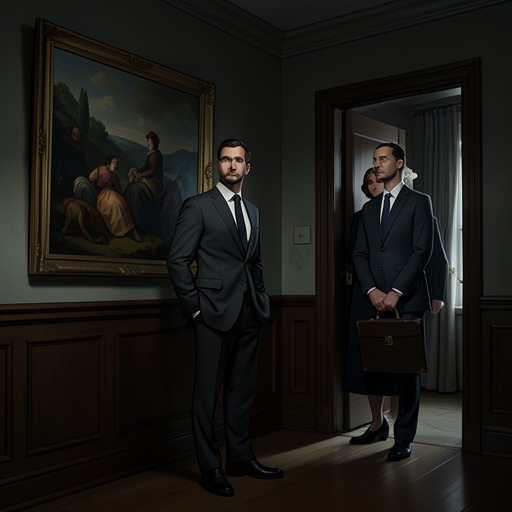
Evan’s achievement of belonging coexists with a radically different present at the book’s close. In a Tunisian desert prison, in cell 145, he begins setting down his story with notebooks and a pen taken from the box beneath Reginald’s bunk. The frame gives his account a specific material setting: instead of writing amid the photographs and trophies he associates with other people’s autobiographies, Evan writes from confinement. His account begins from the admission that he stole a painting. The contrast between the welcome he received from the Cognomina and his imprisonment does not erase either fact; the prison frame shows that membership has not insulated his life from consequence.
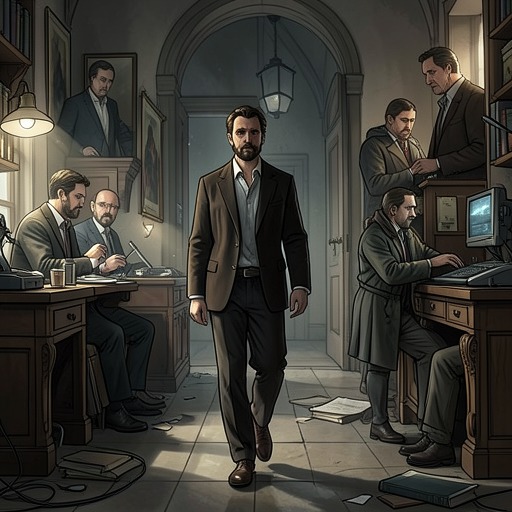
Evan’s role in the novel is therefore both that of a candidate seeking recognition and that of a narrator trying to make a life intelligible. His memories require investigation, practice, and comparison with records; his identity cannot be secured by a feeling alone. Yet factual verification is not the whole of what he seeks. The movement from the isolated childlike memories of Bobby, through the effort to learn Vasili’s language, to the four-to-one judgment of the panel is also a movement toward being known by others. Evan’s account gives that movement a final reversal: the man who has found a durable community writes from a cell, still using memory to hold together the lives that no single present can contain.