Evan’s three notebooks
The Reincarnationist PapersEvan’s three notebooks are transformed from unwanted supplies in a prison care package into the manuscript he writes in cell 145 of an unnamed Tunisian desert prison. They give him a way to focus his mind and account for how he arrived there, but their language and planned handoff also preserve the secrecy he has sworn to keep—even as he approaches what he believes may be the end of his life.
From Useless Paper to Manuscript
The notebooks first appear in a cardboard box from the Red Crescent, delivered with care packages every six months. Reginald dismisses the blank paper and pens as useless: the prison has no mail service, no pickup or delivery, and no means of communicating with the outside world. The supplies cannot bridge the distance between prisoners and the people they have left behind.
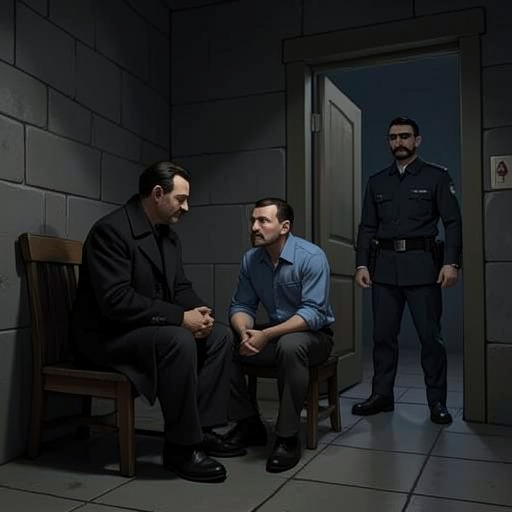
Evan Michaels eventually reaches under Reginald’s bunk for the notebooks and a pen. As the prison’s monotonous hours sharpen his attention to every detail, writing redirects his mind from that increasingly oppressive clarity. He begins recording his story in cell 145, without the desk, photographs, and trophies he had imagined accompanying other people’s autobiographies. The stark setting makes the notebooks less a conventional memoirist’s equipment than a means of working against the prison’s enclosing present.
A Record That Changes Its Writer
Chronicling the preceding months helps Evan focus his idle mind and understand how he came to be imprisoned. The manuscript also unsettles the boundary between account and beginning: he cannot tell whether the pages he has written are an epilogue to his story or whether the prison narrative is itself the story, with everything before it serving as a prologue.
The notebooks remain part of his experience of the ongoing imprisonment, not merely a record made afterward. After sessions of torture and questioning, Evan rereads the manuscript’s opening and marvels at how much he has changed. Writing provides a measure of concentration and perspective, while the pages themselves become evidence of a transformation he can see by comparing his present self with the person who began the account.
Secrecy and the Planned Handoff
Evan writes the notebooks in Bulgarian so Reginald will not understand them. Although he considers having Reginald contact Ramsay after leaving prison, Evan’s secrecy oath forbids him from exposing Reginald to the truth. The language therefore makes the manuscript readable in principle but inaccessible to the person entrusted with it.
Reginald is due for release in two days and agrees to take the notebooks with him. Evan asks him to keep them until a stranger might come for them in about eighteen years. That future visitor may not know exactly why the notebooks are at the door; Reginald is to give the young man or woman all three and tell them about Evan if they ask. A prison care package that could not carry a letter outward is thus made into a delayed message, dependent on an uncertain future encounter rather than ordinary communication.
Final Words and Intended Future
Evan writes this plan as he resolves to end his life, describing his final words as being composed while the sound of his heartbeats returns from the walls of the room. The notebooks are not presented simply as a message to Reginald: their Bulgarian text conceals their meaning from him, while their intended recipient remains unknown and years away. Their hoped-for destination gives the manuscript a future beyond its author’s immediate confinement, even as its closing pages approach the possibility that he will not live to deliver it himself.