Martin Shelby Warehouse Arson Case
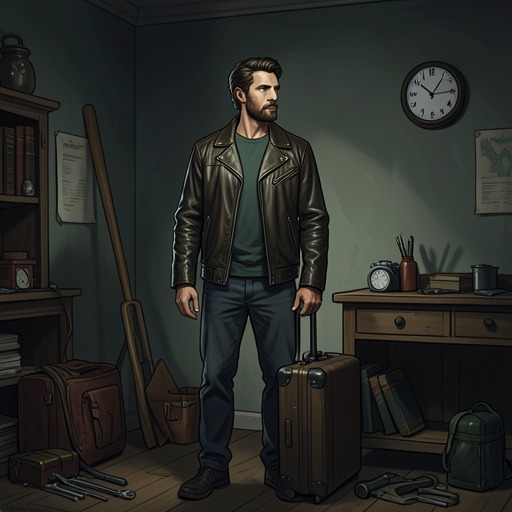
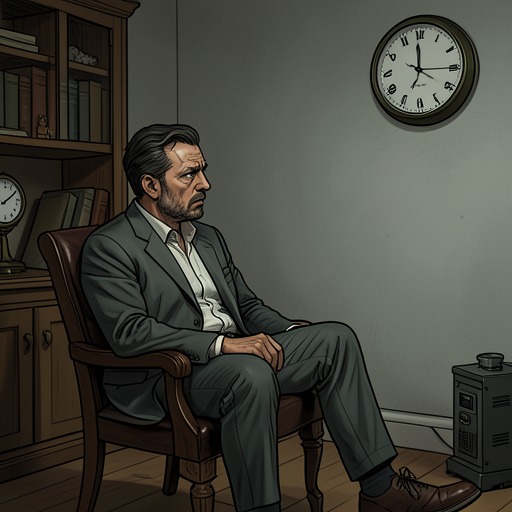
The Reincarnationist PapersThe Martin Shelby Warehouse Arson Case is the deliberate destruction of a warehouse for which Evan Michaels was paid by its owner, Martin Shelby. Its importance extends beyond the building’s loss: the fire brings Evan into a police pursuit, leaves him injured and dependent on Poppy’s help, and later becomes the crime he admits before the Cognomina’s Ascension panel. In that hearing, a paid act of destruction becomes a test of whether Evan will risk the future he wants by telling the truth about his past.
Commission and Context
Evan explained that he had been paid five thousand dollars to burn the building down and identified Martin Shelby as the person who hired him. Shelby was the warehouse’s owner, and Evan said he had first encountered him through a referral. The evidence establishes a paid commission, not the referrer’s identity or the precise arrangements by which the fire was set; the account is specific about the payment and the target, but spare about the mechanics.
The warehouse fire was not Evan’s first arson. During the same questioning, he identified it as his nineteenth job. He also described how his earlier work had become a pattern: after one job, a stranger visited his hotel with an address and two thousand dollars, saying that the police had suggested Evan could help. The first seven or eight jobs came through that kind of approach; later, his name circulated around town. This background places Shelby’s commission within Evan’s established criminal work, without demonstrating that Shelby’s referral came through the same channel or that the police arranged this particular fire.
Fire, Pursuit, and Rescue
Evan later told how the warehouse fire turned a paid job into an immediate danger. He had been seen leaving the building on the night of the fire. Police pursued him, and as he was close to getting away, an officer shot him. Evan said his first thought was to call for a friend to collect him, but Poppy found him instead and stitched up his wound. He then hid in the alley behind Poppy’s Church.
The account links the blaze to a bodily consequence without describing the fire’s ignition, the chase route, or the wound’s severity. Evan’s escape was not a clean getaway: he was shot while trying to evade the police, concealed himself near Poppy’s church, and relied on her to treat him. The job’s immediate aftermath therefore exposed the vulnerability behind his practiced role as a paid arsonist. The fire damaged property; the attempt to flee left Evan injured and dependent on someone who would later become central to his new life.
The Burned Warehouse
When Antonio drove past the site, the building’s remaining walls were still standing, but the exterior above each open window was scorched black. Daylight showed through the second-story windows where the roof had been. The account describes the warehouse as a complete loss: its shell remained, but its roof was gone and the interior was exposed to the sky.
That stark remnant gives the case a visible aftermath beyond Evan’s recollection. The fire is not merely a secret he can disclose or conceal; the ruined structure persists in the landscape as evidence of what he did. On a later return to the Ohio Hotel, Evan limped toward his room with his foot bandaged. The grimy hotel and the familiar corridor sharpened his sense of distance from his former surroundings: he feared finding himself still there, ignorant of the truth he had since learned. The warehouse’s visible ruin and Evan’s changed self thus occupy different scales of aftermath, one physical and one personal.
Confession and Consequences
At the Ascension hearing, a judge asked Evan whether Poppy’s account of the fire was accurate and whether he had been there. Evan weighed several possible stories, then decided that lying could jeopardize the process. He recognized that lies require further lies to sustain them, and admitted that he had been at the fire and started it. Asked why, he said that he had been paid; asked who paid him and how much, he named Shelby and the five-thousand-dollar sum. He also disclosed that the warehouse job was his nineteenth.
The confession placed incriminating facts before the people deciding whether Evan was the same person he claimed to have been in another life. The hearing’s question was identity, not the adjudication of the arson, but Evan believed a lie about the fire could threaten his acceptance. His candor mattered because it surrendered the protection of concealment at the moment when he had most to lose. The panel ultimately voted four to one that Evan was what he claimed to be and would be welcomed into the Cognomina. The warehouse fire therefore remains both a crime with material consequences and a turning point in Evan’s passage from outsider to accepted member: he does not erase his culpability, but speaks it aloud before the community whose recognition he seeks.