Nez-lah’s Return to Latsei
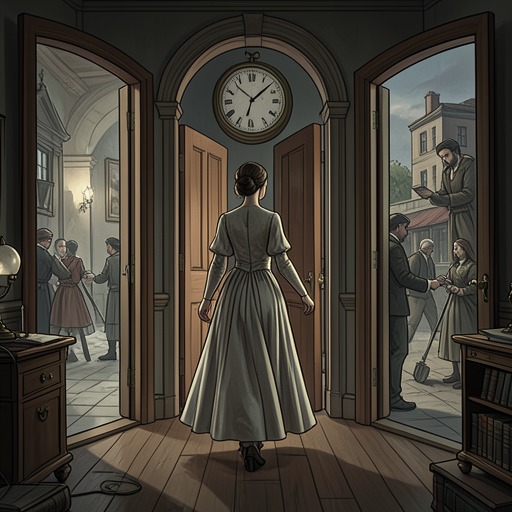
The Reincarnationist PapersNez-lah’s Return to Latsei is a homecoming that turns into a test of identity: Bando reaches the sandstone village claiming to be Nez-lah reborn, and Teszin recognizes him through knowledge no stranger should possess. Her testimony establishes his identity for the village’s senior mage, but the chief grants him only two days to prove himself before he may stay.
Arrival at the village
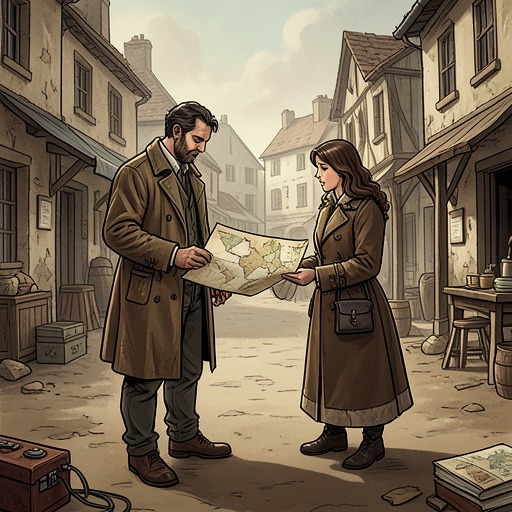
Juan and Bando approach Latsei after setting out at first light. Juan wears the breastplate he bought in Compostela, which hangs awkwardly on his smaller frame; by midday, its straps are digging into his shoulders. Bando points out the destination: a community of about thirty buildings gathered against a sandstone bluff, its stone dwellings and ladders stacked into a three-tiered settlement beneath a great cantilever of rock. Seeing it, Bando stops, dismounts, and calls it his home. His voice cracks.
The villagers have noticed the travelers before the two reach the settlement. Juan’s horse recedes into the distance as he turns back, recalling that horses once frightened the Zunis. He is unsure whether he wants that intimidation now. Although he has died eight times, he still fears the pain that precedes death. Bando, by contrast, walks ahead briskly, head high and shoulders back, toward the gathering crowd. The difference makes the return’s stakes immediate: Juan anticipates danger, while Bando approaches the place he remembers as home.
Recognition and resistance
Between fifty and sixty villagers form a semicircle around Bando. Dressed in earth tones and adorned with silver, they draw closer in stages: children first, then women, then men. The children touch his dark skin and retreat giggling; older children and some women reach for his woolly hair and full lips. Bando’s tears glisten as he faces them. He speaks in their esoteric tongue, and the crowd steps back together; he wipes his face and tries to reassure them that he has traveled a long way to see them.
The welcome is sharply contested. A chief climbs a ladder to the top of a stone wall and warns the crowd that Bando is Masaudu of the underworld. Some villagers echo the fear that he is evil and has come to take them away. Juan, unable to understand their words but reading their hostility, puts a hand on his sword and begins to retreat. Bando’s return has brought him into the very community he sought, but his unfamiliar appearance makes him seem like a threat to the people whose recognition he needs.
Teszin breaks through the crowd to defend him. Her long black hair is streaked with gray, and she wears a painted buckskin poncho. Bando recognizes her at once and notices that she has no braids, which would mark a married woman. She studies him in silence, then places her ear against his bare chest and asks for the name Nez-lah used for her. Bando answers with the private endearment Little deer. The intimate test changes the scene: the crowd’s fearful interpretation is challenged by a shared history that appearance alone could not reveal.
The test of identity
Teszin asks how he could have returned. Bando explains that he has a new body but is Nez-lah and remembers his life in Latsei. The chief rejects this as a trick and renews his warning that Bando may be a danger to everyone. Teszin answers from a position of authority: she is the senior mage, and she will decide whether he is Nez-lah. She leads him through the crowd to her doorway, taking the disputed claim out of the chief’s immediate control and into a process of recognition.
When Teszin returns with Bando, she tells the chief that he is Nez-lah because he knows things only Nez-lah could know. The chief does not simply yield to her judgment. He sets a condition: Bando has two days to prove himself; if he succeeds, he may stay, and if not, he must leave. Bando agrees. The recognition is therefore real but provisional: Teszin can identify him, yet the community’s acceptance remains to be earned.
Juan’s part in the gathering offers a small counterpoint to the dispute. The chief drinks a fermented concoction and expects Juan to follow suit. Juan gags at its spoiled-grain smell, forces down the first cup, then avoids drinking the second by filling the chief’s cup and turning his own upside down. While Bando’s place among the villagers is being judged, Juan negotiates the social encounter through restraint and improvisation rather than confrontation.
Rebirth, memory, and belonging
The episode gives physical and communal form to the novel’s idea of continued identity across lives. Bando does not ask to be accepted on appearance or assertion alone: Teszin tests him with a private name, and she bases her judgment on knowledge specific to Nez-lah. The chief’s two-day ultimatum extends that recognition into a public question of belonging. The scene thus distinguishes remembering who one was from persuading others that the memory is genuine.
That distinction resonates with the later Cognomina Ascension, which requires a candidate to convince people who knew an earlier incarnation that the new body belongs to the same person. The procedures are not identical: Latsei’s chief imposes a brief local test, while the Cognomina uses a panel and verifiable details such as names, dates, and places. When Evan is eventually accepted by a four-to-one vote, Poppy presents the Embe-shaped tattoo as part of his welcome. Across these episodes, identity is both inwardly remembered and socially recognized; the return to Latsei dramatizes how precarious that recognition can be when a familiar person arrives in an unfamiliar body.