Red Sea
The Reincarnationist PapersThe Red Sea is both a landscape of apparent remoteness and a place whose sands Clovis describes as marked by long histories of bloodshed. In Evan’s journey to Clovis’s lighthouse, the shore seems almost empty; in Clovis’s dispute with Ramsay, it becomes ground on which the fate of its inhabitants is at stake.
Coastal Setting
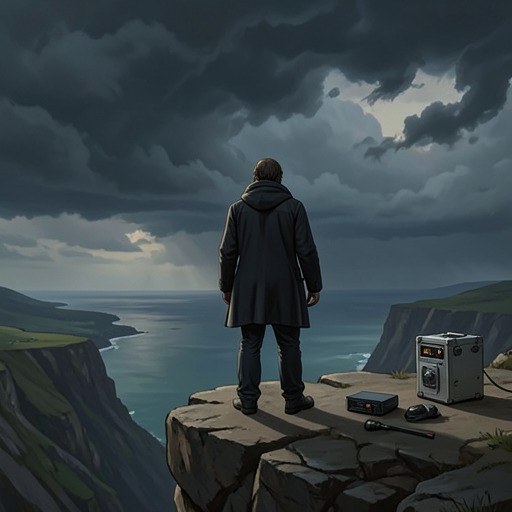
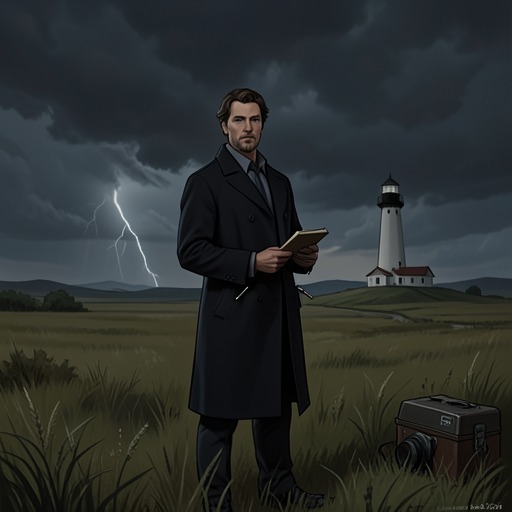
Evan travels along a road beside the water, watching waves roll onto the beach. The coast appears so isolated that he imagines it might be the only inhabited place in sight; the packed dirt road, made by human hands, is the evidence that others have passed through. As daylight wanes, a small lighthouse comes into view, rising from the sand against the open sea and sky.
The road winds down to a narrow point of land jutting into the water. Stone blocks support the lighthouse, and waves reach the shore on both sides. A small stone house is joined to the back of the tower. The scene gives the Red Sea coast a defined, lived-in shape: not just open water and sand, but a road, a working landmark, and a keeper’s home.
Clovis’s Lighthouse
Clovis tells Evan that he is the lighthouse keeper. The tower still works, and Clovis lives beside it in the small house. Their approach is made by horse and cart, in keeping with Clovis’s preference for travel at a horse’s pace. Though he has used modern vehicles to meet other people’s schedules, he regards the traditional journey as more comfortable and familiar.
The lighthouse stands out against the otherwise sparsely inhabited coastline. Its fixed position contrasts with Clovis’s long life of movement: after more than nineteen hundred years, he has spent nearly all of that time traveling no faster than a galloping horse. Here, at the edge of the sea, he is not merely passing through but keeping watch over a functioning coastal beacon.
Shores of Conflict
The Red Sea coast also enters a dispute between Clovis and Ramsay about the homes below them and the people who might defend them. Ramsay warns that modern soldiers and cannon would bring mass casualties; Clovis answers that the sands have already witnessed enough bloodshed to drain England dry. Their disagreement turns on what defending the inhabitants would mean: Clovis insists on their capacity to face danger, while Ramsay stresses the scale of violence modern warfare can inflict.
The contrast between the quiet approach to the lighthouse and this argument gives the coast two distinct narrative roles. It is a place of solitude and practical habitation, marked by a road and a keeper’s tower, but it is not outside history. Clovis’s reference to blood-stained sands makes the apparently timeless shore a setting where older conflicts and the destructive reach of modern weapons meet.