Samas proposes stealing The Rendezvous
The Reincarnationist PapersSamas proposes stealing The Rendezvous as a paid commission, turning a long personal history of loss into an opportunity for Evan Michaels. The painting is a portrait by Jan Vermeer that Samas loved and has spent decades trying to recover. By offering two million dollars and a practical plan for taking it from the Tunisian National Gallery, Samas tests Evan’s abilities and his willingness to treat reincarnation as a way around ordinary legal consequences. Evan is drawn toward the offer, but the decision remains pending while he prepares for Cognomina’s Ascension.
The portrait and its history
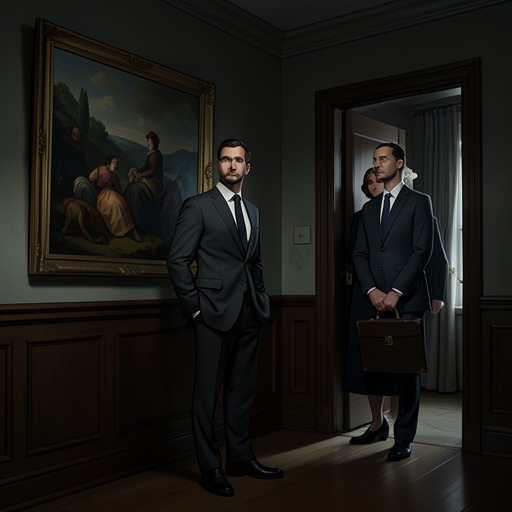
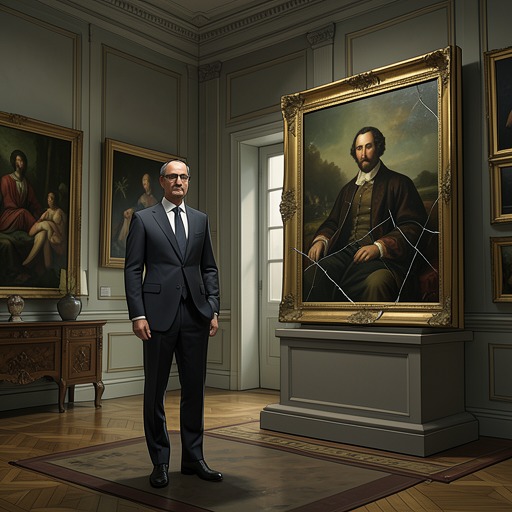
Samas’s attachment to art is personal as well as acquisitive. He explains that he commissioned works in the room and modeled for several of them, and that he had obtained at least one portrait in each of his last six lives. The empty rectangle on the wall marks the absence that matters most: a portrait of Samas, painted by Jan Vermeer in 1670. Samas says that The Rendezvous was as special to him as Jan, whom he loved. The painting is therefore not simply another valuable object in his collection; its loss is bound up with a relationship and with the repeated effort to reclaim possessions across lifetimes.
The Nazis took the portrait from Samas’s home in Amsterdam in 1940. Other works remained in the house, but the SS captain in charge took the Vermeer. Samas searched for five years, through the end of the war, with Ramsay’s help. Ramsay arranged an appointment with a Luftwaffe colonel in Berlin during the fighting’s final days. The proposed exchange was ten thousand British pounds and passage by boat from Rostock to neutral Sweden. Samas prepared two hundred thousand pounds as well, hoping the colonel might be holding other stolen works, and even readied a truck for a possible haul.
The meeting produced no recovery. The Red Army reached the colonel first. From nearby cover, Samas watched soldiers remove narrow crates from an anti-aircraft tower and load them onto an eastbound truck; the colonel’s body lay at the base of the tower. Samas arrived too late to learn whether his portrait was among the crates. It took him another twenty years to locate it in the Soviet Union, stored at The Hermitage with other works listed on the German manifest.
In 1985, General Secretary Gorbachev gave the portrait, along with several other pieces, to the Government of Italy as a political offering. The Italians leased the works to galleries around the world, while the portrait was listed as doubtfully attributed to Vermeer. Samas had made a generous offer for it every year for three years, including a final offer that left the price open to the sellers. Each was refused. That repeated failure changes the means, not the end: Samas concludes that wealth can still return the painting to his possession if it is put to work differently.
The offer to Evan
Samas presents theft as a commission rather than as a demand. He says he will hire someone regardless of Evan’s answer, and that the two million dollars is intended to attract capable candidates. He offers Evan the opportunity first because he has confidence in Evan’s abilities, grounded in who Evan is and what he can do. He leaves him time to consider it and says he will not offer the job to anyone else before letting him know.
Evan does not accept immediately. After spending much of the night thinking about the offer, he calls it generous and tempting and asks how long he has to decide. Samas tells him that he can wait until after the Ascension. When Evan asks why one painting matters so much, Samas connects it directly to his history with the works and to his love for Jan. The delay leaves the choice open while making clear that the proposed theft is not an impersonal transaction for either man.
Samas has already identified the picture’s present location: it is in Tunis, on a one-year loan to the Tunisian National Gallery. He intends to have it by the end of that year and considers the Gallery’s security suspect. He claims to possess both a master schematic of the security system and a floor plan of the building, purchased from an inside source the previous month. The specific knowledge makes his offer more than an expression of desire: he has prepared to turn it into an operation.
The proposed operation and its stakes
The outline is to enter the Gallery, remove the portrait from its frame, cut it from its internal frame, and get out. Samas recognizes that the building is protected: its doors, windows, and skylights are alarmed; two guards are on duty and make rounds every twenty minutes; motion detectors cover the floor; and pressure-sensitive mounts connect the paintings to the main alarm. The plan does not pretend that the theft can be completed without triggering a response. Samas identifies departure as the hardest part because the alarm will sound when the thief exits.
He points out an exit to an alley and describes a route from there to the harbor. A boat and crew would be waiting to take Evan to a beach. The payment would be placed in an account opened for Evan upon confirmation, and after receiving the painting Samas would have Leopold Diltz transfer the money. Evan could call to confirm that the funds had arrived. These arrangements make the reward concrete, while the alarm, guards, and need for an escape route make the risk equally explicit.
Evan questions why the sum is so high for a plan that sounds easy. Samas’s answer rests on Evan’s particular condition, not on a claim that the Gallery is harmless. He argues that a normal thief fears incarceration, whereas Evan could die if caught and return in another life, with the money waiting until his next Ascension. Evan recognizes the attraction of that logic: he understands that, in his view, ordinary justice cannot reach him permanently. The possibility of commuting a sentence through death and return makes the commission more enticing and helps him understand Samas’s confidence in his own way of living. It does not, in these scenes, establish that Evan has accepted the job or that the theft has taken place.
Reincarnation, secrecy, and the unresolved choice
The proposal arrives within Evan’s introduction to the Cognomina, a society whose twenty-eight members are sworn to conceal their identities until a candidate is accepted. Its members undergo Ascension in each successive incarnation to prove that they are the same people in new bodies. Earlier candidates faced a lethal test: after being run through with a spear, they had to return in another life and identify their murderer. In the present system, a panel verifies a candidate through names, dates, places, and other checkable details. Samas’s offer is accordingly postponed until Evan has completed the identity trial that will determine whether he can formally reenter the society.
The secrecy has a historical cause. Around the turn of the first millennium, seven members had amassed wealth rivaling nearby kingdoms. One trustee revealed the Cognomina to surrounding villages, hoping to create a kingdom ruled by the members as a royal family across successive lives. The disclosure instead provoked a massacre and the looting of the society’s treasury; secrecy became a lasting tradition. Membership also entails ongoing duties, including introducing new palingenesists, answering calls to serve as judges or jurors, making provision for assets to pass to the Cognomina, and submitting to later identity trials. Against this background, Samas’s offer is both a private inducement and an early glimpse of the wealth, continuity, and unusual obligations surrounding Evan’s possible new life.
The scene ends with Evan drawn toward the commission but still facing a choice. Samas has explained why the portrait matters, why ordinary purchase has failed, how the Gallery might be entered and left, and why he believes Evan’s vulnerability to prison is different from that of an ordinary thief. The two-million-dollar offer thus joins a concrete art-recovery scheme to the novel’s larger question of what repeated life does to the force of risk and punishment. Yet Samas leaves the decision with Evan, and the Ascension remains the immediate condition that must come first.