Teszin
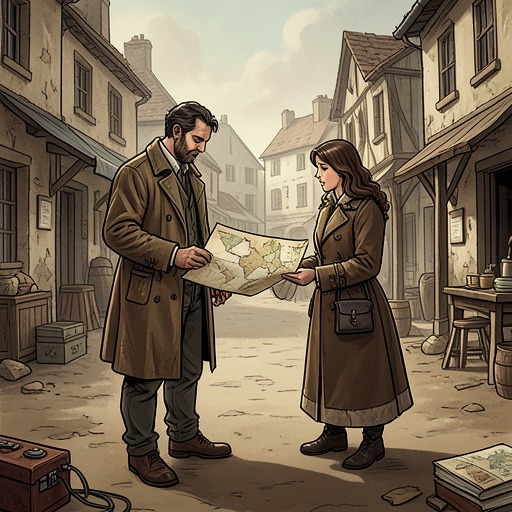
The Reincarnationist PapersTeszin is the woman Nez-lah loved in an earlier life, and the first person in his return as Bando to recognize him through the private knowledge they shared. Her recognition does more than reunite two former lovers: in a village that fears Bando as an evil spirit, it gives his claim to remembered identity a witness with both intimate knowledge and public authority. Their reunion offers proof, but not safety or a lasting return to the life they once knew.
Identity and Background
In the life Bando remembers, Teszin was beautiful, loved him, and met him secretly among the rocks above their village. Her father had arranged for her to marry the son of another leader, making their meetings a concealed relationship set against a marriage planned by their families. Bando climbed to their usual meeting place early one day to wait for her. He fell asleep, woke after dark, and fell while trying to descend the rocks alone. He remembers slipping, knowing the height, feeling the cold wind, and being afraid; after the fall, he forgot his family for many seasons. His account makes Teszin part of both his love story and the circumstances surrounding his death.
When Bando returns to the village, Teszin is older, with gray streaks in her long black hair. The account also notes that she has no braids, the sign of a married woman in that community. Her appearance registers the years that have passed, while her recognition of him makes those years suddenly traversable: she sees the person she knew in the unfamiliar body before the surrounding crowd can accept what he claims.
Recognition and Authority
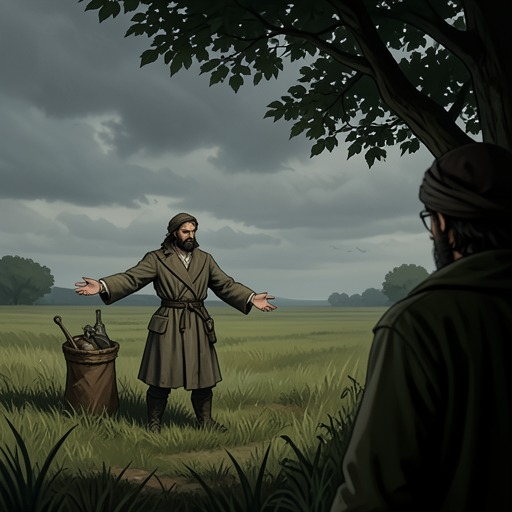
The crowd responds to Bando’s appearance with accusations that he is evil and has come to take them to the underworld. Teszin answers with certainty, saying she would know Nez-lah. She approaches him and studies him in silence, then places her ear against his bare chest and asks for the name he used for her. Bando answers, “Little deer.” Her gasp and immediate reaction confirm that he has supplied knowledge grounded in their shared past, not merely repeated a public story.
The exchange makes their intimacy function as evidence. Teszin does not ask him to establish his identity through a general account of his life; she tests him with an endearment particular to their relationship. Bando’s response also carries a physical tenderness: he smiles at her touch and tells her that although he has a new body, he is Nez-lah and remembers his life there. The moment joins bodily difference to continuity of memory—the very contradiction the crowd finds frightening and Teszin recognizes.
That recognition is not enough to settle the dispute by itself. The chief calls Bando’s knowledge a trick and stirs the crowd against him. Teszin counters by asserting her standing as the senior mage and taking responsibility for determining whether Bando is Nez-lah. She leads him away through the crowd toward her doorway, shifting the test from a public confrontation to an examination under her authority. When she returns, she tells the seated chief that Bando is Nez-lah and explains that he knows things only Nez-lah could know. Her judgment converts private memory into a declaration the community must confront.
Love, Separation, and the Later Encounter
Teszin’s reunion with Bando is shadowed from the outset by the life that preceded it: they had been lovers, but their meetings took place in secret, and an arranged marriage stood between them. The narrative does not say that they were able to resume that relationship in Bando’s new life. It instead gives their recognition a narrow, precarious space amid suspicion and communal upheaval. Teszin can identify him and defend his claim, but her authority cannot make the surrounding dangers disappear.
Later, Juan is searching the dead for valuables when Teszin screams and looks toward the cliffs. Bando stands at the bluff, silhouetted against the sky, with his shirt torn away and blood running from his head onto his shoulders and chest. Teszin shouts, but he does not respond; he looks directly down at Juan, who is holding a large silver necklace still partly draped around an old woman’s neck. The scene places Teszin’s alarm beside Juan’s looting and Bando’s fixed attention on him. It marks a sharp turn from the intimate recognition that had restored Nez-lah’s name to a new moment of danger and separation. The evidence leaves Teszin’s fate and the outcome of this encounter unresolved.
Narrative Significance
Teszin’s part in the story gives reincarnation a human measure. Bando’s claim depends not only on his own memory but on someone who can test that memory against a shared name, an intimate history, and the life he once lived. Where a formal institution such as the Cognomina requires candidates to persuade judges through verifiable details, Teszin’s recognition is immediate and personal; her authority then carries that knowledge into a public decision. Her scene therefore dramatizes how memory can serve simultaneously as private attachment and proof of identity.
The later identification of Poppy as Nez-Lah connects Teszin’s story to the novel’s broader continuity of past lives. That connection does not resolve Teszin’s own later history, but it gives the name she helps restore a life beyond the village encounter. For Teszin, the return is not an uncomplicated reunion: she recognizes the beloved she lost, speaks for him against collective fear, and then sees him again at a distance, wounded and unresponsive to her calls. Her arc holds recognition and loss together rather than allowing proof of identity to become a guarantee of recovery.