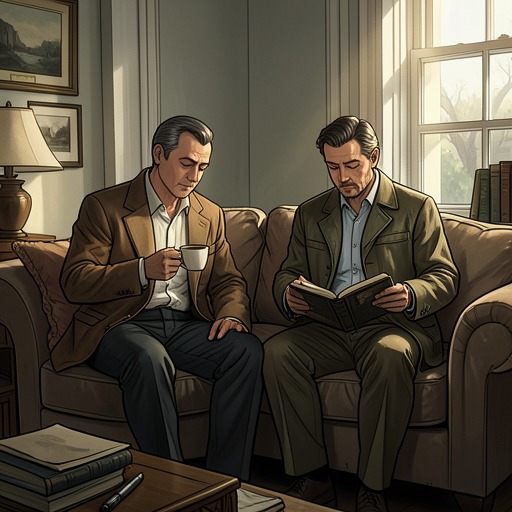
The truth is not what you see when you look around. The truth is what you don't see.
The Reincarnationist PapersThe truth is not what you see when you look around. The truth is what you don't see. is an expression about the gap between outward social life and the unseen choices that shape it. It moves from suspicion of appearances to a moral accusation: people are not living as they want or naturally, but as they are told to live, and a spirituality that excuses them from responsibility compounds that failure.
Appearance and Absence
The expression turns on a contrast between what can be observed and what remains hidden. Looking around does not disclose the truth, because ordinary appearances conceal how people actually live. The repeated distinction between seeing and not seeing makes absence the means of revelation: the concealed condition, rather than the visible scene, becomes the evidence that matters.
Choice and Responsibility
The argument develops from social conformity into a critique of spiritual evasion. People are described as following instructions instead of living naturally, then as living vicariously through a false spirituality that permits them to avoid responsibility for their own existence so long as they believe and are forgiven. The expression therefore treats belief not as an automatic source of moral value, but as an excuse when it replaces personal responsibility. Its final judgment follows from that logic: evading responsibility is presented as a sin.