Tradition and progress
The Reincarnationist PapersTradition and progress form a recurring conflict between the values a generation inherits and the future it wants to build. In the speaker’s account, neither side simply wins: each new generation calls its disruption necessary, while those it displaces fear the loss of hard-won standards. Progress is therefore both creation and erasure, and the speaker’s retreat from a rapidly changing world gives this abstract dispute a personal, historical dimension.
The setting: change and loss
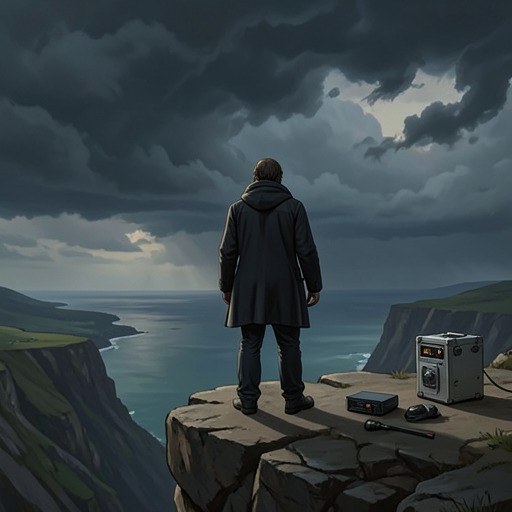
The discussion emerges from a landscape marked by disappearance. A settlement now has fewer than a thousand residents, mostly fishermen, and, when asked what became of the rest, the speaker explains that the desert reclaimed it. The saying he recalls links swift growth to swift disappearance: cities that rise from the sands too quickly may sink back into them. The image gives the later discussion of progress a material counterpart. What people build can be lost, whether through the slow pressure of the desert or through a new generation’s decision to clear away what it considers outmoded.
The speaker’s preference for a slower, uncomplicated life is tied to this setting. He describes his home as a refuge from changes in the wider world, and says that time barely touches the land. His choice is not presented as proof that nothing changes; rather, it places him at some distance from the accelerating transformations he describes. The refuge makes his argument concrete: a way of life can be preserved, at least for a time, by living somewhere less exposed to the demands of continual renewal.
A historical turning point
The speaker frames his view across a span of more than sixteen hundred years. For most of that time, he says, human society built itself on the experiences of the past. Then, within a few generations of the Renaissance, its orientation shifted: society began rebuilding itself around anticipation of the future. In his account, this change also altered the basis of virtue. What had been grounded in inherited tradition came to rest on the promise of what was new.
This is a personal chronology as well as a diagnosis of history. The speaker says he came to his refuge and stayed shortly after that transformation. His long perspective allows him to describe the change not as a single invention or isolated reform but as a lasting reorientation in how society justifies itself. The future becomes a warrant for overturning the past; tradition, correspondingly, risks appearing obsolete simply because it is inherited.
The cycle of generations
The speaker does not condemn change in itself. He acknowledges that advances have occurred, and distinguishes them from the heated, cavalier manner in which change can arrive. His concern is the repeated pattern by which each generation takes power, achieves what it can, and then grows alarmed as its successors approach. The older generation fears that the standards it established with care will not be respected; the younger generation sees inherited structures as dilapidated and out of fashion, and argues that they must be razed so something new can begin on the same foundation.
That image of rebuilding contains the conflict’s central irony. To the young, there is no loss, only progress; yet they cannot foresee that the same instrument of progress will later be wielded by their successors against their own achievements. What one generation clears away as obsolete may become the tradition another generation tries to defend. The speaker’s argument thus treats the opposition not as a contest with a final victor but as a succession: each side eventually occupies the other’s position, and each new beginning risks repeating an older act of dispossession.
Retreat and perspective
The speaker’s answer to this cycle is withdrawal, not a claim to have resolved it. He chooses not to live in a world of tumultuous change and considers himself fortunate that his adopted corner of the world changes little. His stance gives weight to preservation, but the conversation does not establish that retreat can halt the broader cycle. It offers instead a personal limit: he can decline to participate in the pace and manner of change he distrusts.
The listener’s response complicates any simple contrast between a conservative refuge and an exciting modern world. The listener agrees that Bulgaria in youth was much the same as the speaker’s quiet setting, while the move to Istanbul came as a shock that was not necessarily unwelcome. The exchange leaves room for both attachments: stability can offer shelter, and change can still be received without being wholly rejected. Tradition and progress remain in tension, but the speaker’s distinction between change itself and its heedless pursuit prevents the debate from collapsing into a choice between total preservation and unqualified novelty.