Carrying the fire
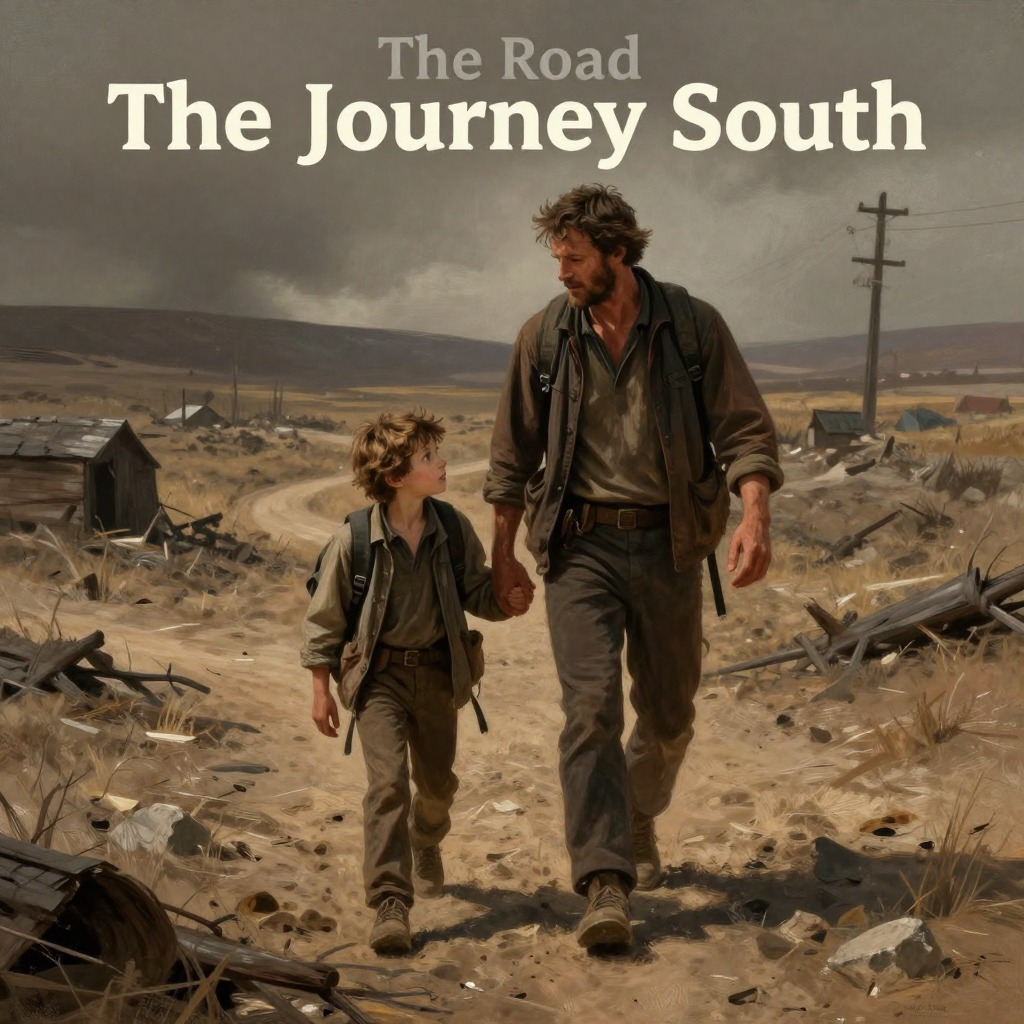
The RoadCarrying the fire is the central moral and existential principle in Cormac McCarthy's The Road, a metaphor for preserving humanity, goodness, and hope in a post-apocalyptic world reduced to ash and cannibalism. It functions as the boy's inherited creed, the measure of the good guys, and the only justification for continued survival, distinguishing the protagonists from the marauding roadagents and bloodcults who have abandoned all ethical constraints.
Origin and First Articulation
The concept first emerges during a moment of extreme vulnerability. After the man and the boy have narrowly escaped a band of roadagents and spent a freezing night in a parked car beneath an overpass, the boy asks for reassurance. "We're going to be okay, arent we Papa?" he says. The man answers, "Yes. We are. And nothing bad is going to happen to us." The boy presses further: "Because we're carrying the fire." The man confirms: "Yes. Because we're carrying the fire" . In this exchange, the boy himself introduces the phrase, claiming it as their shared identity. The man immediately accepts and affirms it, making the fire a compact between them, a talisman against the surrounding darkness.
The Fire as a Moral Compass
The fire is explicitly linked to the distinction between the good guys and the bad guys. After the boy witnesses the man kill a roadagent who threatened them, he asks, "Are we still the good guys?" The man replies, "Yes. We're still the good guys. And we always will be." The boy then asks, "And we're carrying the fire." The man confirms, "And we're carrying the fire. Yes" . The fire is thus not merely survival but a moral identity: the good guys carry the fire; the bad guys do not. It is the principle that forbids cannibalism, even under the most extreme starvation. When the boy asks, "We wouldnt ever eat anybody, would we?" the man answers, "No. Of course not." The boy insists, "No matter what." The man agrees: "No. No matter what. Because we're the good guys" . The fire is the reason they do not become what they flee.
The Fire as a Legacy and a Command
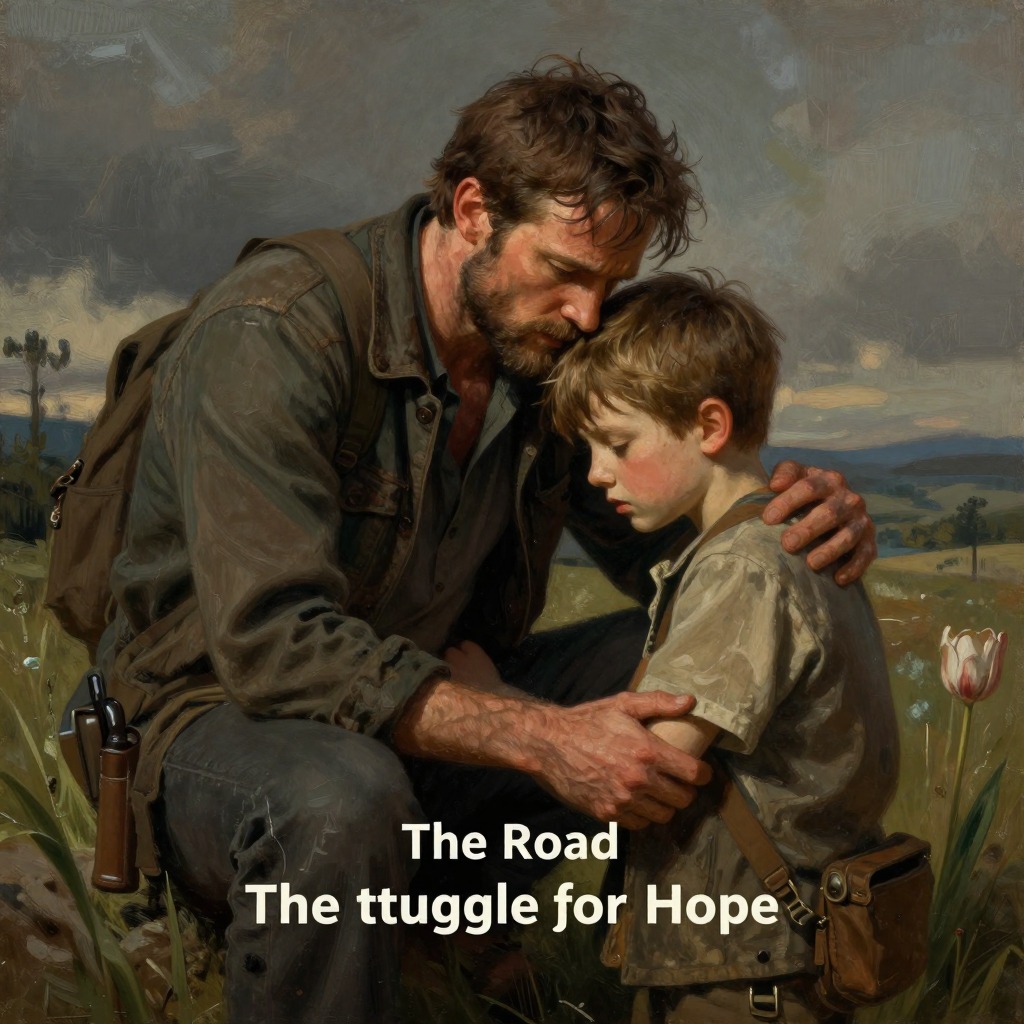
On his deathbed, the man bequeaths the fire to the boy as his sole inheritance and purpose. Knowing he cannot continue, the man tells the boy, "You have to carry the fire." The boy, terrified and uncertain, replies, "I dont know how to." The man insists, "Yes you do." When the boy asks, "Is it real? The fire?" the man answers, "Yes it is." The boy then asks, "Where is it?" and the man says, "I dont know where it is. Yes you do. It's inside you. It was always there. I can see it" . The fire is internal, not external; it is the boy's own goodness, which the man has recognized and nurtured throughout their journey. The man's final command is not to survive at any cost but to carry this fire, to remain the good guy.
The Fire as a Test of Others
When the boy, alone after his father's death, encounters a stranger who offers to take him in, he immediately tests the man's allegiance to the fire. He asks, "Are you carrying the fire?" The man, confused, replies, "Am I what?" The boy repeats, "Carrying the fire." The stranger, after a moment, says, "Yeah. We are" . This exchange is the boy's final act of discernment: he does not ask for food or shelter first; he asks for the fire. The stranger's affirmative answer, coupled with his statement that his family does not eat people, convinces the boy to go with him. The fire has become the boy's criterion for trust, the only passport in a world without documents.
The Fire as a Bodily and Affective Reality
The fire is not only a metaphor but is also grounded in the physical experience of the journey. The man and the boy build literal fires for warmth and cooking throughout the novel, and these acts of fire-making are often accompanied by moments of tenderness and care. The man watches the boy stoke the flames and calls him "God's own firedrake" . The boy's body, described as "so thin" and "ghostly pale" , is the vessel that must be kept warm, kept alive, so that the fire can be carried forward. The fire is thus both a literal necessity and a spiritual one, a fusion of the physical and the moral that defines their entire existence. The boy's final act of running naked into the sea, screaming with joy , is a testament to the life force that the fire represents, a vitality that persists even in the face of utter desolation.