The archer
The RoadThe archer is an unnamed figure who attacks the man and the boy from a window in a coastal town, representing the ever-present danger of human predation in the novel's desolate landscape. The encounter is brief but brutal, forcing the man to use the flare gun as a weapon for the first time and leaving him with a serious leg wound that he must suture himself. The archer's identity and motives remain unknown, but his actions highlight the moral compromises and survival instincts that define the man's journey.
Ambush and Attack
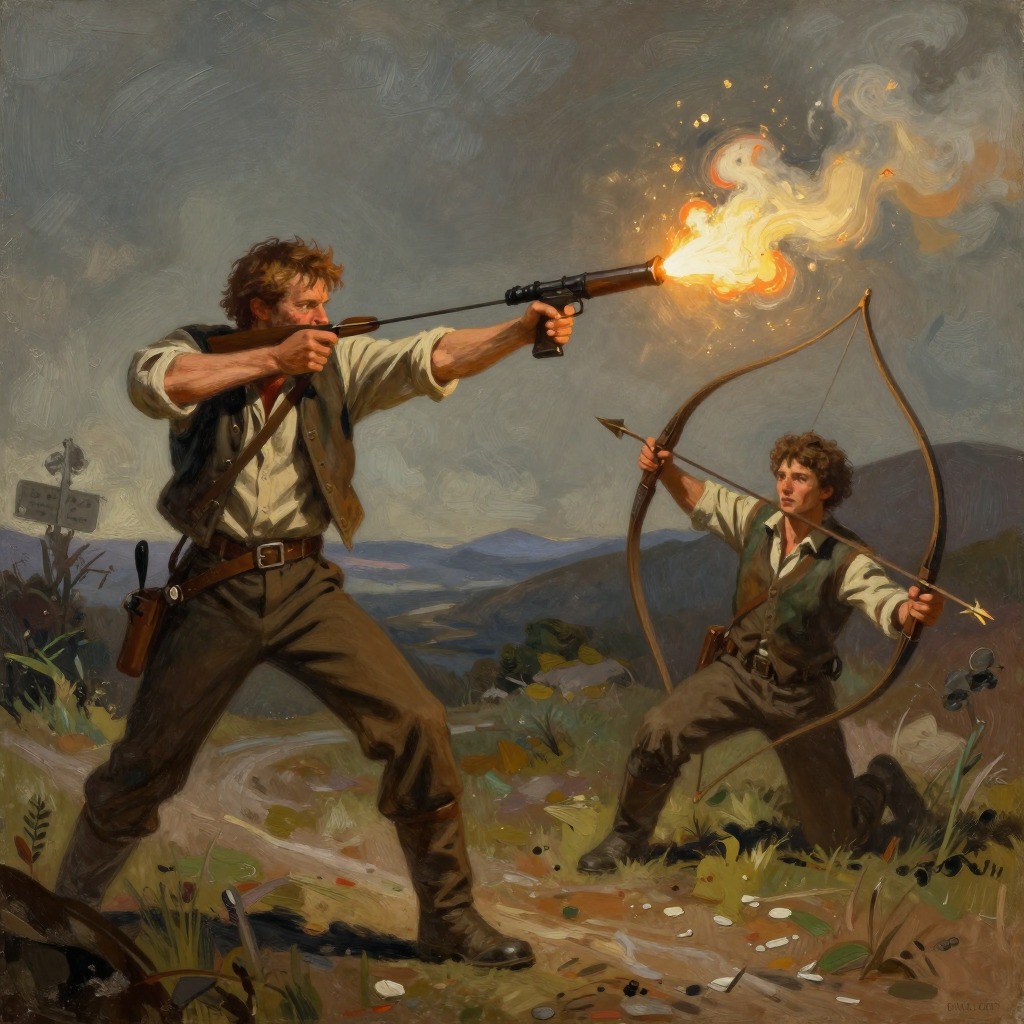
As the man and the boy wheel their cart through the back streets of a small port town, a projectile whistles past the man's head and clatters off the street. The man grabs the boy and falls on top of him, pulling the cart toward them. It tips over, spilling the tarp and blankets into the street. In an upper window of a house, the man sees a figure drawing a bow on them. He pushes the boy's head down and tries to cover him with his body. He hears the dull thwang of the bowstring and feels a sharp, hot pain in his leg. The arrow, a homemade broadhead beaten out of strapiron or an old spoon, cuts a gash just above his knee about three inches long.
Retaliation with the Flare Gun
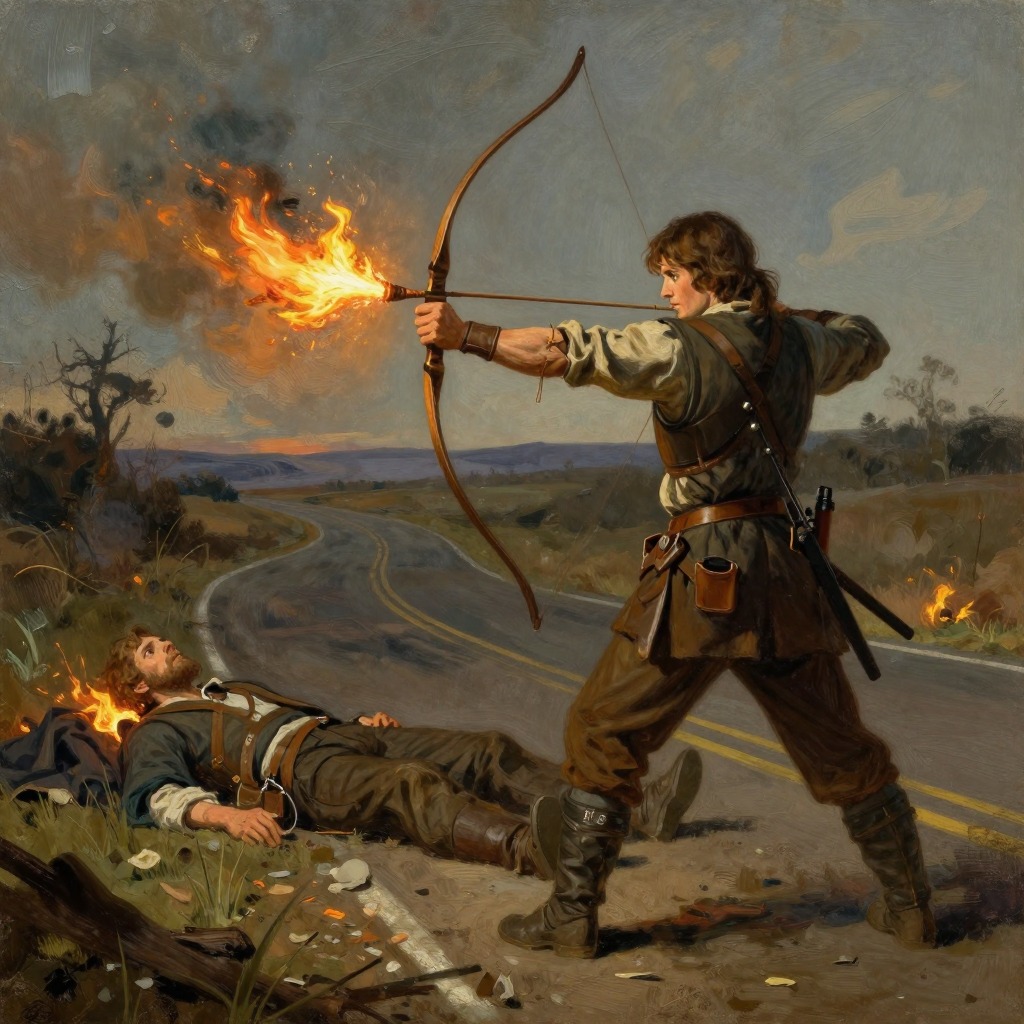
Clawing the blankets aside, the man lunges for the flare gun, cocks it, and rests his arm on the side of the cart. When the archer steps back into the window frame to draw the bow again, the man fires. The flare rockets up toward the window in a long white arc, and then the man hears the archer screaming. The man grabs the boy, pushes him down, and drags blankets over him, telling him not to move or look. He retrieves the case for the flare pistol, reloads it, and puts the remaining flares in his pocket. Limping, he crosses the street and enters the house through the back door, the flare gun leveled at his waist.
Aftermath and the Wounded Archer
Inside the stripped-out house, the man finds a woman sitting in a corner holding the archer. She has taken off her coat to cover him. As soon as she sees the man, she begins to curse him. The flare has burned out in the floor, leaving a patch of white ash and a faint smell of burnt wood. The man crosses the room and looks out the window. The woman's eyes follow him. She is scrawny, with lank gray hair. The man asks who else is up there, but she does not answer. He steps past her and goes through the rooms. His leg is bleeding badly, his trousers sticking to the skin. He returns to the front room and asks where the bow is. The woman says she does not have it and does not know where it is. When asked if they left her there, she replies, "I left myself here." The man turns and limps down the stairs, opens the front door, and goes out into the street backward, watching the house. He rights the cart, piles their things back in, and tells the boy to stay close.
Consequences and Thematic Significance
The archer's attack forces the man to confront his own vulnerability and the limits of his protection. The wound becomes a physical marker of the constant danger, and the man's decision to use the flare gun as a weapon rather than a signal device reflects the novel's theme of repurposing objects for survival. The archer's fate is left uncertain, but the encounter reinforces the idea that in this world, violence is a constant threat, and even the most desperate acts of self-defense carry a moral weight. The man's subsequent suturing of his own wound, without anesthetic and with crude tools, underscores the harsh reality of their existence and the necessity of self-reliance.