The beach
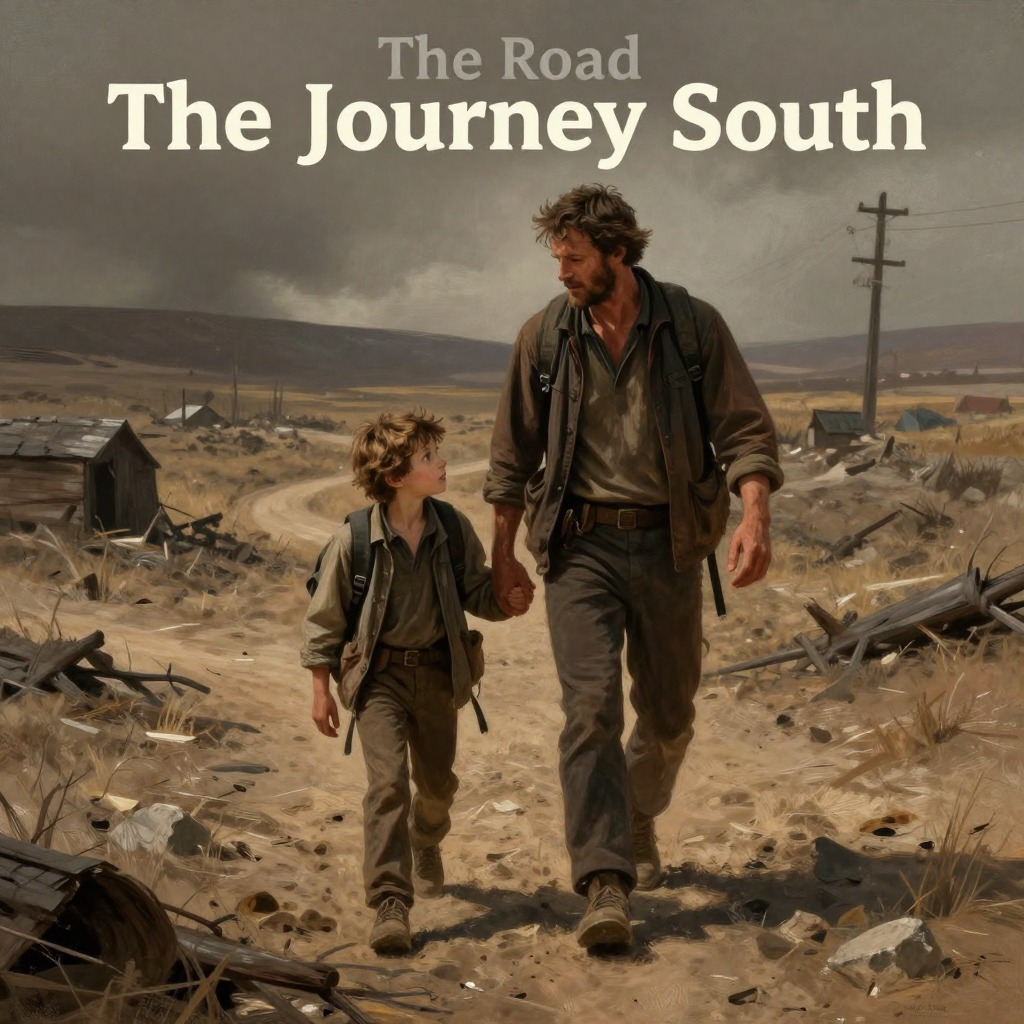
The RoadThe beach is the terminal point of the man and the boy's long journey south in Cormac McCarthy's The Road, a landscape of profound disappointment and desolation. When they finally reach it after months of trudging through ash and snow, the sea is not the blue haven the boy had imagined but a "cold and rainy" expanse, "gray as lava sand," with a "wall of smog across the horizon." The man sees the disappointment in the boy's face and apologizes: "I'm sorry it's not blue." The beach is birdless, littered with the bones of seabirds and fish, and the wind carries only a faint smell of iodine, not the sea. It is a place where the world's end is made visible, a "vast salt sepulchre" that is "senseless."
Arrival and the Disappointment of the Sea
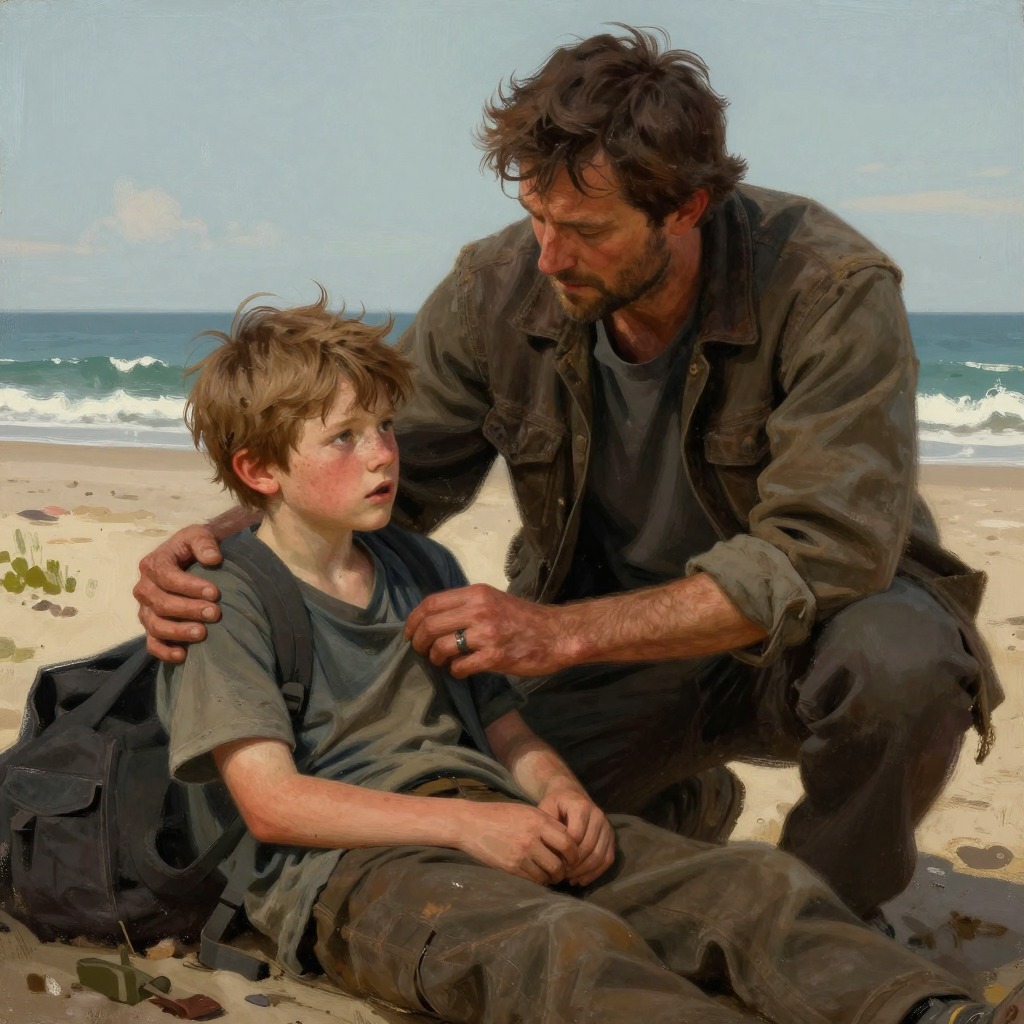
The man and the boy first glimpse the ocean from a turn in the road, stopping to feel the salt wind in their hair. They sit on the beach, their heels dug into the sand, staring out at the bleak water. The boy asks if there could be ships out there, and the man says no. When the boy asks what is on the other side, the man replies, "Nothing." The boy then offers a tentative hope: "Maybe there's a father and his little boy and they're sitting on the beach." The man agrees that would be okay, and the boy asks if they could be carrying the fire too. This moment of shared imagination is the closest the beach comes to offering comfort. The boy does go swimming, running naked into the slow surf, but when he comes out he is crying, though he will not say why.
Theft, Illness, and Violence on the Shore
The beach becomes a site of crisis. While the boy is sick with a high fever, the man nurses him, washing his clothes in the surf and crushing aspirin into sugar water. The boy recovers, but their camp is then robbed by a thief who takes their cart, blankets, and food. The man tracks the thief down the road, retrieves their belongings, and forces the naked man to stand in the road, a scene that deeply traumatizes the boy. Later, the man is shot in the leg with an arrow by an archer in a coastal town, and he sutures his own wound. The beach is thus a place of both vulnerability and violent confrontation, a stark contrast to the boy's earlier hope for a gentle encounter with other "good guys."
The Final Camp and the Man's Death
After the man is wounded, they continue south along the coast, but his health deteriorates. They eventually leave the cart behind and carry their few possessions in a canvas bag and a suitcase. The man knows he is dying. They make a final camp at a crossroads near the beach, where the man lies down and tells the boy he cannot go on. The boy builds a lean-to from a piece of plywood, but the man says he does not want anything covering him; he wants to be able to see. The boy stays with him for three days after his death, then walks out to the road where he is found by a man who says he is one of the "good guys." The boy leaves the beach with this stranger, carrying the fire.
Narrative and Thematic Significance
The beach functions as the story's ultimate anti-climax and the site of the man's final failure and the boy's final test. It is the place where the promise of the south—warmth, safety, a blue sea—is revealed to be an illusion. The landscape is not a refuge but a continuation of the same gray, ashen, and hostile world they have traversed. Yet it is also where the boy's compassion and resilience are most starkly tested: he insists on helping the thief, he nurses his father, and he ultimately chooses to trust a stranger. The beach is thus the stage for the story's final, unresolved tension between despair and the will to continue. The final image of the book—the brook trout in the mountain streams—is a memory of a world that is gone, a world that the beach, with its dead sea and birdless sky, has definitively replaced.