The cave
The RoadThe cave is a recurring dream-image in Cormac McCarthy's The Road, first appearing in the man's opening nightmare and returning at the novel's close as a liminal space of dread, beauty, and final passage. It functions as the story's most concentrated symbol of the sublime—a place where the boundaries between life and death, the known and the unknowable, collapse into a single, terrifying vision.
First Vision: The Cave of the Creature
In the dream from which the man wakens at the novel's very beginning, the boy leads him by the hand through a cave. They wander "like pilgrims in a fable swallowed up and lost among the inward parts of some granitic beast," their light playing over wet flowstone walls. Deep stone flues drip and sing, tolling "the minutes of the earth and the hours and the days of it and the years without cease." They come at last to a great stone room where a black and ancient lake lies. On the far shore, a creature raises its dripping mouth from a rimstone pool and stares into the light with eyes "dead white and sightless as the eggs of spiders." It is crouching, pale, naked, and translucent, its alabaster bones cast up in shadow on the rocks behind it, its bowels and beating heart visible, the brain pulsing in a dull glass bell. It swings its head from side to side, gives out a low moan, turns, and lurches away soundlessly into the dark. This is the man's first and most elaborate dream of the cave, and it establishes the cave as a space of profound otherness—a place where the boy is guide, where time is measured in geological increments, and where a creature that is both alive and dead, both material and spectral, dwells in a lake that is as ancient as the earth itself.
Return to the Cave: The Final Dream
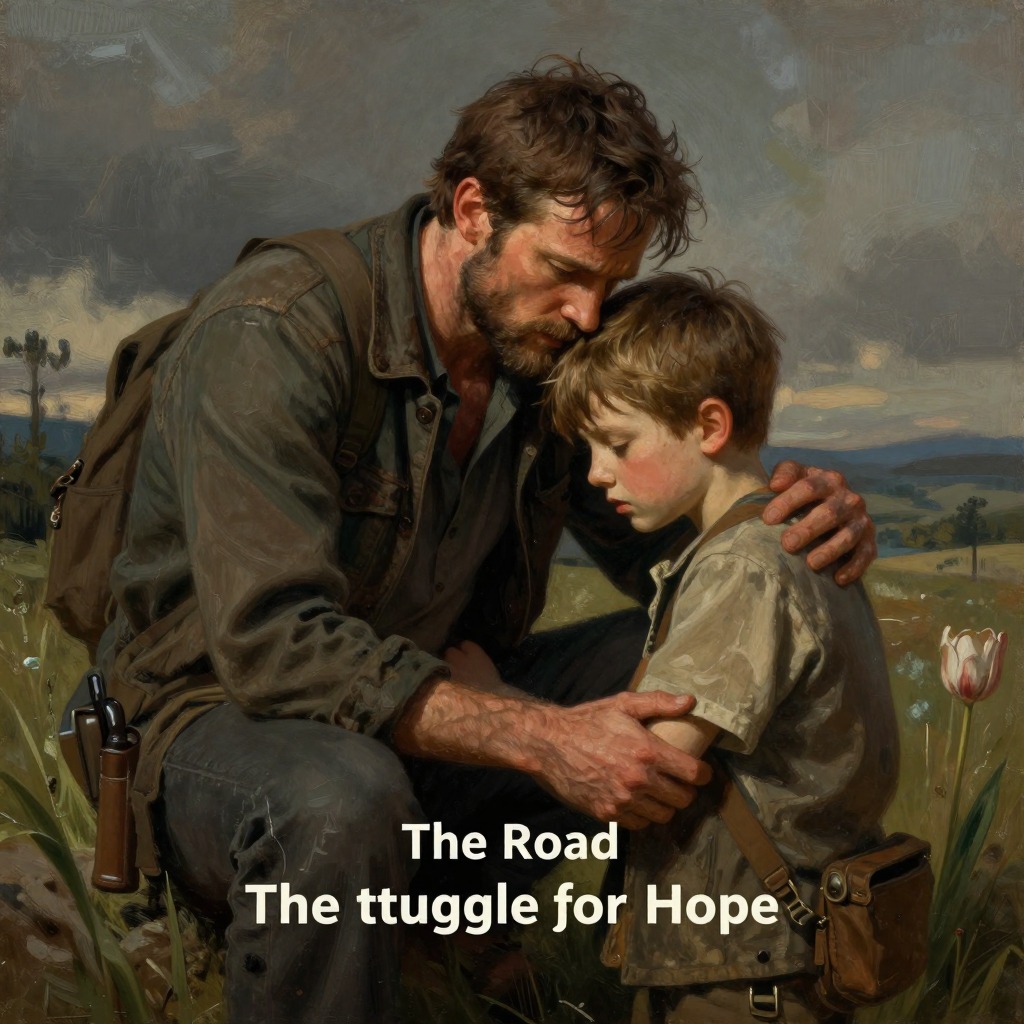
In the novel's closing pages, as the man lies dying, the cave returns. He wakes in the darkness, coughing softly, and sees the boy sitting by the fire, watching him. The dripping of water merges with the dripping of the cave. The light is a candle which the boy bears "in a ringstick of beaten copper," the wax spattering on the stones. Tracks of unknown creatures lie in the mortified loess. In that cold corridor, they have reached "the point of no return which was measured from the first solely by the light they carried with them." This final dream reprises the opening vision but strips it of the creature; what remains is the boy, the candle, the tracks, and the sense of a journey that has always been moving toward this threshold. The cave is no longer a place of horror but of passage—the point beyond which the man cannot go, and from which the boy must return alone.
The Cave as a Recurring Symbol
The cave is not merely a dream; it is a structural principle that recurs throughout the novel in other forms. The man and the boy repeatedly enter enclosed, dark spaces that echo the cave's qualities: the basement of the grand house where they discover the prisoners, the bunker they find beneath the yard, the abandoned houses they explore, the beach where they camp. Each of these spaces is a kind of cave—a hollowed-out place that holds either threat or refuge, death or sustenance. The cave in the dream is the archetype of all such spaces: it is the place where the hidden dwells, where the unknown takes shape, and where the boundary between the living and the dead becomes permeable. The man's dreams are "so rich in color" that waking turns them to ash "like certain ancient frescoes entombed for centuries suddenly exposed to the day," and the cave is the most vivid of these frescoes—a vision of a world that is both inside him and outside him, both memory and prophecy.
The Cave and the Sublime
The cave embodies the aesthetic of the sublime that pervades the novel. It is a space of terror and beauty combined: the creature is horrifying, but the cave itself is described with a kind of awe—the flowstone walls, the dripping water that tolls the minutes of the earth, the ancient lake. The man's response to the cave is not simple fear but a complex mixture of dread and wonder. This is the "terror sublime" of Gothic tradition: the cave confronts him with something that exceeds his understanding, something that is both inside him (it is his dream) and outside him (it is a vision of the world's deep time and its ultimate emptiness). The cave is the place where the "sacred idiom shorn of its referents" finds its most potent image: a creature that is all body and no soul, a lake that is all depth and no life, a journey that is all passage and no arrival.
The Cave as the Boy's Inheritance
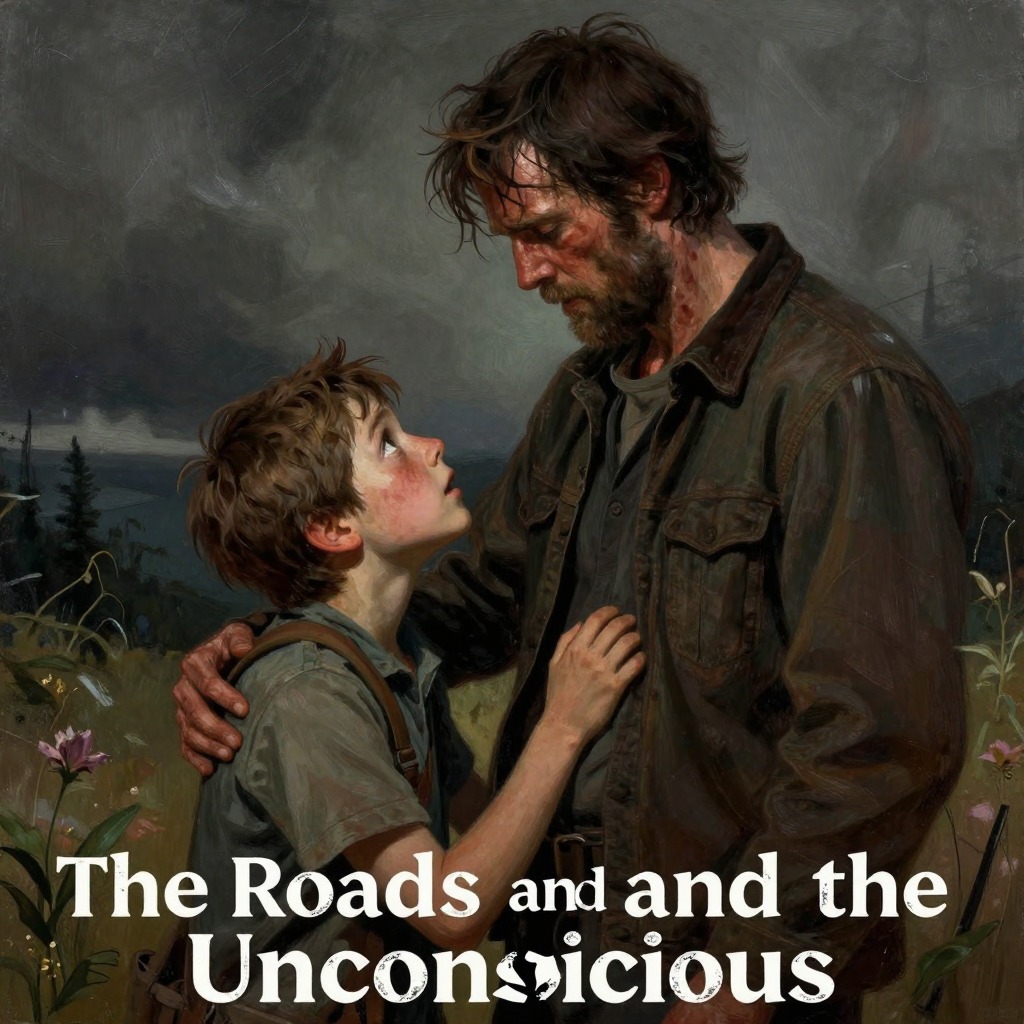
The cave is also the boy's inheritance. In the opening dream, the boy leads the man into the cave; in the final dream, the boy holds the candle. The boy is the one who carries the light, who bears the fire, who guides the man to the threshold. The cave is the place where the boy's role as guide and guardian is most clearly revealed. It is also the place where the man's role as protector ends: the cave is the point beyond which he cannot follow, and the boy must go on alone. The cave thus becomes a figure for death itself—not as an end, but as a passage into a darkness that the living cannot enter. The boy, who has been the man's warrant and his reason for living, becomes the one who must carry the light into that darkness, just as he will carry the fire into the world after the man is gone.
The Cave and the Novel's Ending
The novel's final paragraph, which describes the brook trout in the mountain streams, is not a return to the cave but a counter-image to it. The cave is dark, ancient, and silent; the streams are bright, living, and musical. The cave holds a creature that is dead and sightless; the streams hold trout that are "polished and muscular and torsional," their backs marked with "vermiculate patterns that were maps of the world in its becoming." The cave is the place of the "thing which could not be put back," the irreversible loss; the streams are the place of "maps and mazes," of a world that was older than man and hummed with mystery. The cave and the stream are the two poles of the novel's imagination: one is the space of death and the sublime, the other is the space of life and the beautiful. The boy, who has been in both, must carry the memory of the stream into the cave's darkness, and the memory of the cave into the stream's light.