The child's warrant
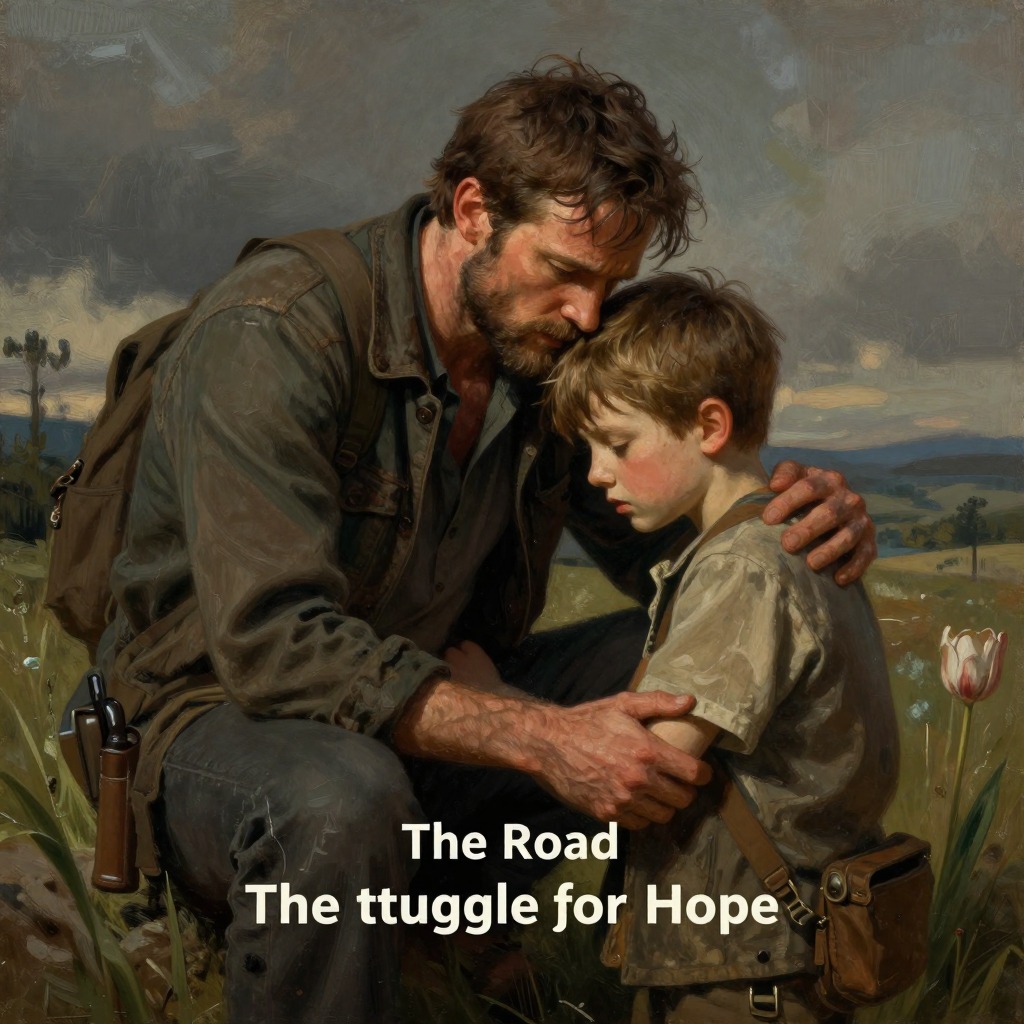
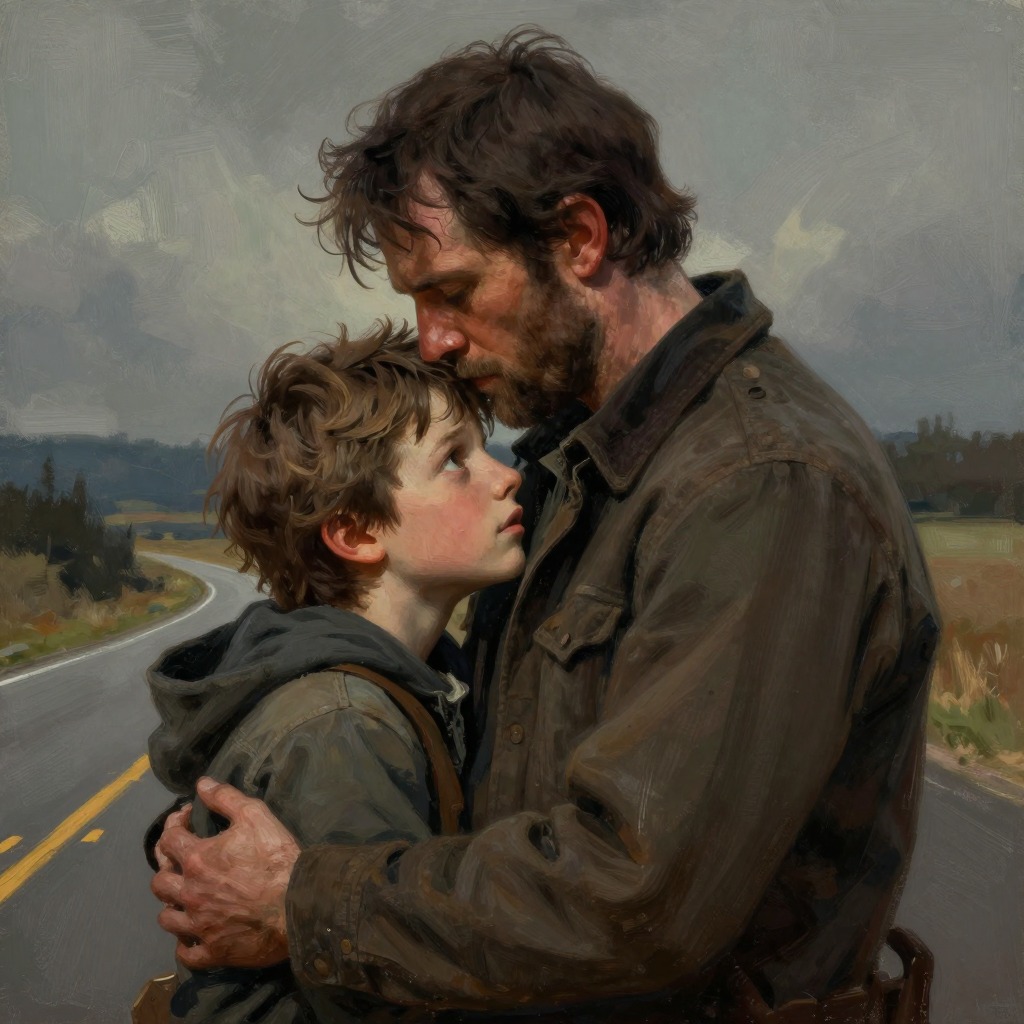
The RoadThe child's warrant is the man's foundational belief that the boy is his moral and existential justification, the reason he continues to survive and act with goodness in a world stripped of all ethical order. This concept, introduced early in the narrative, defines the man's entire purpose and shapes the ethical core of their journey, distinguishing them from the brutal world they traverse.
Origin and Definition
The concept is first articulated in the opening pages of the book. As the man sits glassing the barren valley with his binoculars, he reflects on his sole reason for continuing: "He knew only that the child was his warrant." He immediately amplifies this into a theological claim: "He said: If he is not the word of God God never spoke." This declaration establishes the boy not merely as a loved child but as a divine sanction, the living proof that goodness and meaning still exist. The warrant is not a legal document but a spiritual and moral commission, one that the man accepts without question.
The Warrant in Action: Moral Boundaries
The warrant directly governs the man's most difficult ethical decisions, particularly when survival instinct conflicts with compassion. When they encounter a man struck by lightning, the boy pleads to help him, but the man refuses: "We cant share what we have or we'll die too." The boy later confronts him, and the man explains that the boy's survival is paramount. Similarly, when they discover the basement prisoners—naked people huddled against a wall, a man with his legs burnt to the hip—the man's immediate response is to flee, dragging the boy away despite the prisoners' cries for help. In both cases, the warrant compels the man to prioritize the boy's life over the claims of other suffering strangers, a choice that haunts the boy but is presented as necessary for their survival.
The Warrant and the Boy's Compassion
The boy internalizes the warrant in his own way, transforming it into an unconditional ethical demand. When the thief steals their cart and the man strips him naked in the road, the boy sobs and begs his father to help the starving thief: "Just help him, Papa. Just help him." The man responds, "I'm scared," but the boy insists, "Yes I am. I am the one." This moment reveals that the boy has taken on the warrant as his own burden, feeling responsible for the welfare of every suffering person they encounter. His compassion becomes the living expression of the warrant, even when it contradicts the man's survival logic.
The Warrant and the Bunker
The discovery of the bunker provides a concrete manifestation of the warrant's promise. When the man opens the hatch and finds crate upon crate of canned goods, hundreds of gallons of water, and blankets, he whispers, "Oh my God." The boy asks, "Is it real?" and the man assures him it is. The bunker's abundance feels like a reward for their faithfulness, a providential confirmation that the warrant is real. The man's careful inventory—the gold krugerrands he kneads and then returns to the jar, the sextant he holds and admires—shows him treating these goods as sacred trust, not mere plunder.
The Warrant and the Sextant
On the wrecked sailboat Pájaro de Esperanza, the man finds a brass sextant in a fitted oak box. He lifts it from its case and is "struck by the beauty of it." The brass is dull with patches of green, but otherwise perfect. He holds it to his eye and turns the wheel, and it is "the first thing he'd seen in a long time that stirred him." Yet he does not take it; he fits it back into the blue baize lining, closes the lid, and returns it to the locker. This act of restraint—leaving behind an object of beauty and precision that cannot help them survive—demonstrates that the warrant is not about acquisition but about preserving a sense of order and reverence in a world that has lost both.
The Warrant and the Map
The map, a tattered oilcompany roadmap once taped together but now sorted into leaves numbered with crayon, is another physical embodiment of the warrant. The man uses it to navigate, to measure their progress, to give the boy a sense of direction. When the boy traces the route to the sea with his finger, he is tracing the path of their warrant. The map is not just a tool; it is a promise that there is still a destination, still a purpose. The man's careful preservation of the map—sorting through the limp pages, spreading them out, studying them—mirrors his careful preservation of the boy.
The Warrant's Thematic Significance
The child's warrant is the novel's central ethical and theological claim. It asserts that in a world where all institutions, laws, and moral codes have collapsed, the simple fact of a child's existence can still command absolute loyalty and define what is good. The man's belief that the boy is his warrant allows him to continue when every other reason has failed. It is the fire they carry, the reason they are "the good guys." The warrant is not proven by any external authority; it is a choice, an act of faith that the boy's life matters more than anything else. This choice, made again and again in the face of starvation, violence, and despair, is what gives the novel its moral gravity.