morels
The RoadThe morels are a rare and precious food source discovered by the man and the boy in a dead southern wood, representing a moment of unexpected abundance and natural beauty in the otherwise barren post-apocalyptic landscape. Their discovery and consumption provide a brief respite from starvation and a rare instance of the natural world yielding sustenance, underscoring the novel's themes of survival, the loss of the old world, and the fleeting grace that can still be found in the ashes.
Discovery in the Dead Wood
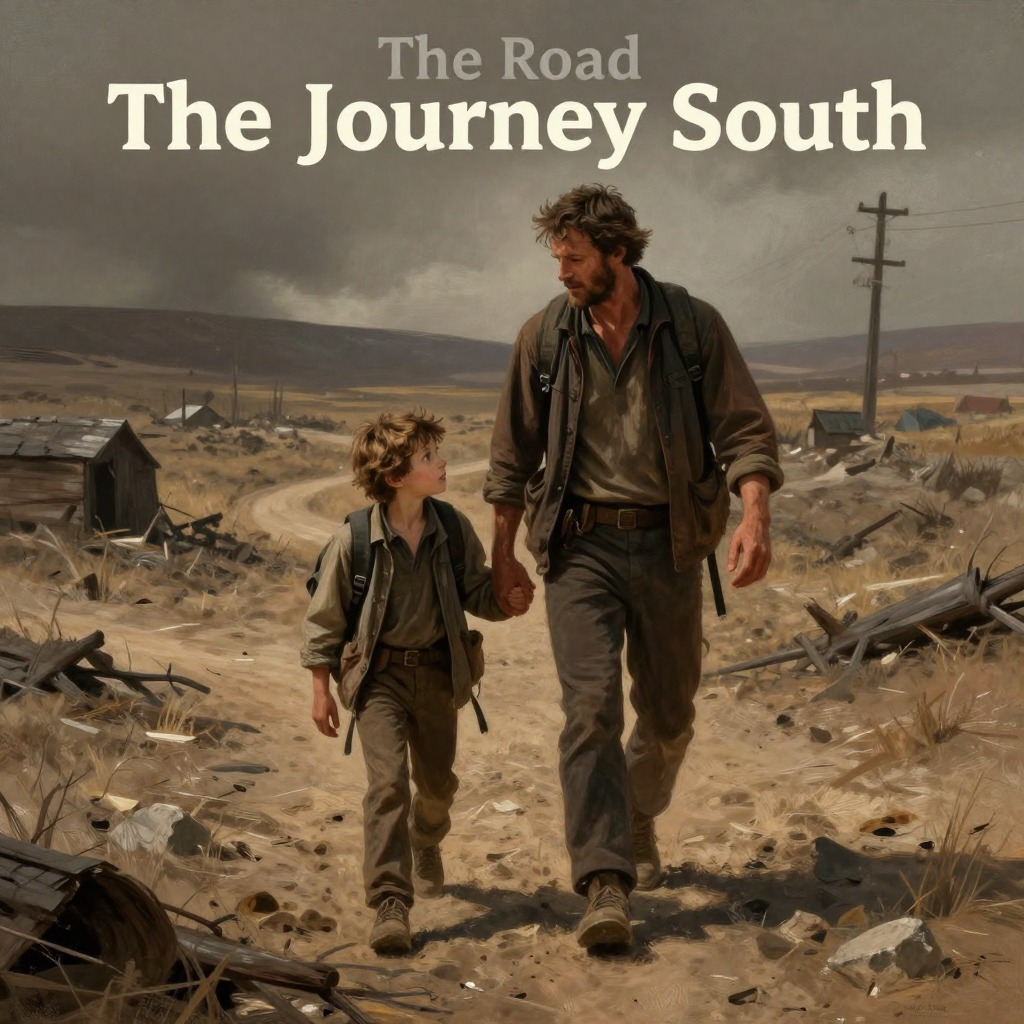
After crossing the river and leaving the waterfall behind, the man and the boy walked out through the woods along the upper river, among huge dead trees that once held may-apple, pipsissewa, and ginseng. The raw dead limbs of rhododendron twisted and knotted and black. The man stopped when he saw something in the mulch and ash. He stooped and cleared it away, revealing a small colony of morels—shrunken, dried, and wrinkled. He picked one, held it up, and sniffed it, then bit a piece from the edge and chewed. When the boy asked what it was, the man answered, "Morels. It's morels." He explained they were a kind of mushroom and that they could be eaten. The boy smelled the mushroom, bit into it, and stood chewing, then looked at his father and said, "These are pretty good."
Gathering and Preparing the Morels
The man and the boy pulled the morels from the ground, piling them in the hood of the boy's parka. They hiked back out to the road and down to where they'd left the cart, then made camp by the river pool at the falls. They washed the earth and ash from the morels and put them to soak in a pan of water. By the time the man had the fire going, it was dark. He sliced a handful of the mushrooms on a log for their dinner and scooped them into the frying pan along with the fat pork from a can of beans, setting them in the coals to simmer. The boy watched him and said, "This is a good place Papa." They ate the little mushrooms together with the beans, drank tea, and had tinned pears for dessert. The man banked the fire against the seam of rock where he'd built it and strung the tarp behind them to reflect the heat, and they sat warm in their refuge while he told the boy stories of courage and justice until the boy fell asleep.
A Rare Moment of Sustenance and Beauty
The morels were a rare find in a world where food was almost impossible to come by. The man and the boy had been surviving on meager supplies, often going hungry. The discovery of the morels provided a substantial meal, a moment of abundance that was both physical and emotional. The boy's appreciation of the mushrooms—"These are pretty good"—was a rare expression of simple pleasure in a life of constant hardship. The morels also connected them to the natural world, which had been largely destroyed. The man's knowledge of the mushrooms, his ability to identify and prepare them, was a remnant of the old world, a skill that had survived the apocalypse. The morels were a gift from the earth, a sign that even in the ashes, something could still grow and nourish.
The Morels as a Symbol of the Lost World
The morels were one of the few instances in the novel where the natural world provided for the man and the boy without human intervention. They were a reminder of the world that had been lost—a world of forests, streams, and edible plants. The man's memory of the wood that once held may-apple, pipsissewa, and ginseng was a memory of a time when the land was alive and productive. The morels were a link to that past, a taste of the old world that had been destroyed. They were also a symbol of the man's role as a provider and protector. His ability to find and prepare the morels was a demonstration of his resourcefulness and his commitment to keeping the boy alive. The morels were a small victory against the overwhelming darkness, a moment of grace that sustained them both physically and spiritually.
The Morels in the Context of the Journey
The morels were discovered at a point in the journey when the man and the boy were heading south, trying to reach the coast. They had just left the waterfall, a place of beauty and wonder, and were continuing their trek through the dead landscape. The morels were a brief respite, a moment of warmth and fullness in the midst of their cold and hungry journey. They were also a reminder of the man's knowledge and experience, which were essential to their survival. The morels were not just food; they were a testament to the man's ability to find sustenance in the most unlikely places, a skill that would be crucial in the days ahead. The memory of the morels would stay with them, a small but significant moment of joy in a world that offered little of it.
The Morels and the Theme of Grace
The morels were a manifestation of the novel's theme of grace—the idea that even in the midst of utter desolation, there can be moments of unexpected beauty and goodness. The man and the boy were "carrying the fire," a metaphor for their moral integrity and their determination to remain good in a world that had lost all goodness. The morels were a reward for that determination, a sign that the world, though broken, could still offer gifts to those who were willing to look for them. The boy's simple pleasure in the mushrooms was a moment of innocence and hope, a reminder of what they were fighting to preserve. The morels were a small but powerful symbol of the possibility of renewal, of the idea that even in the ashes, life could find a way to persist.