pistol
The RoadThe pistol is the man's constant companion and the family's ultimate safeguard in Cormac McCarthy's post-apocalyptic novel The Road. It is a small nickelplated revolver, carried in his belt or pocket, and it functions as both a practical tool of survival and a profound symbol of the father's desperate love and the moral burden of protecting his son. The weapon's presence shapes nearly every encounter with the hostile world, from the tense standoff with the roadagent to the final, heartbreaking transfer of the gun to the boy. Its dwindling ammunition—from an initial supply to a single, final round—becomes a countdown of their peril, while the man's willingness to use it, and his ultimate inability to do so against his own son, defines the novel's central ethical crisis.
Identity and Role
The pistol is introduced early as a fixture of the man's daily routine. He takes it from his belt and lays it on the cloth as he prepares breakfast, a gesture that underscores its constant presence. It is a double-action revolver, though the man often cocks it manually for effect, producing "two loud clicks" that serve as a warning. The weapon is small and nickelplated, a detail that becomes significant when the man later whittles fake bullets to fill its empty cylinder, hoping to make it appear loaded. Its primary role is defensive: the man keeps it "to hand on the folded tarp on top of the cart" as they pass through a burned city, and he carries it in his belt at the front, his parka unzipped for quick access. The pistol is not merely a tool but an extension of the man's vigilance, a physical manifestation of his promise to protect the boy at all costs.
The Weapon in Crisis
The pistol's most dramatic use comes during the encounter with the roadagent. When the man and boy are discovered hiding, the man levels the pistol and engages in a tense verbal standoff. He threatens to shoot the roadagent, explaining that the bullet will travel faster than sound, reaching the man's brain before he can hear it. The roadagent, however, calls his bluff, noting the man has only two shells. The confrontation escalates when the roadagent grabs the boy and holds a knife to his throat. The man, dropping to the ground, fires from a two-handed position at a distance of six feet, killing the roadagent instantly with a shot to the forehead. This act is swift and decisive, but it leaves the boy covered in gore and mute with shock. The pistol, in this moment, is both a savior and a source of trauma, its violence marking the boy indelibly.
The weapon's limitations are equally stark. After the killing, the man checks the revolver and finds only a single round left. This knowledge haunts him. When the boy falls and will not get up, the man sits holding him, rocking back and forth, acutely aware of the "single round left in the revolver." The pistol's dwindling ammunition becomes a measure of their desperation, a countdown to a moment of ultimate decision. The man's thoughts turn to the unthinkable: using the last bullet on his own son to spare him a worse fate. This possibility is made explicit when he later pushes the revolver into the boy's hand and instructs him on how to use it on himself, saying, "You put it in your mouth and point it up. Do it quick and hard." The boy, terrified, cannot comprehend the instruction, and the man takes the gun back, realizing the boy does not understand. The pistol, meant to protect, becomes a symbol of the father's unbearable choice.
The Pistol as a Moral and Emotional Object
The pistol is also a site of moral reflection and emotional exchange. The man's decision to carry it, and his willingness to use it, is tied to his role as protector. He tells the boy, "My job is to take care of you. I was appointed to do that by God. I will kill anyone who touches you." The pistol is the instrument of this vow. Yet the weapon also creates distance. After the killing of the roadagent, the boy is silent and withdrawn, and the man must coax him back to speech. The pistol's violence has cost them something intangible.
The weapon's emotional weight is further revealed in the man's private moments. He thinks about the pistol when he is alone, and its presence is a comfort. When he is sick and feverish, he keeps the pistol close, and the boy, watching him, understands its importance. The pistol is also a point of connection between father and son. The man teaches the boy to handle it, and at one point, he hands the pistol to the boy for safekeeping, a gesture of trust. The boy, in turn, learns to carry it, though he is often afraid.
The pistol's history is also marked by loss and improvisation. The man had once carried a billfold until it wore a hole in his trousers, and he discarded it, along with a picture of his wife. The pistol, however, is never abandoned. When the man finds the bunker, he discovers a box of .45 ACP cartridges and three boxes of .30-30 rifle shells, but no gun to use them in. He whittles fake bullets from a treebranch, fitting them into the empty cylinder to make the revolver appear loaded, a desperate ruse. He also saves the empty cartridge casings, hoping to reload them, but they are lost with everything else. The pistol, in its imperfection, mirrors the man's own fragility.
The Pistol's Final Transfer
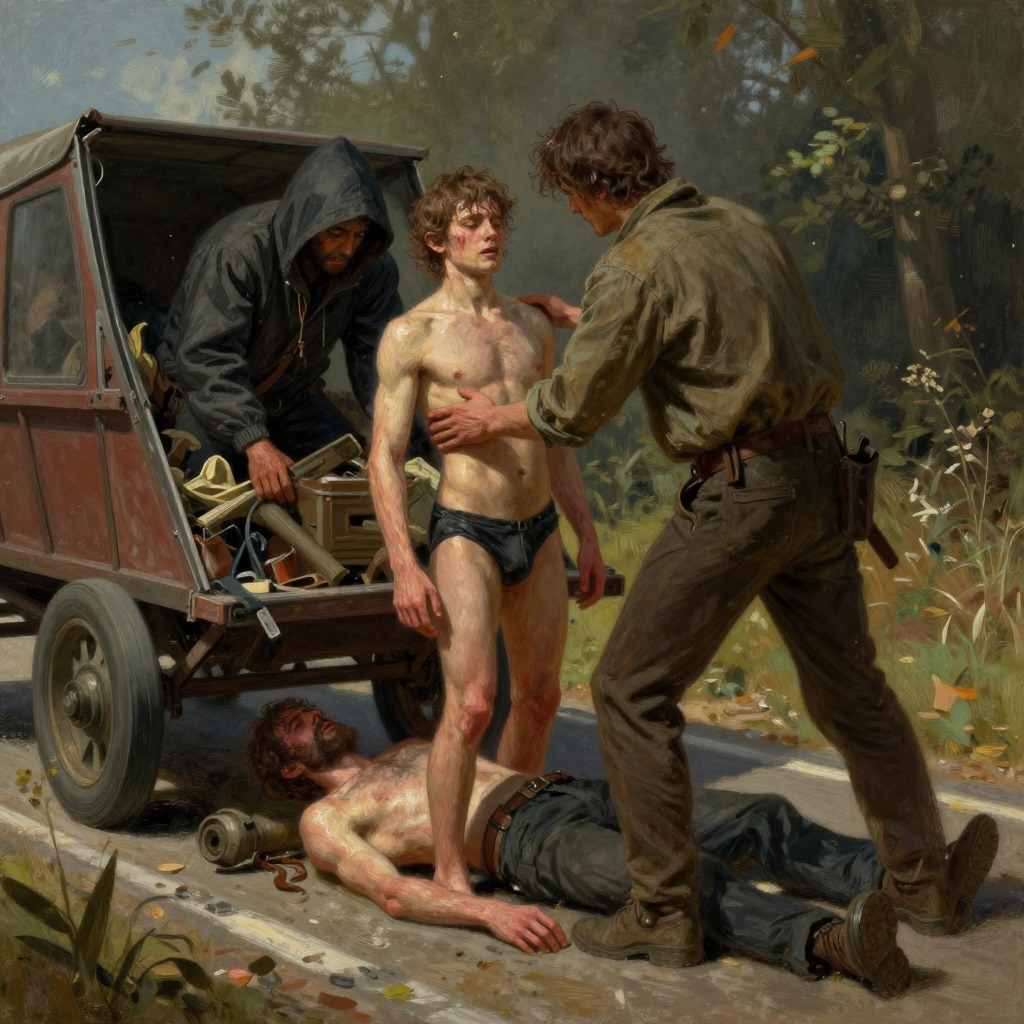
As the man's health fails, the pistol's role shifts. He is too weak to carry it effectively, and he begins to rely on the boy. When they are robbed, the man chases the thief, and the pistol is central to the confrontation. He cocks it and threatens to kill the thief, but the boy's pleas stop him. The man strips the thief of his clothes and shoes, leaving him naked in the road, but he does not use the pistol. This act of mercy, or perhaps of exhaustion, marks a turning point. The pistol, once a tool of decisive violence, is now a symbol of the man's waning power.
The pistol's final transfer comes after the man's death. The boy, alone and grieving, stands in the road with the pistol in his hand. When the good man approaches, the boy asks if he is one of the good guys. The good man replies that he is, and asks the boy to put the pistol away. The boy refuses, saying, "I'm not supposed to let anyone take the pistol. No matter what." The good man respects this, and the boy keeps the pistol. Later, when the good man offers to take the boy with him, the boy tries to hand him the pistol, but the good man refuses, saying, "You hold onto that." The pistol, in the boy's hands, becomes a legacy, a symbol of his father's love and the burden of carrying the fire. The boy's final act is to keep the pistol, a promise to his father that he will not forget.
The pistol, throughout the novel, is more than a weapon. It is a character in its own right, a silent witness to the father's love and the boy's coming of age. It is a tool of survival, a source of terror, and a symbol of hope. Its presence shapes the narrative, and its final transfer marks the end of one journey and the beginning of another. The pistol is, in the end, a testament to the man's unwavering commitment to his son, and the boy's determination to carry on.