the road
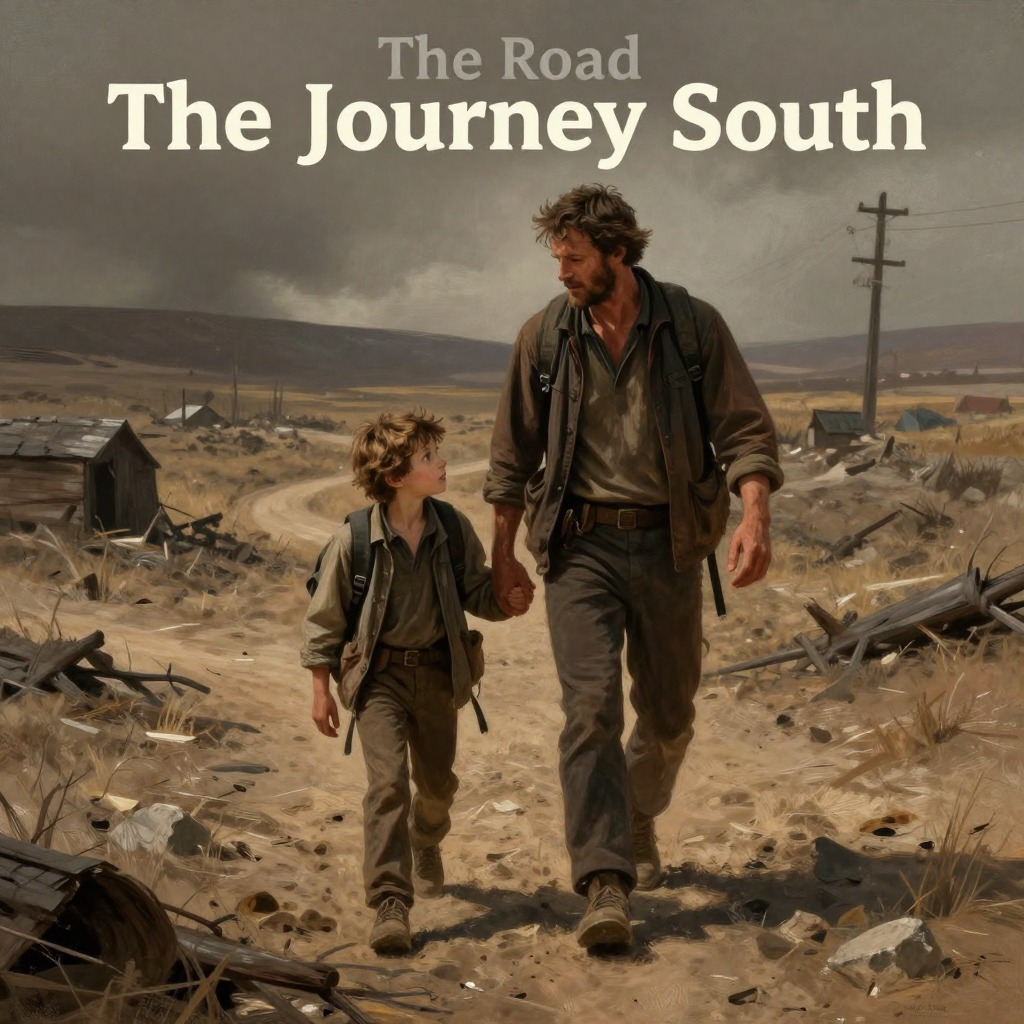
The RoadThe road is the central physical and symbolic artery of Cormac McCarthy's novel, a blacktop highway that the man and the boy follow south through a post-apocalyptic wasteland. It is both a literal path of survival and a metaphysical stage for the novel's core themes of hope, despair, and the struggle to remain human in a world stripped of meaning.
Physical Reality and Journey
The road is a concrete, ruined artifact of the lost world. It is a blacktop surface, often covered with ash, that the man and the boy traverse with their grocery cart. The man refers to the state roads as "our roads," the black lines on a tattered oil-company roadmap, and explains to the boy that they used to belong to what were called the states. The road is the primary setting for their journey, a linear path through a barren, silent, and godless country. They wake in the woods and walk out to the road to study the country to the south, and they set out along it "shuffling through the ash, each the other's world entire." The road is also a place of constant danger and vigilance; the man uses a chrome motorcycle mirror clamped to the cart's handle to watch the road behind them. It is where they encounter other desperate survivors, such as the old man Ely, who shuffles along the road before them, and where they must make life-or-death decisions about whom to trust.
Symbolic and Thematic Significance
Beyond its physical function, the road is a powerful symbol of the novel's central themes. It represents the only possible direction—south—toward a hoped-for warmth and survival, a goal that becomes increasingly desperate and uncertain. The road is also a stage for the man's internal struggle; he thinks about the picture of his wife he left in the road, and he wonders if he should have tried to keep her in their lives. The road is where the boy's compassion is tested, as when he begs to help the lightning-struck man they find sitting in the road. The road is also a place of profound loss and memory. The man recalls a perfect day from his childhood, a day he says was "the day to shape the days upon," a stark contrast to the gray, ashen road of the present. The road is the setting for the novel's most harrowing encounters, including the discovery of the basement prisoners and the confrontation with the thief who steals their cart. The road is also where the man finally dies, and where the boy, after three days, walks out to meet the good man who will take him in. The road, in its relentless linearity, becomes a metaphor for the journey of life itself, a path that must be walked even when all hope seems lost, and a space where the fundamental questions of goodness, faith, and survival are played out.
Encounters and Events on the Road
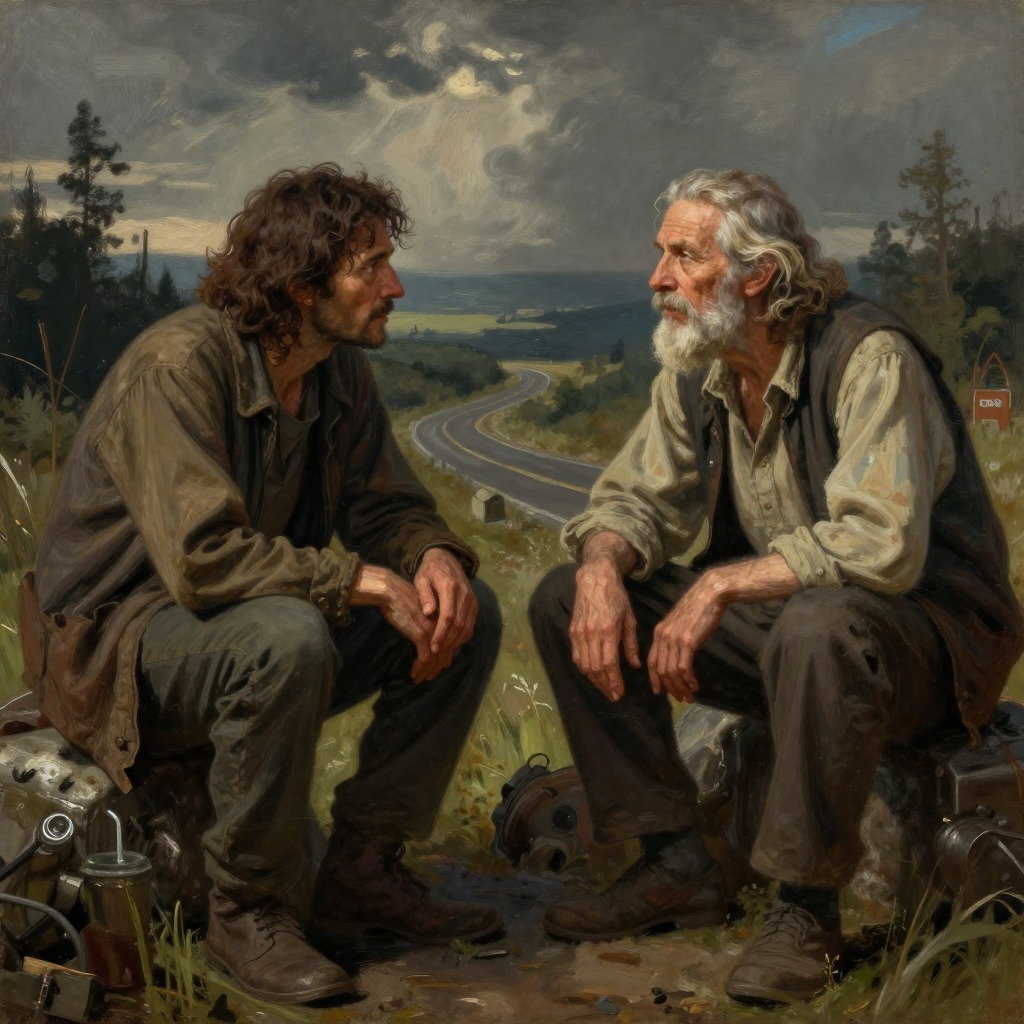
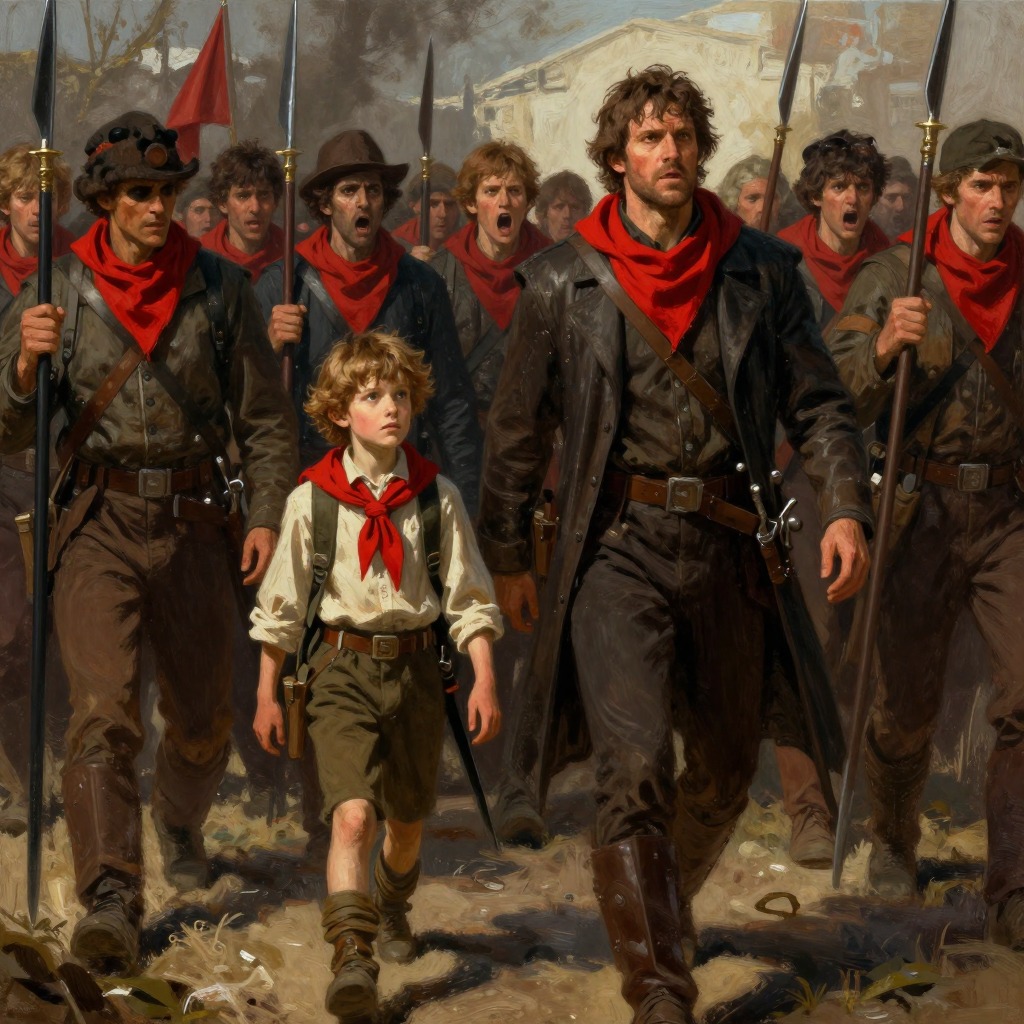
The road is the stage for nearly every significant event in the novel. It is where the man and the boy encounter the roadagent with the tattoo, whom the man shoots to protect his son. It is where they find the old man Ely, who sits in the road and claims to be ninety years old. It is where they are ambushed by an archer, who shoots the man in the leg with an arrow. It is where they chase down the thief who has stolen their cart and all their supplies. The road is also where they witness the march of an army, a phalanx of men carrying spears and lances, and where they see the aftermath of a firestorm, with the dead half-mired in the blacktop. The road is a place of constant movement, but also of waiting and watching, as when they hide in the woods and watch a group of four people—three men and a pregnant woman—cross a bridge and continue down the road. The road is the thread that connects all these disparate episodes, giving the novel its episodic, picaresque structure. The road is also where the boy, after his father's death, stands and waits, and where the good man finds him, asking, "Are you carrying the fire?" The road, in the end, is the place where the boy's journey continues, a path toward an uncertain future with a new family.
The novel's critical reception has been overwhelmingly positive, with many reviewers focusing on the symbolic weight of the road itself. In Literary Review, Sebastian Shakespeare praised McCarthy's ability to transform a potentially ludicrous premise into a tense psychological drama, while The Village Voice called it the author's purest fable. Michael Chabon, writing in The New York Review of Books, argued that the book is best understood as a lyrical epic of horror, not science fiction, despite its post-apocalyptic setting. Entertainment Weekly named The Road the best book of the past 25 years in 2008 and included it on its end-of-the-decade best-of list, lauding its spare prose and harrowing yet heartbreaking narrative. In 2019, The Guardian ranked it 17th on its list of the 100 best books of the 21st century. The novel's cultural impact was further amplified when Oprah Winfrey selected it for her book club in March 2007, leading to McCarthy's first televised interview on The Oprah Winfrey Show, during which he credited his son as a co-author for inspiring the father-son dialogues. The road has also been adapted into a 2009 film directed by John Hillcoat, starring Viggo Mortensen and Kodi Smit-McPhee, and a graphic novel adaptation illustrated by Manu Larcenet, published in 2024.