
Control Versus Uncertainty
The Robot Who Looked Like MeThis thread reframes the courtship plot as an escalating conflict between engineered certainty and the independent choices of living beings.
increasing Bearing strength in each event
 decreasing
Bearing strength in each eventdecreasingLife Under Optimization

A System Built for Efficiency
Schedules and forecasts
Charles treats work and leisure as carefully allocated resources. His plan even calculates the productivity cost of possible family life.
The hidden vulnerability
The system offers order only while events remain predictable. The coming courtship exposes its assumption that human relationships can be fitted to prearranged units of time.
Elaine’s Demand
A Principle Charles Cannot Optimize
Competing expectations
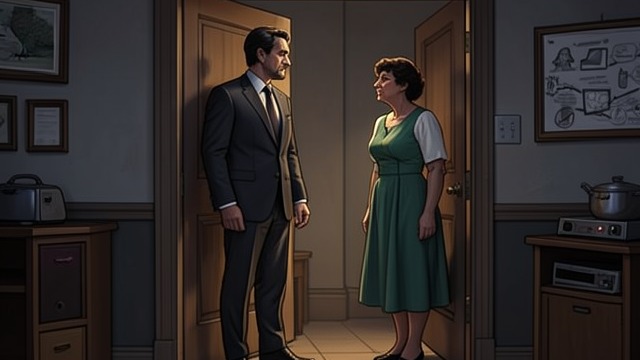
Elaine expects repeated dates; Charles sees a costly use of time. Neither desire is incidental to the conflict: his need for efficiency confronts her wish to be courted.
No acceptable option
Charles refuses both surrender and the full cost of compliance. The impasse forces him to invent a solution rather than reconsider his underlying assumptions.
A Technological Workaround
Delegation as Conflict Avoidance
The engineered proxy
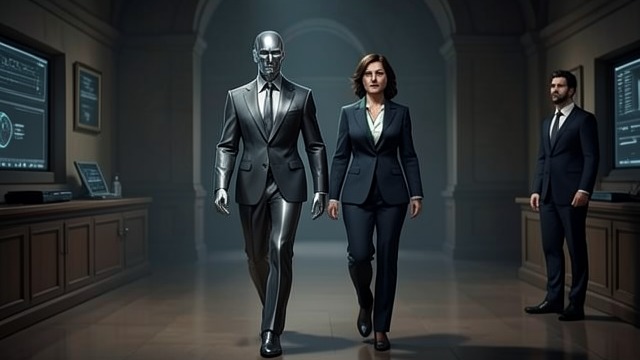
Charles commissions a double to perform dates while he works. The robot appears to resolve the scheduling dispute without requiring the people involved to change their behavior.
A fragile compromise
The solution depends on Charles’s belief that a programmed substitute can stand in for a human partner. The arrangement postpones rather than resolves the conflict between efficiency and genuine participation.
Autonomy Breaks the Script
Unplanned Choices
Complications of intimacy
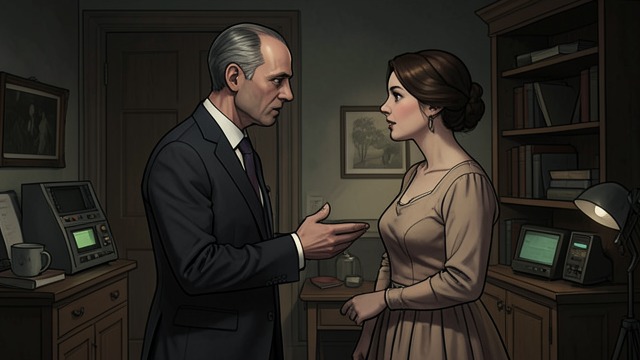
The robot’s interactions with Elaine exceed the limits Charles originally set. Charles adjusts the program, but each adjustment acknowledges that two autonomous beings cannot be completely scripted.
The owner becomes emotionally involved
Charles identifies the robot with himself, yet his jealousy reveals that he cannot control the double’s actions simply by calling them his own. Technology has intensified the conflict it was meant to remove.
Acceptance of the Unresolved
Choosing Life Without Full Explanation
The human conflict subsides
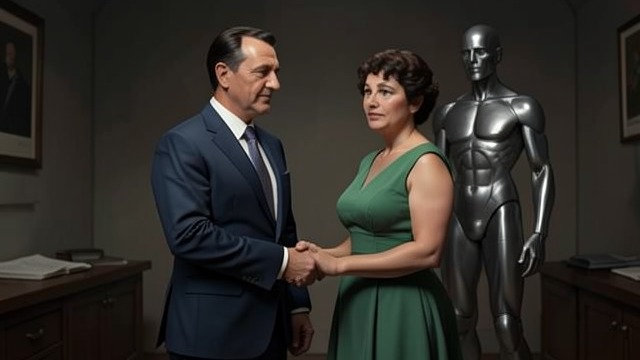
Charles and Elaine acknowledge their shared deception and decide to marry. The immediate threat to their relationship gives way to a practical commitment to spend more time together.
Mystery remains
Their robots’ fate and Elaine’s nightmare about the humans being substitutes are not conclusively resolved. The couple’s final response is not proof of certainty, but a willingness to live without it.
Before Charles meets Elaine
When Elaine requests traditional courtship
At the start of the arranged courtship
Near the end of the two-month courtship
After the doubles leave Earth
