Johnny Bezique
The Robot Who Looked Like MeJohnny Bezique is the spaceship driver whose arrival on Loris establishes Earth’s first contact with alien life and launches his rapid ascent from explorer to ruler. Mechanically competent but conceited, disputatious, fearless, and aggressively self-confident, he is equipped to endure the dangers of deep space—and poorly equipped to live among people who do not share his adversarial outlook. Loris is nearly an ideal society, yet its virtues do not reassure him: they make his growing hostility, and the political crisis that follows, all the more revealing.
Identity and Introduction
Identified in the narrative as John Charles Bezique, Johnny works for SBC Explorations, Inc. He is surveying an unexplored fringe of the Seergon Cluster when he approaches a fifth planet after finding nothing of interest on the first four. A voice addresses his ship remotely, identifies the planet as Loris, and supplies landing information directly to the computer. Johnny agrees to the assistance without hesitation. The encounter is Earth’s first contact with alien life, although its routine, practical opening gives little indication of how radically the visit will change his position.
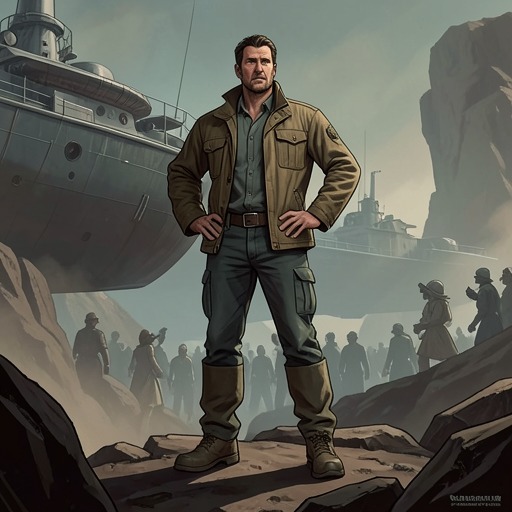
Johnny’s temperament is presented as part of his professional equipment. He is small and bandy-legged, with ginger-colored hair and an irascible disposition; at work he is mechanically capable. More consequentially, he is conceited, disputatious, profane, and fearless. The narrative connects this temperament to the stresses of exploration: a pilot entering the immensities of space and facing unknown threats needs a large ego and durable self-confidence, even when that confidence is supported by ignorance. Johnny can proceed where a more cautious person might hesitate, but the same certainty makes it difficult for him to interpret another society on its own terms.
Arrival on Loris
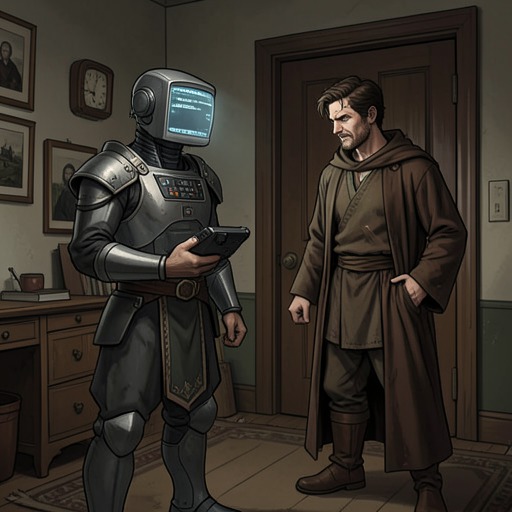
Loris immediately unsettles expectations about alien life. Its air is breathable, its water drinkable, and its inhabitants humanoid, despite a celebrated scientist’s assertion that such a combination was extraordinarily unlikely. The Lorians give Johnny a hypnopaedic understanding of their language and assign Helmis, a guide of Johnny’s own age, to show him the major city of Athisse. Helmis’s wit, patience, insight, gentleness, humor, and self-deprecation make him an effective guide, but Johnny responds to those qualities with intense dislike. The hostility is not prompted by cruelty or threat; it arises in the presence of a person whose manner exposes Johnny’s own combativeness.
Over several days, Johnny encounters a society organized around conditions that Earth might regard as ideal. The Lorians have gone five hundred years without war, rebellion, or insurrection, and none seems imminent. Their population and resources are balanced; several races coexist without racial conflict; technology is advanced while the ecology remains in equilibrium. Machines perform brute labor, leaving people to choose creative work freely. Politically, government closely reflects the collective wishes of the people. Its closest approximation to a ruler is Veerhe, head of the Office of Future Projections, who issues forecasts rather than orders. Loris therefore appears to need little conventional government, and what government exists mostly refrains from governing.
Johnny recognizes that the Lorians are close to human ideals of perfection, but recognition does not make him comfortable. He understands that they have little interest in conquest or territorial expansion, while also seeing that their intelligence could lead them to act against Earth if they believe Earth will threaten them. The central difficulty is not that the Lorians are hostile: it is that Earth’s people, in Johnny’s judgment, would resist being governed by aliens even if those aliens were benevolent. His first-contact experience thus places the political question of mutual threat beside the cultural assumption that human beings will reject alien authority regardless of its merits.
Conflict with Lorian Society
For nearly two weeks, Johnny behaves himself. Then, while driving manually, he turns left without signaling. Another car is moving up to pass; his abrupt turn nearly defeats its automatic reflexes, and the vehicles come to a stop facing one another. The other driver responds mildly to the near collision. The exchange escalates, and Johnny punches the man, sparing the monitor from having to act against him. The incident makes Johnny’s difficulty with Lorian norms concrete: an ordinary traffic encounter becomes a confrontation, and he answers a measured intervention with violence.
Johnny leaves the encounter unsteadily, aware that assaulting a monitor is probably serious and that there is no easy way out. He decides to reach his ship and attempt escape, reasoning that the Lorians might let him go once he is aboard, although they could stop the launch or destroy the vessel. He reaches the ship without incident but finds about twenty workers on it. Its main drive has been removed for cleaning and modernization, presented as a gift of friendship. The foreman says that five more days will make it the fastest ship west of Orion. The gesture that might have served as hospitality now prevents Johnny from leaving when he wants to; the mismatch between Lorian generosity and his suspicion sharpens the predicament.
From Pilot to Ruler
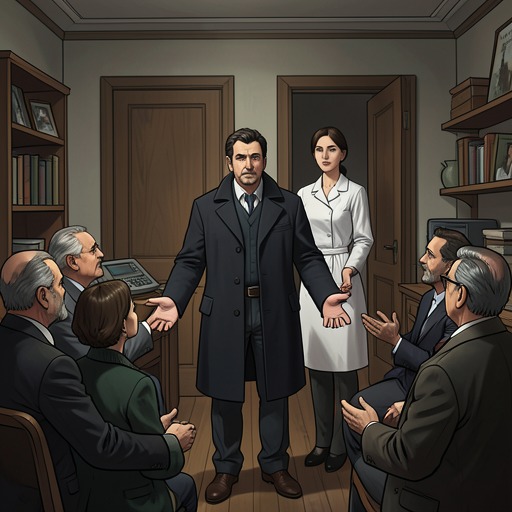
Rather than punish Johnny in the expected way, Veerhe offers him authority over Loris. Johnny calls the offer unusually attractive, admits that he is not qualified, then accepts on the grounds that nobody else is qualified either. He says that he likes the Lorians and intends to do a good job for them. Veerhe thanks him and explains that the population will be easy to manage so long as his orders remain within its psychological capabilities. Johnny, in turn, promises that everything will continue as before because he cannot improve on the existing arrangement.
The acceptance is both a sincere expression of his liking for the Lorians and an extraordinary change in scale: in less than two weeks, he has gone from spaceship driver to ruler of an advanced alien planet. Yet his confidence expands beyond the responsibility he has just accepted. Johnny concludes that he must take over Earth as well, presenting the project to himself as a service that will bring civilization to people he disparages and that they will eventually appreciate. He proposes reviewing the data on the Ancient Dynasty Spacefleet and asks Veerhe to arrange a referendum electing him Emperor, followed by a coronation. These are plans, not completed events: the narrative shows his decision and requests, not the referendum or coronation taking place.
Narrative Role and Significance
Johnny’s arc turns first contact into a study of how quickly apparent accommodation can become a route to power. The Lorians are peaceful, capable, and reluctant to rule; Johnny arrives with no demonstrated qualification for government, commits an assault, and nevertheless receives an offer of leadership. His response does not overturn Lorian society so much as promise to preserve it while claiming authority over it. The contradiction is central: he admires the arrangement he inherits and simultaneously imagines that his own rule can improve the wider world by imposing civilization on Earth.
The narrative’s irony depends on the gap between Johnny’s self-assurance and the restraint of the society around him. His professional boldness enables him to make contact, but his combative reflex turns a minor driving incident into a political rupture. Lorian patience and hospitality do not produce a reconciliation in which Johnny relinquishes his assumptions; instead, they place the offer of rulership before him. His rise therefore leaves the reader with a tension between the peaceful conditions of Loris and the expansionist ambitions he announces for Earth. The story ends this phase not with a completed conquest, but with Johnny preparing to become Emperor and treating that possibility as a practical next step.