
The Han's Claims to Legitimacy
The Romance of the Three KingdomsThis flow traces rival claims to the mandate of Heaven and explores how inherited legitimacy is invoked, manipulated, and finally lost.
increasing Bearing strength in each event
 decreasing
Bearing strength in each eventdecreasingThe Mandate in Question
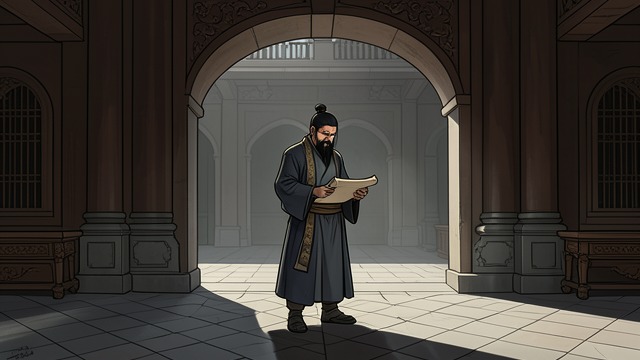
Rule Needs More Than a Title
A Dynasty’s Inherited Claim
The Han’s long rule makes its collapse traumatic. Its authority is understood through family lineage, ritual, and an expectation of just government.
Ambitious Rivals
Warlords invoke the language of Heaven’s mandate while fighting for territory. The narrative asks whether a claim can remain legitimate when it relies on coercion.
Cao Pi’s Abdication Ritual
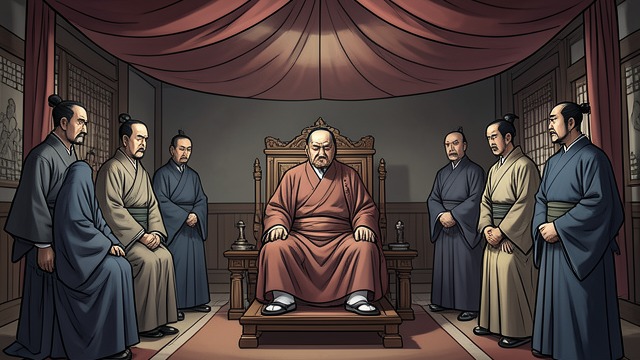
Conquest Presented as Ceremony
The Transfer
Cao Pi compels Emperor Xian to abdicate, invoking precedents in which virtuous rulers yielded authority to successors.
Political Coercion
The ritual makes Wei’s accession appear orderly, but the emperor’s fear and the officials’ pressure expose the force underneath the language of consent.
Xuande’s Counterclaim
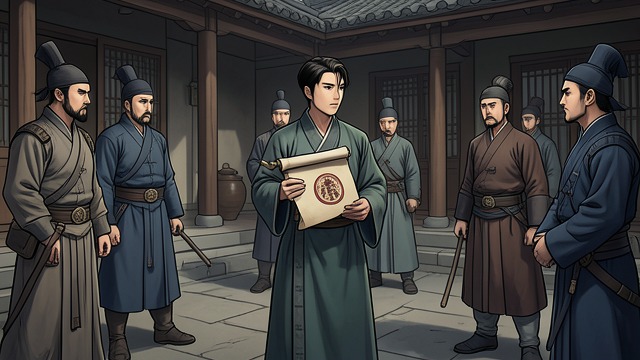
Continuity Through the Liu Line
A New Emperor
Xuande claims the Han title after Cao Pi’s accession, presenting his descent from the imperial family as a duty to continue the dynasty.
An Unsettled Legitimacy
The claim gives his kingdom moral standing, but the novel recognizes that dynastic succession is also shaped by political control and military survival.
A Prince Rejects Surrender
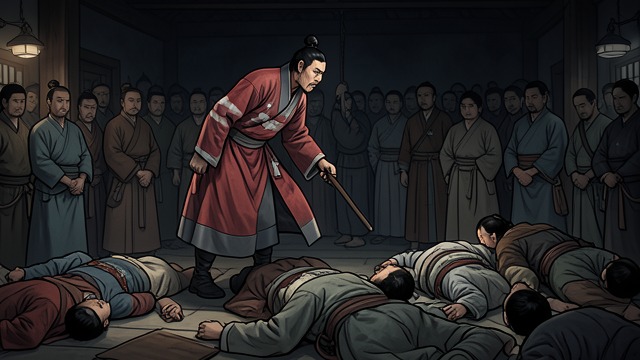
Legitimacy as Personal Duty
Liu Chen’s Protest
Liu Chen opposes Liu Shan’s surrender, arguing that the family’s duty to the Han cannot be set aside for personal safety.
A Tragic Act
He kills his family and himself rather than see the ancestral cause submit. His sacrifice preserves the language of legitimacy but cannot preserve the state.
The Mandate Passes to Jin

Another Transfer of Rule
Cao Huan Deposed
Sima Yan forces Cao Huan to abdicate and declares that Heaven’s mandate has left the Wei and fallen to the Sima family.
A Cycle Repeats
The language that once justified Wei’s accession now legitimizes Jin. The transition resolves who rules but leaves the novel’s political cycle intact.
At the start of the Three Kingdoms conflict
AD 220
AD 221
At the fall of Chengdu
AD 265
