Cao Mao
The Romance of the Three KingdomsCao Mao becomes emperor of Wei in 254 through a succession arranged by Sima Shi, but his reign reveals how little authority remains with the Cao ruler as the Sima family consolidates power. His interpretation of a trapped dragon as a sign of imprisonment turns into political confrontation: Cao Mao attempts to oppose Sima Zhao, and is killed in the street by Sima Zhao’s forces.
Accession Under Sima Control
After Sima Shi denounces Emperor Cao Fang as unfit to rule, he arranges for Cao Fang to abdicate and selects Cao Mao, another member of the Cao family, as his replacement. Cao Mao has no desire to become emperor, but, facing Sima Shi’s power, he has no practical choice. His accession therefore begins not as an assertion of personal ambition but as a change of ruler managed by the dominant political force.
The wider decline of the Han and the rise of Wei provide the dynastic context for Cao Mao’s position. The account presents the empire’s division into three kingdoms as the culmination of earlier failures of rule and the collapse of central authority. Later, the story recalls the abdication of Emperor Xian to Cao Pi: the transfer is presented in the language of Heaven’s signs and the people’s wishes, while Xuande’s court interprets Cao Pi’s seizure of the throne as usurpation. These competing claims of legitimacy frame the political world inherited by Cao Mao, but they do not protect him from the power exercised by the Sima family.
The Dragon in the Well
A portent sharpens the conflict between the emperor’s symbolic authority and his actual circumstances. A yellow dragon appears twice in a well at Ningling. When the emperor is congratulated on the sighting as auspicious, he rejects that reading: if the dragon represents the ruler, he reasons, its presence underground in a well signifies imprisonment rather than elevation. He writes a poem about the omen, and the interpretation is understood as an indictment of Sima Zhao.
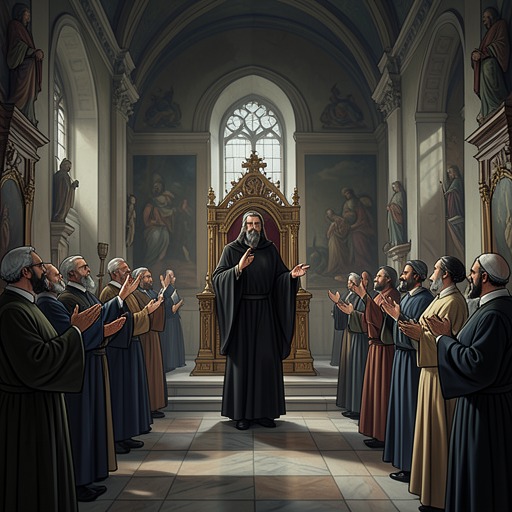
In the summer of 260, Sima Zhao confronts Cao Mao over the poem at court. He also demands the highest honours, invoking the Sima family’s service to Wei across three generations. The exchange leaves the emperor unable to answer and shows that even an imperial criticism of Sima power can be turned into a public occasion for Sima Zhao to assert his authority.
The Attempt to Resist
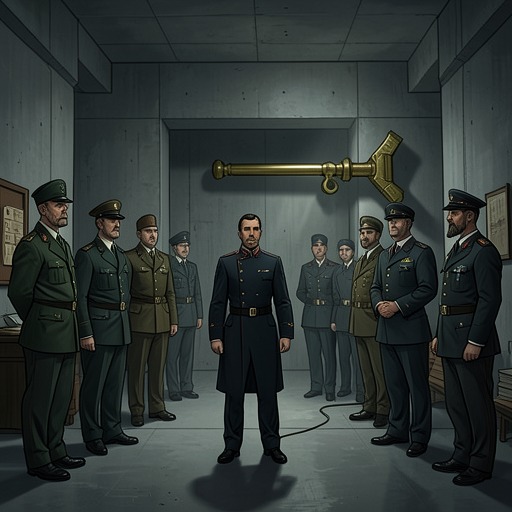
Cao Mao retreats to his inner chambers and summons Wang Shen, Wang Jing, and Wang Ye. He asks them to help overthrow Sima Zhao, whom he believes intends to take the throne. Wang Jing explains that Sima Zhao has secured the key appointments and that the court cannot effectively challenge him. Wang Shen and Wang Ye, fearing suspicion and the consequences for their families, report the conversation to Sima Zhao; Wang Jing refuses to do so.
Despite Wang Jing’s warning that a small force would be like sheep entering a tiger’s mouth, Cao Mao summons his guards and about three hundred servants, takes his sword, and rides out in the imperial carriage. His procession is met in the street by Jia Chong on horseback, Cheng Ji and Cheng Zu, and thousands of armed troops. Cao Mao identifies himself as the Son of Heaven and challenges them over the prospect of killing their rightful ruler. Jia Chong orders Cheng Ji to kill him rather than take him prisoner. Cao Mao’s resistance ends there; his attendants flee, while Wang Jing protests and is seized.
Death and Political Meaning
Sima Zhao arrives after Cao Mao’s death and feigns distress. At the subsequent court discussion, Chen Tai calls for Jia Chong’s execution as an apology to the country. Sima Zhao asks whether a lesser punishment would suffice. Chen Tai answers that he would impose an even harsher penalty, identifying Cheng Ji as the true traitor. Cheng Ji protests that he followed Sima Zhao’s orders through Jia Chong, but Sima Zhao has him silenced; Cheng Ji and Cheng Zu are executed, and their clan is destroyed.
Cao Mao’s ending makes the gulf between imperial status and political power concrete. He is emperor in title, yet the officials who could have supported him either judge resistance futile or disclose his plan, and the armed force that answers his challenge acts under Sima Zhao’s command. The dragon in the well functions first as Cao Mao’s reading of his own constrained position, then as the sign that turns private opposition into open confrontation. His death confirms that, in this account, the Sima family’s control of Wei has advanced beyond influence over the court to the power to determine who may rule—and what happens to an emperor who tries to resist.