Cao Mao's Death
The Romance of the Three KingdomsCao Mao's Death marks the point at which Sima Zhao’s control of Wei becomes openly indistinguishable from rule by force: after learning that Cao Mao’s poem about a dragon trapped in a well is directed at him, Sima Zhao confronts the emperor, and Cao Mao attempts to overthrow him. The emperor is killed in the streets by Cheng Ji, acting on Jia Chong’s order. Sima Zhao then stages a response that punishes the agents who carried out the killing while preserving his own power, and places Cao Huan on the throne.
Background: a warning from the well
Deng Ai had reported growing dissension within Shu, prompting Sima Zhao to consider an attack. Jia Chong cautioned that Wei was not secure at home, then recounted an omen at Ningling: a yellow dragon had appeared twice in a well. The Son of Heaven rejected the celebration of it as auspicious. A ruler, Jia Chong explained, belonged in Heaven or among the people, not imprisoned underground; Cao Mao’s poem about the trapped dragon was therefore understood as a warning about Sima Zhao himself.
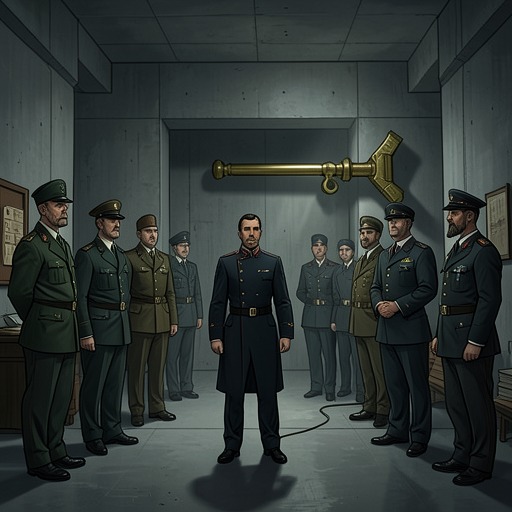
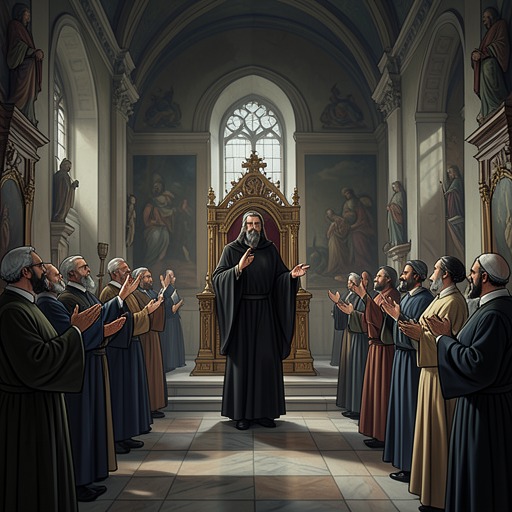
The poem unsettled Sima Zhao. He took its image as evidence that Cao Mao wished him the fate of Cao Fang, and concluded that the emperor had to be removed. In the summer of 260, Sima Zhao went to the palace. Cao Mao rose to greet him, while courtiers urged that Sima Zhao receive the highest honours. When Cao Mao did not join their acclamation, Sima Zhao challenged him, invoking his family’s three generations of service to Wei. He then confronted Cao Mao about the poem. The emperor had no answer, and Sima Zhao left the court under the pressure of the exchange.
The emperor’s attempt to act
In despair, Cao Mao withdrew to his private chambers and summoned Wang Shen, Wang Jing, and Wang Ye. He asked them to help him overthrow Sima Zhao, whom he believed intended to seize the throne. Wang Jing warned that Sima Zhao controlled the key appointments and that no one at court could effectively oppose him. Wang Shen and Wang Ye, fearing suspicion would fall on their families, reported the conversation to Sima Zhao. Wang Jing alone refused to betray the emperor.
Cao Mao nevertheless set out to confront Sima Zhao, accompanied by his guard and about three hundred servants. He took his sword and rode in the imperial carriage. Wang Jing wept and prostrated himself in an effort to stop him, warning that this small company could not fight Sima Zhao’s forces. Cao Mao continued out through the palace gate. The contrast was stark: the emperor asserted his authority with a personal retinue, while Jia Chong arrived armed and backed by thousands of troops.
Killing in the street
Cao Mao called on the armed men to recognize that he was the Son of Heaven and asked whether they intended to kill their rightful ruler. Jia Chong then ordered Cheng Ji to act. Cheng Ji asked whether Cao Mao should be killed or taken prisoner; Jia Chong answered that Sima Zhao’s order was to kill him. Cheng Ji attacked, and Cao Mao died beside his carriage. His guard fled. Wang Jing alone protested, and was seized and bound as a report was sent to Sima Zhao.
The sequence turns the earlier dispute about honours and the poem into a direct test of who commands the state. Cao Mao’s title and appeal to rightful rule do not protect him once Sima Zhao’s military authority is brought into the street. The episode makes visible the contradiction at the centre of Wei: an emperor remains in place, but the power to decide whether he lives or dies rests elsewhere.
Aftermath and political consequence
Sima Zhao came to the scene and presented himself as distressed by the killing. He then convened the court and asked how those responsible should be punished. Chen Tai, wearing mourning clothes, called for Jia Chong’s death as the minimum gesture of apology to the state. Sima Zhao asked whether a lesser punishment was possible. Chen Tai answered that the greater culprit was Cheng Ji, whom he proposed to execute and whose clan he would destroy.
Sima Zhao’s handling of the aftermath transfers responsibility downward. Cheng Ji protested that he had acted on orders conveyed by Jia Chong, but Sima Zhao ordered him silenced; Cheng Ji and his brother Cheng Zu were publicly executed, and their clan was killed. Wang Jing and his entire family were also executed. The account leaves the hierarchy of responsibility unmistakable: Cheng Ji bears the formal punishment, while the poem that follows says that the real criminal is known. Jia Chong is not made to answer for the command, and Sima Zhao retains his position.
After Cao Mao’s formal burial, Sima Zhao selected Cao Huan, a distant relative of Cao Cao, to succeed him. The appointment restored an emperor to the throne without undoing the Sima clan’s command of Wei. News of Cao Mao’s death reached Shu, where Jiang Wei argued that the regicide gave grounds for an invasion. In the larger story of a Han empire fractured among rival states, the episode shows imperial legitimacy reduced to a contested claim: Cao Mao invokes the authority of the throne, but Sima Zhao controls the court, the troops, the punishment, and ultimately the succession.
Narrative form and significance
The narrative places an ominous sign, a political confrontation, and a public killing in a tightly connected chain. The dragon in the well first functions as a reading of Cao Mao’s poem; the emperor’s private fear of Sima Zhao then becomes a disclosed plan, and that plan leads to the fatal street encounter. The image of a ruler trapped below ground thus anticipates the practical condition of the emperor himself: formally sovereign, yet unable to act without exposing the limits of his power.
The episode also fits the book’s blend of historical material, theatrical storytelling, and the novelist’s shaping of events. The larger work draws on events recorded in histories while using dramatic scenes and interpretive framing to give them narrative force. Here, the poem, the court’s divided loyalties, Wang Jing’s unsuccessful intervention, and the staged punishment after the killing build toward a pointed contrast between nominal sovereignty and effective control. Cao Mao’s death does not transfer power to a new ruling house immediately; instead, the succession of Cao Huan leaves Sima Zhao dominant and carries the struggle over Wei’s future forward.