Cao Zhi's seven-step poem episode
The Romance of the Three KingdomsCao Zhi's seven-step poem episode is the turning point in which a deadly confrontation between Cao Pi and Cao Zhi becomes a demonstration of poetic skill and an appeal to shared kinship. Cao Pi first threatens his brother with death, then makes him compose under strict conditions; Cao Zhi’s verses meet the challenge and alter its outcome, securing his life at the cost of his rank and position.
Background and Stakes
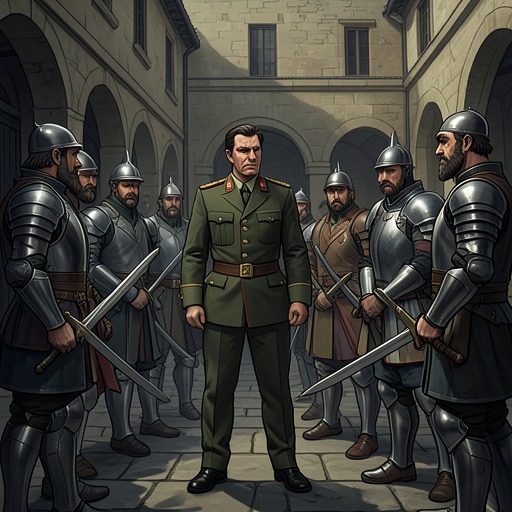
Cao Zhi, lord of Linzi, is known both for his poetry and for a dissolute life among two writer-drinkers, the Ding brothers. He initially refuses to answer his brother Cao Pi’s requests to come and pay homage. Cao Pi has Cao Zhi and the Ding brothers seized by an army of three thousand men. The Ding brothers are executed on Cao Pi’s orders, a decision that saddens many writers and thinkers of the time; Cao Zhi is brought before the new king.
The family conflict is sharpened by their mother’s intervention. Cao Pi wants to kill Cao Zhi, but she pleads for compassion. Rather than immediately carry out the threat, Cao Pi turns the danger into a test: Cao Zhi’s reputation as a poet will determine whether he can answer a challenge set by the brother who holds power over him.
The Seven-Step Challenge
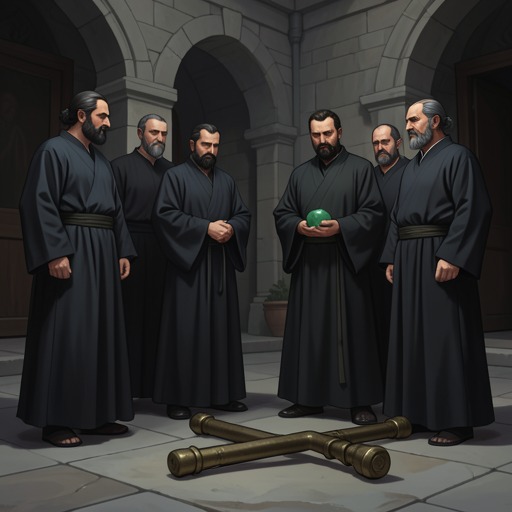
Cao Pi gives Cao Zhi seven paces in which to compose a poem based on a drawing on the wall. It shows two bulls, one of which has died after a fight and fallen into a well. Cao Pi expressly forbids a plain description of the scene, requiring a poem rather than a literal statement of what the picture depicts. The deadline makes the task a public test of Cao Zhi’s famed ability, while its subject places contest and defeat before the brothers in symbolic form.
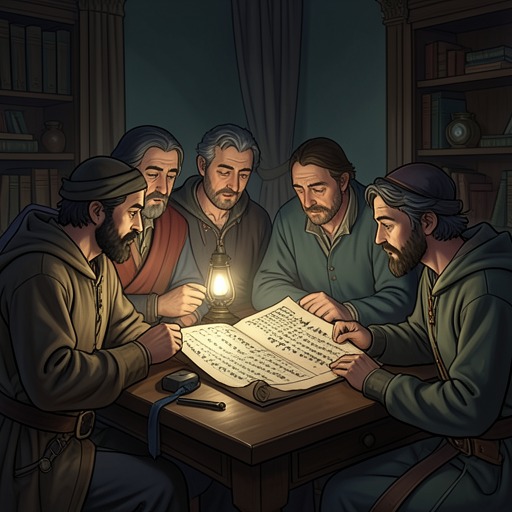
Cao Zhi takes the seven steps and recites a newly composed poem. The surviving passage begins with two beefsteaks moving along a lane, each with a curved-bone headdress. Its imagery transforms the challenge’s pictured contest into verse. The account then records that Cao Pi sets a similar task: Cao Zhi must capture the relationship between the brothers without using the word “brother.” The second test brings the family conflict into the poem’s subject directly, but still requires Cao Zhi to express it without naming it outright.
The Bean-Pot Poem and Reversal
Cao Zhi answers with the image of beans boiling over a fire made from their own stalk. A voice comes from the pot, asking why, since both come from the same root, one is cooking the other. The poem makes kinship its central fact through the material relation between bean and stalk: what should belong to one growth is turned against itself. It thus gives the threatened brother a way to address Cao Pi’s conduct through an image, rather than a direct accusation.
Cao Pi is moved to tears. The response reverses the scene’s immediate direction: the man who set a potentially fatal test is no longer simply judging the poet’s performance, but has been affected by what the poem expresses. Their mother pleads once more for Cao Zhi’s life, and Cao Pi agrees to spare him. The poems do not restore Cao Zhi’s former standing, but they make mercy possible where the initial threat had left death in view.
Outcome and Significance
Cao Pi demotes Cao Zhi, partly to show concern for his brother and partly in response to Cao Zhi’s wastrel lifestyle. Cao Zhi gratefully accepts the lower rank and leaves to take responsibility for governing Anxiang. His survival is therefore accompanied by a political reduction: the encounter ends the immediate danger between the brothers without returning Cao Zhi to his previous position.
The episode makes poetic composition an action within the political and familial struggle, not a pause from it. The seven paces impose a measurable limit; the picture supplies one subject, while the prohibition on direct description forces invention. The follow-up task narrows the constraint further, forbidding the very word that would state the relationship at the center of the conflict. Cao Zhi succeeds by letting the poems’ images carry what the instructions prevent him from saying plainly. The bean and its stalk compress the episode’s central contradiction into a shared origin turned into mutual harm, and Cao Pi’s tears mark the change from a death threat to a sentence of diminished status and life.
In the surrounding account, Cao Zhi’s demotion also closes the immediate contest among Cao Pi’s brothers: Cao Pi is now in charge without further sibling rivalry. The narrative then turns to his rule, saying he reshapes the laws according to his will and places increasing pressure on the Han emperor. The intimate test thus sits at a political hinge: the verse saves Cao Zhi, while Cao Pi’s resulting authority carries the story onward from family succession to the exercise of power over the Han court.