Emperor Shao
The Romance of the Three KingdomsEmperor Shao is the short-lived Han ruler whose rise and fall expose how little authority remained in the court when powerful commanders could decide who occupied the throne. Elevated as a child amid palace turmoil, he reigned for only a few months before Dong Zhuo deposed him in favor of his younger brother, Emperor Xian, and later ordered his death.
Rise amid palace turmoil
After the previous emperor died, Cao Cao nominated He Jin’s nephew, Prince Bian, as heir, with Yuan Shao supporting the choice. The prince was placed on the throne and declared Emperor Shao. But the succession did not settle the court’s divisions: Empress He protected the eunuchs, while Empress Dong attempted to reassert her influence and was eventually sent away from the capital.
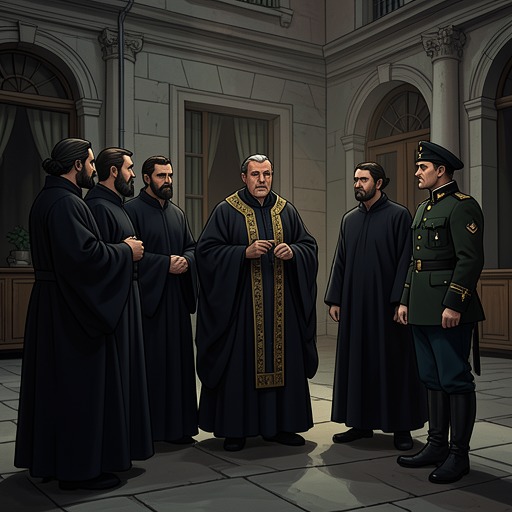
The struggle turned deadly when He Jin entered the inner court alone and was killed by the eunuchs’ supporters. In the ensuing confusion, Zhang Rang and Duan Gui took the young emperor and his brother, Prince Xie, out of the palace. The boys evaded the pursuing soldiers and reached a farmhouse, where the master recognized their identity after Prince Xie explained who they were. Their escape from the palace did not restore their security; it left them dependent on those who controlled the armed forces.
Deposition and confinement
Dong Zhuo used the disorder to recast the succession. In a proclamation read by Li Ru, he presented Prince Bian as unfit to rule and Prince Xie as virtuous, declaring that the younger prince should take the throne. One man opposed the plan and was killed. Emperor Shao was stripped of his position and made Prince of Hongnong; his mother and consort were confined with him in the Palace of Perpetual Harmony, where visitors were forbidden.
His reign had lasted from the fourth month to the beginning of the ninth month. The speed of the reversal makes the limits of his rule plain: his title could be bestowed and withdrawn by others, while the proclamation supplied a language of virtue and Heaven’s approval to justify a decision already enforced by power. Prince Xie became Emperor Xian, and Dong Zhuo took the office of prime minister without showing the customary respect to the child emperor.
Death and political significance
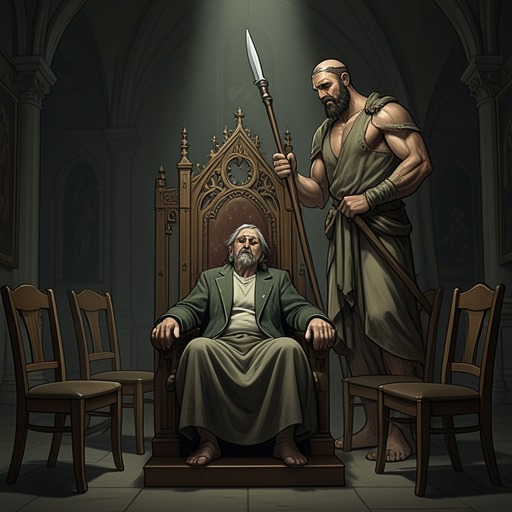
Words attributed to Emperor Shao reached Dong Zhuo, who ordered Li Ru to kill the former emperor, his mother, and his consort. Li Ru brought them poisoned wine while they were imprisoned. Knowing what awaited them, Emperor Shao sang a lament about a world in which Earth had become greater than Heaven and the sun and moon had changed places. The song gives his personal fate a political meaning: the order he had once represented had been overturned, and the former ruler had no power to resist the people who had displaced him.
Emperor Shao’s deposition is an early instance of the larger collapse of Han authority described in the novel. The dynasty would later be divided among rival leaders, with Cao Cao, Xuande, and Sun Quan emerging as founders of competing kingdoms. In that larger account, the young emperor’s brief reign marks not the restoration of stable succession but the court’s subordination to military force.