Guan Yu's Deification
The Romance of the Three KingdomsGuan Yu’s deification transforms the aftermath of his execution from a military defeat into a story of spiritual judgment, continuing protection, and divine recognition. His ghost first seeks redress for his death, but Pujing directs him toward the consequences of his own actions; thereafter Guan Yu returns as a protector of ordinary people, and the narrative’s survivors interpret his enduring power through loyalty, vows, and divine status.
Death and the First Appearance
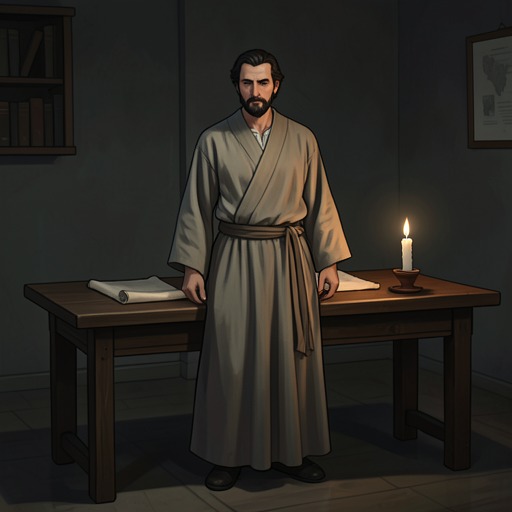
After Guan Yu is executed, his spirit appears at Jade Spring Mountain, where Pujing lives in a simple dwelling with one novice. Pujing had formerly served as abbot of a state temple near the Si River gateway before wandering to the mountain, whose natural setting had astonished him. The account places Guan Yu’s first posthumous appearance in this secluded religious space, away from the campaigns and political calculations that led to his death.
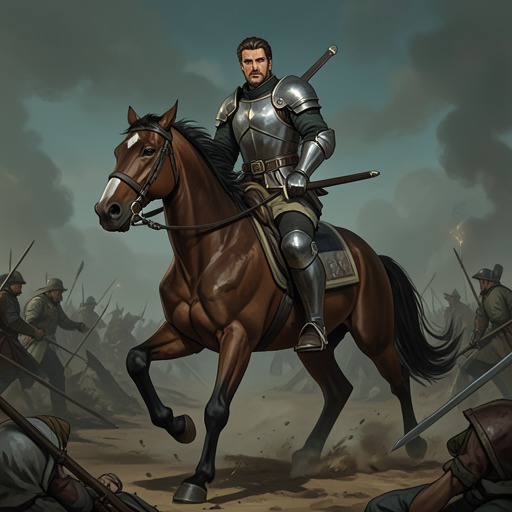
On the night Guan Yu dies, Pujing hears a voice crying, “Give me back my head!” He sees a mounted figure carrying the Green Dragon, accompanied by two other men: one fair-complexioned general and another dark-complexioned figure with imposing whiskers. Pujing recognizes the visitor as Guan Yu and performs a protective ritual. Guan Yu then approaches him and asks for guidance, saying that he has been murdered and is in distress. The ghost’s return is therefore not initially presented as settled divinity: he is a dead warrior seeking an answer to an unresolved grievance.
Pujing’s Teaching and the Turn to Protection
Pujing answers Guan Yu by directing him away from vengeance and toward karma. The past, he says, cannot be changed; the consequences of Guan Yu’s actions will shape what follows. When Guan Yu cries out for his own head, Pujing asks him to consider the many people he killed, including the six guards at the passes, and asks who will find their heads. The exchange makes Guan Yu’s supernatural appearance a reckoning as well as a visitation: the dead general is reminded that his own losses do not erase the suffering he caused.
Guan Yu bows in respect for the Buddhist teaching and vanishes. Yet this disappearance does not end his presence in the region. He often returns to Jade Spring Mountain and performs deeds that protect local ordinary people. The people, moved by his virtue, build a temple on the mountain. His transformation thus takes a communal form: protection is remembered and answered with a place of worship, connecting a wandering spirit to an enduring local devotion.
A Ghost in the Victors’ Feast
Guan Yu’s supernatural power also enters the political aftermath of his defeat. With him removed, Sun Quan stands to gain complete control of the Jingzhou region. Sun Quan holds a feast to celebrate the campaign’s main victory and honors Lü Meng by offering him the cup of honor. At that moment Lü Meng abruptly throws the cup down, seizes Sun Quan, and speaks as Guan Yu, declaring that the ambush has avenged his death. The scene brings the dead commander into the center of the victors’ ceremony, turning a public celebration into an encounter with the man whose death made the victory possible.
The assembled people bow in fear. Lü Meng then falls dead, and blood flows from his mouth and nose. After the funeral and the first confusion have passed, Sun Quan remains troubled by his decision to have Guan Yu executed. The haunting therefore changes the emotional meaning of Sun Quan’s victory: control of the region has been won, but the celebrant cannot treat Guan Yu’s death as a settled matter. The narrative presents the possession and Lü Meng’s death as evidence of the ghost’s continuing reach, while making Sun Quan’s unease a political consequence of the supernatural episode.
Loyalty, Vows, and Divine Status
Guan Yu’s posthumous identity is not confined to Jade Spring Mountain or to Sun Quan’s feast. The account says that both Cao Cao and Xuande receive visits from his ghost, and that Cao Cao collapses. Later, at Baidi, as Xuande lies ill and alone, he sees Guan Yu and Zhang Fei. Xuande initially believes they are alive, but Guan Yu tells him they are ghosts and says that the Supreme Lord has made the brothers gods because they remained faithful to their vow in life. He also tells Xuande that the three will soon be reunited.
Xuande wakes and finds that the visitors have disappeared. The encounter confirms Guan Yu’s divinity in the terms of the story itself: the oath between the brothers has been recognized by a higher power, and their loyalty has carried them beyond death. Guan Yu’s first ghostly cry had focused on a personal grievance; his later appearances, the temple built by local people, and his reunion with his sworn brothers enlarge that presence into protection, worship, and divine fellowship. The arc makes his execution a turning point rather than an ending: the defeated commander persists in memory and story as both a figure subject to moral reckoning and a god honored for fidelity.