Huang Gai
The Romance of the Three KingdomsHuang Gai’s apparent betrayal is the hinge of the stratagem that turns the battle at Red Cliffs against Cao Cao: he consents to be flogged, then leads fireboats toward the enemy fleet under the guise of bringing supplies. The ruse makes his own body part of the message, and his survival depends on rescue from the burning, smoke-filled river.
Identity and Role
Huang Gai is one of Sun Quan’s important commanders and a military officer willing to undertake a dangerous exploit against Cao Cao. The strategy calls for a credible defector, not merely a false report: Cao Cao has spies in the southern camp, and the supposed desertion needs a motive they can believe. Huang Gai supplies that motive by agreeing to endure a public, apparently genuine punishment.
His contribution is therefore both tactical and theatrical. The assault depends on fire, but before the boats can approach, Cao Cao must be persuaded to welcome them. Huang Gai’s reputation as a senior commander and the visible evidence of his grievance make the deception persuasive; the injury he sustains is not a decorative detail but part of the operation’s credibility.
The Feigned Punishment
Huang Gai secretly approaches Zhou Yu and advocates using fire against Cao Cao’s fleet. Zhou Yu asks whether he is prepared to risk himself for the plan. Huang Gai agrees to do whatever is necessary, including appearing to desert to the enemy. Because that claim would be difficult to credit without a serious grievance, Zhou Yu arranges a fabricated offense and plans to punish him publicly.
At a council of war the next day, Huang Gai challenges Zhou Yu’s proposal to store provisions for three months. He argues for attacking at once, and even suggests surrender as the alternative. His outburst gives Zhou Yu a public reason to punish him. The officers kneel and plead for mercy; Zhou Yu relents only enough to replace execution with a hundred lashes. Huang Gai is left with deep cuts across his back and can barely walk. The other officers are shocked and offer help, while Zhou Yu alone knows that the punishment is part of the deception.
The performance also tests how knowledge is managed inside the southern camp. Lu Su is distressed that no one intervened effectively and asks Kong Ming why he stood by. Kong Ming explains that the flogging must look real to the enemy spies Cai Zhong and Cai He, who are expected to report Huang Gai’s grievance to Cao Cao. He asks Lu Su to keep his understanding from Zhou Yu. When Lu Su later hears the explanation directly from Zhou Yu, he keeps his counsel and recognizes the sophistication of Kong Ming’s reading of the plot.
The Defection Letter and the Assault
While Huang Gai recovers in his tent, Kan Ze visits and recognizes that the punishment is a stratagem. Huang Gai asks him to carry a letter offering to defect to Cao Cao, and Kan Ze agrees. The letter extends the deception beyond the staged injury: the apparent grievance acquires a written offer, while Huang Gai’s intended role in the attack remains concealed from the enemy.
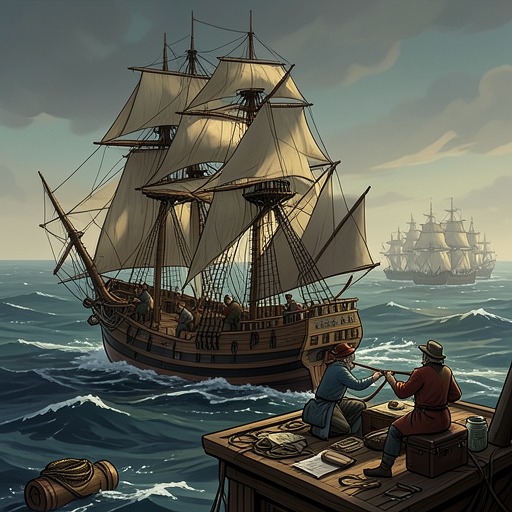
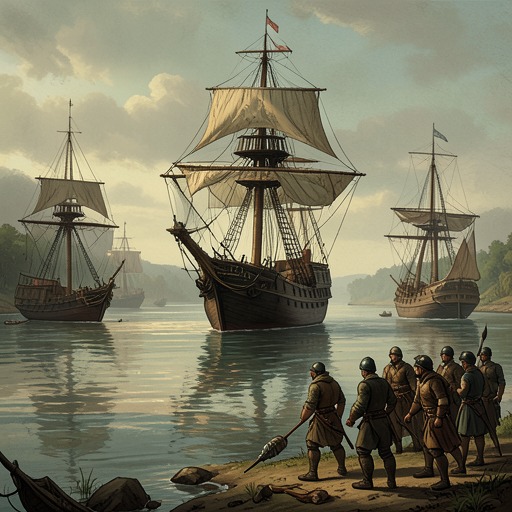
When the attack begins, Huang Gai leads the fleet toward the Red Cliffs in full armor. His vessel displays a large banner identifying him as the vanguard. Cao Cao sees the approaching ship and takes its appearance as confirmation that Huang Gai has truly changed sides. Cheng Yu warns that it is a trick: the boats ride high rather than low in the water as loaded supply vessels would, and the wind is carrying them rapidly toward Cao Cao’s fleet. Cao Cao realizes the danger, but the warning comes too late to stop the approach.
Huang Gai raises his sword to signal the fire attack. Twenty fireboats, driven by the wind, crash into Cao Cao’s chained ships; with the vessels unable to escape one another, flames race from ship to ship. Catapults from the southern shore add to the destruction. As the fleet is consumed, Huang Gai spots Cao Cao and pursues him in a skiff. Zhang Liao helps Cao Cao escape in a small boat and fires an arrow at Huang Gai, striking him in the armpit. Huang Gai falls into the river.
Rescue and Significance
Huang Gai survives because Han Dang hears him calling for help as the attack continues. Han Dang has him pulled from the water, removes the arrow shaft with his teeth, digs out the arrowhead with his sword, and binds the wound with his cloak. He sends Huang Gai back to camp, where he recovers. The rescue completes the reversal: the commander who seemed to have abandoned his own side is restored to it after leading the operation that devastates Cao Cao’s navy.
The episode makes deception costly in a literal, visible way. Huang Gai’s wounded back establishes the credibility of the false defection; his banner helps carry that credibility to Cao Cao; and his arrow wound exposes the danger once the disguise gives way to open attack. The stratagem succeeds not through disguise alone, but through a sequence in which an apparent quarrel, a written offer, the enemy’s interpretation, and the fireship assault reinforce one another. Huang Gai’s survival, secured amid the battle by Han Dang, closes the personal arc of that risky performance without diminishing its cost.