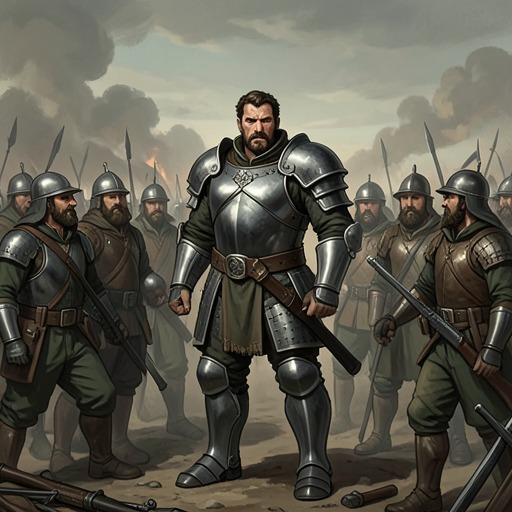
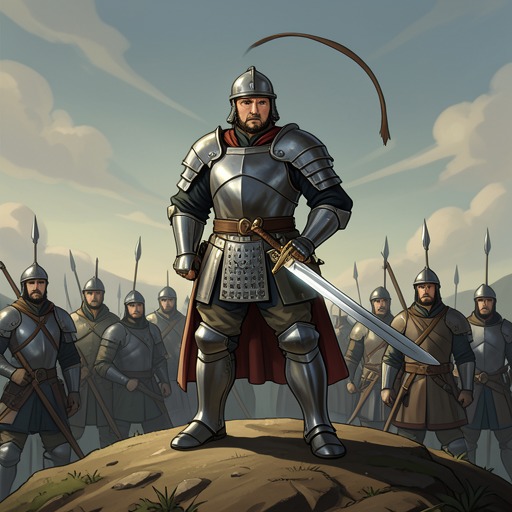
Lü Bu's Capture of Xuzhou
The Romance of the Three KingdomsLü Bu's Capture of Xuzhou is a sudden reversal in which Zhang Fei’s broken promise and abuse of Cao Bao open the city to a night attack. Lü Bu takes Xuzhou with five hundred horsemen while Zhang Fei is drunk; Zhang Fei escapes, but Xuande’s family remains behind in the captured city. The episode makes the consequences of failed self-command immediate: a feast becomes the breach through which an army enters, and the commander who survives the loss nearly turns his remorse against himself.
Background: a promise under strain
The crisis follows a brief military success. In a clash between Yuan Shu, who leads one hundred thousand men, and Xuande, whose army is much smaller, Yuan Shu is forced to retreat. But the apparent relief does not restore security in Xuzhou. Zhang Fei has sworn that he will no longer drink or beat anyone, and Xuande does not trust the promise enough to leave him without supervision: he places commander Chen Deng in charge and tells him to keep watch over Zhang Fei.
The arrangement underlines the danger already present in the household of command. Zhang Fei’s pledge is not a private matter, because his conduct can compromise the city and the people in Xuande’s care. Yet the attempt to manage that risk depends on Zhang Fei keeping his word at precisely the moment when he chooses to test it.
The feast and Cao Bao’s message
Zhang Fei holds a feast, presenting it as his final day of drinking, and insists that those present accept his toast. Cao Bao says he has never drunk alcohol. Zhang Fei mocks him as an improper soldier and forces him to drink. When Zhang Fei comes around again, now very drunk, he offers Cao Bao another toast. Cao Bao refuses, and Zhang Fei demands to know why he accepted before but will not do so now.
When Cao Bao continues to refuse, Zhang Fei treats the refusal as disobedience to his command. Chen Deng rises to remind him that this is exactly what Xuande had warned about. Zhang Fei dismisses Chen Deng’s intervention as none of his bureaucratic concern. Cao Bao then pleads for mercy on account of his son-in-law, Lü Bu. That appeal does not calm Zhang Fei: the mention of his enemy enrages him further, and he beats Cao Bao fifty times before the others at the feast manage to quiet matters.
The assault changes the political balance inside the city. Cao Bao now truly hates Zhang Fei, and he sends Lü Bu a message that Xuzhou can be taken because Zhang Fei is drunk. The capture is thus not simply a surprise attack: the opening is supplied by an injured subordinate with both a grievance and knowledge of the commander’s condition.
The night capture and its cost
Lü Bu acts on the message and rides through the night with five hundred horsemen. He takes Xuzhou easily while Zhang Fei is drunk, forcing Zhang Fei to flee for his life. The city’s defenses and command structure have failed at once: the warning has reached the attacker, the commander is incapacitated, and the city changes hands before Xuande can protect those left inside.
The most shameful consequence for Zhang Fei is not merely the loss of Xuzhou. In escaping, he abandons Xuande’s family to their fate. Lü Bu’s men round them up and lock them away. The capture therefore carries the military reversal into the personal sphere, making the family’s confinement the direct cost of Zhang Fei’s failure to keep watch over himself and the city.
Remorse and narrative significance
Zhang Fei reaches Xuande and Guan Yu and must tell them what happened. Guan Yu asks where their sisters-in-law are; Zhang Fei can only answer that they are still in Xuzhou. Guan Yu rebukes him for ignoring the warnings given before they left and asks what they can do now that the women are trapped there. The exchange makes the failure impossible to disguise: the danger Xuande anticipated has become the loss Guan Yu must confront.
Full of remorse, Zhang Fei draws his sword and is about to kill himself. The episode ends on the brink of that act, turning the capture into a crisis of responsibility as well as a change of possession. Its chain of causes is sharply drawn: Zhang Fei breaks his pledge, abuses Cao Bao, ignores Chen Deng’s warning, and gives Lü Bu both an opportunity and a signal. In the novel’s larger pattern of battles and reversals, this domestic failure demonstrates how a city can fall not only through a contest of armies but through a commander's loss of discipline and the grievance it creates.