Lü Meng
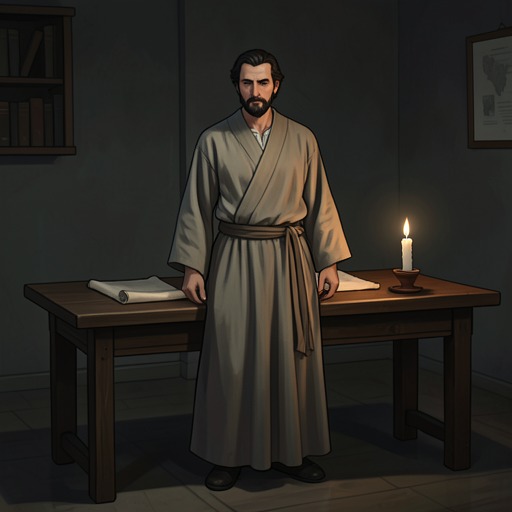
The Romance of the Three KingdomsLü Meng is a commander serving Sun Quan whose role in the struggle for Jingzhou culminates in a carefully planned capture of Guan Yu. His campaign combines practical political calculation with an appeal to divination, and its decisive success proves costly: after Guan Yu is executed, the narrative represents his spirit as taking possession of Lü Meng, who collapses and dies during the victory celebration.
Position in the Three Kingdoms conflict
The novel places Lü Meng in the contest among Liu Bei, Cao Cao, and Sun Quan, the three leaders whose separate kingdoms emerge from the disintegration of Han China. Jingzhou is a contested region at the heart of this struggle. Guan Yu’s defeat there removes a major obstacle to Sun Quan’s control, while also setting the stage for the revenge that follows.
Lü Meng’s part in the campaign is not limited to battlefield command. He understands that Guan Yu’s army depends on its commanders and their families, and he uses the circumstances of the occupation to affect that network of loyalties. This approach makes the capture of territory inseparable from the handling of the people whose allegiance sustains it.
The fall of Guan Yu’s position
As Cao Cao’s forces advance toward Fancheng and Lü Meng takes Jingzhou, Guan Yu refuses to accept that the region has fallen. When his men report the loss, he dismisses the news, reasoning that Lü Meng is ill and that the young Lu Xun poses no serious danger. His denial compounds the military crisis: he rides out to face Xu Huang despite Guan Ping’s warning that he is still too weak.
Lü Meng orders Guan Yu’s family and the families of his commanders to be treated respectfully and cared for. When Guan Yu sends a letter seeking an alliance, the families gather around the messenger to ask after their loved ones and send messages back. Lü Meng politely rejects Guan Yu’s appeal, but the reports of the families’ safety have an unintended effect on the opposing army: its soldiers begin to question why they should continue fighting. As Guan Yu marches toward Jingzhou, men slip away when opportunities arise; he loses skirmishes and is eventually driven into a valley, where local troops desert him. After Guan Ping and Liao Hua break through to rescue him, the remnant retreats to Maicheng and seeks help from Liu Feng and Meng Da at Shangyong.
Encirclement and capture
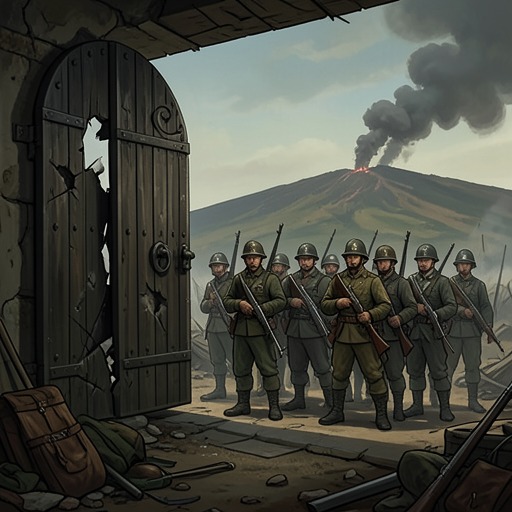
Sun Quan asks for divination, and Lü Fan interprets the resulting hexagram as predicting that the enemy will flee far away. Lü Meng turns that prediction into a practical plan: Guan Yu may have wings, he says, but Wu has nets. He advises Sun Quan to leave the north side of Maicheng open so that Guan Yu will try to escape through it, then place two ambushes along the narrow country road beyond the gate.
The traps are assigned to Zhu Ran and Pan Zhang, each with five thousand elite troops, and their positioning is again confirmed by a hexagram predicting flight to the northwest. At Maicheng, Guan Yu has only about three hundred men, food is running out, and soldiers continue to desert at night. When no relief arrives from Shangyong, he accepts that flight is the only option. Wang Fu warns that the mountain road north is ideal for an ambush, but Guan Yu chooses it anyway, leaving one hundred men with Wang Fu to hold the town while he leads the escape party out after dark.
Guan Yu, Guan Ping, and Zhao Lei initially travel north without being challenged. Zhu Ran’s first attack then drives them onward, but further troops block the route. Guan Yu turns toward a minor road leading to Linju, while Zhu Ran overwhelms the rearguard and pursues. Lü Meng’s plan has converted the only apparent opening in the siege into a route controlled by successive ambushes.
Victory and its cost
With Guan Yu out of the way, nothing stands between Sun Quan and control of the Jingzhou region. Sun Quan celebrates the campaign’s victory and honors Lü Meng by presenting him with the cup of honor. The scene abruptly reverses: Lü Meng throws the cup down, seizes Sun Quan, and speaks as Guan Yu, accusing Sun Quan of having caused his death. Those present bow in fear, and Lü Meng falls to the ground and dies.
After the funeral, Sun Quan remains troubled by the execution. Zhang Zhao reminds him that the oath sworn in the Peach Orchard binds Liu Bei to seek revenge, and that Liu Bei now commands a large army in Shu. Thus Lü Meng’s achievement secures a strategic prize but intensifies the danger to Wu: the conquest of Jingzhou becomes a cause of renewed conflict, while the story’s supernatural episode presents Guan Yu’s vengeance as already reaching into the victors’ celebration.
Character and narrative significance
Lü Meng’s conduct in these episodes joins military stratagem to political awareness. He recognizes that respect for the captured commanders’ families can loosen Guan Yu’s army from within, even as the refusal of Guan Yu’s proposed alliance closes off reconciliation. His use of the open northern route similarly turns an opponent’s constrained choice into the mechanism of capture.
The narrative places these calculated successes beside the supernatural collapse at the feast. Lü Meng’s victory is therefore not presented as a clean resolution: it changes who controls Jingzhou, but it cannot contain the consequences of Guan Yu’s death. The abrupt shift from honored commander to the vessel of his enemy’s accusing spirit makes the campaign’s triumph inseparable from the revenge and political instability it unleashes.