Ma Su
The Romance of the Three KingdomsMa Su is a Shu commander whose knowledge of military writing proves no substitute for battlefield experience. Sent to defend Jieting during Kong Ming’s first Northern Expedition, he rejects the practical advice of Wang Ping and takes a position on a hill, leaving the road exposed. The resulting defeat costs Shu the city and men, and Kong Ming orders Ma Su executed. His story turns on the gap between studying strategy and applying it under pressure—and on the severe consequences when a commander’s judgment endangers a campaign.
Identity and Appointment
Ma Su enters the account during Kong Ming’s campaign against Wei, following the death of Meng Da. The changed circumstances make Jieting a critical defensive position: Kong Ming sends troops there to hold against Sima Yi, while arranging guards at other passes and backup in case the position fails. Ma Su volunteers for the assignment despite the narrator’s qualification that his knowledge comes mostly from books on war rather than practical command. Kong Ming accepts his offer but pairs him with Wang Ping, whose role is to oversee his actions.
The appointment places Ma Su at the center of a larger plan rather than in an isolated test of personal skill. Kong Ming has moved his main force forward, with Jiang Wei leading the vanguard, and the defense of Jieting is meant to protect the campaign’s position as Wei responds. Ma Su’s responsibility is therefore concrete: hold a strategically important city and road against an approaching army. The distinction between his formal command and Wang Ping’s supervisory presence foreshadows the disagreement that will decide the defense.
The Dispute over Jieting
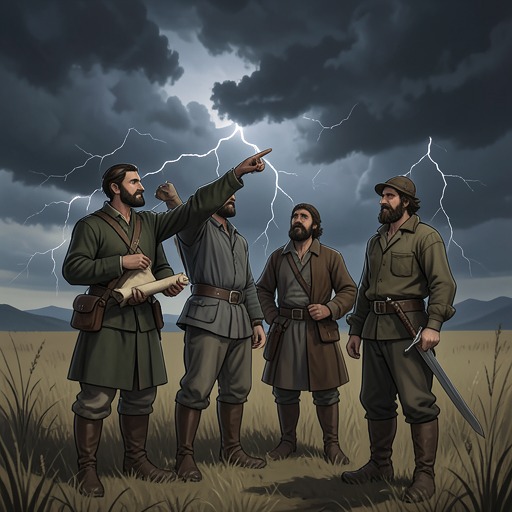
On reaching Jieting, Ma Su chooses to station his troops on a hill, believing its elevation will give him a useful vantage over the main road. Wang Ping urges him to defend the road itself. Ma Su dismisses this advice, citing passages from Sun Zi’s Art of War; the account presents that learning as largely theoretical, not as evidence of tested military judgment. He goes so far as to insult Wang Ping by comparing the older warrior to a woman.
Ma Su eventually allows Wang Ping to take a small detachment to protect the road, but he does not change his own deployment on the hill. Wang Ping sends Kong Ming an urgent report describing the positions they have taken. That message makes the disagreement visible to the commander directing the larger campaign, but it does not resolve the weakness in Ma Su’s arrangement before Sima Yi advances.
The Fall of the Position
Sima Yi is encouraged to attack when he learns that the inexperienced Ma Su is in command. His forces move against Jieting and cut off the troops on the hill. Wang Ping attempts to come to Ma Su’s assistance but is forced back. With no water on the hill, Ma Su’s soldiers become desperate, and men begin to desert as their position deteriorates.
Ma Su has no remaining option but to lead his troops down and attempt to fight their way out. Zhang He pursues them and nearly overwhelms them before a rescue force led by Wei Yan arrives. Wei Yan is then caught in an ambush; Wang Ping rescues him at the last moment, but the Shu forces suffer severe losses. Sima Yi captures the city, converting Ma Su’s flawed deployment into a wider setback for the campaign.
The attempt to recover Jieting compounds the defeat. The Shu commanders regroup at Lieliu, where Gao Xiang joins them after riding out to assist. They decide to attack the Wei camp at night, hoping to retake the city, but the force finds the town apparently empty and is surprised upon entering. Meanwhile, Guo Huai and Cao Zhen advance on Lieliu, acting against Sima Yi’s authority. After another damaging battle, Wang Ping, Wei Yan, and Ma Su retreat toward Yangping Pass, fearing that it too may fall. The lost position thus draws Shu into further fighting and retreat rather than being quickly restored.
Execution and Narrative Significance
After taking stock of the losses, Kong Ming is relieved that all his commanders have survived, but he regards Ma Su’s foolishness as requiring punishment. He orders Ma Su’s execution and weeps as it is carried out, recognizing that the failure has cost the men and state of Shu. In that moment, Kong Ming recalls that Xuande had warned him not to trust Ma Su. He nonetheless leads the official mourning and burial rites, because Ma Su had been like a son to him.
Kong Ming also submits a formal memorial to the second ruler, asking to be demoted for his own failures. Though the ruler objects, he is advised that custom and honor require the demotion. Kong Ming loses military titles but remains acting prime minister, so the episode makes accountability extend beyond the executed commander. Ma Su’s ending is therefore both personal and political: affection does not spare him the consequence of his decision, while his patron’s mourning does not undo the judgment that the defeat demands. His reliance on texts, refusal to heed experienced counsel, and fatal choice of terrain define the contrast at the heart of the episode: strategic language can inform command, but it cannot replace sound decisions about the ground, the road, and the needs of the troops.