Pang Tong
The Romance of the Three KingdomsPang Tong, known as Young Phoenix, is a strategist whose understanding of military vulnerability helps make Cao Cao’s chained fleet possible—and therefore helps prepare it for defeat. Later, serving Xuande alongside Kong Ming, he argues for seizing territory in extraordinary times, but presses the advance into Shu despite warnings and a troubling dream. His death at Fallen Phoenix Valley turns the name he bears into an omen and leaves Xuande and Kong Ming grieving a gifted ally whose confidence has outpaced his caution.
Identity and Strategic Reputation
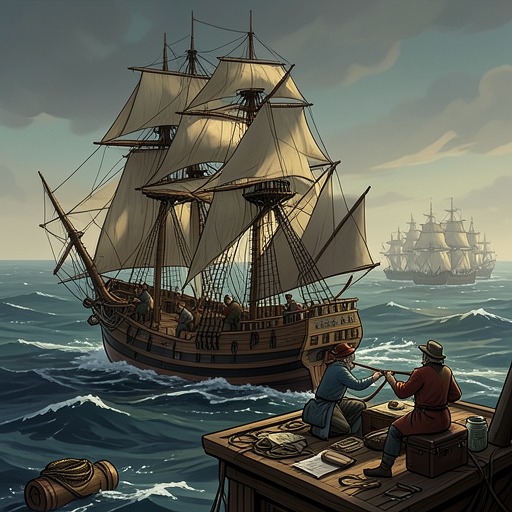
Pang Tong is introduced as an exile from the north and a strategist known by the name Young Phoenix. Before joining Xuande’s service, he has already offered counsel to Lu Su, who passes his thinking to Zhou Yu. Pang Tong recognizes a structural problem in Cao Cao’s fleet: if each ship remains independent, fire spreading to one will allow the others to withdraw. His answer is to link the ships, making escape from a fire much harder. This is not merely a clever device; it converts the fleet’s own organization into a vulnerability.
The plan’s effect depends on Cao Cao accepting the same practical logic from an apparent adviser. When Pang Tong reaches Cao Cao’s camp, he presents the linked ships as a remedy for the discomfort of soldiers unaccustomed to the river’s movement. He proposes grouping thirty to fifty ships and joining them with broad walkways. Cao Cao welcomes the advice, and orders for chains and fixtures follow within hours. The episode places Pang Tong’s intelligence in the realm of applied military design: he persuades an opponent to make a tactical arrangement that can later be exploited.
From the Northern Camp to Xuande’s Service
Pang Tong’s route to Cao Cao’s camp begins with Jiang Gan’s second attempt to draw useful information from Zhou Yu. Zhou Yu stages anger over Jiang Gan’s earlier visit and sends him to stay at a monastery in the Western Hills. There, Jiang meets Pang Tong, who is reading Sun Zi’s Art of War. Jiang recognizes him as Young Phoenix and invites him to serve Cao Cao, promising to make the introduction. Pang Tong agrees to leave quickly, and the two cross the river in Jiang’s concealed boat.
That apparent defection also gives Pang Tong the opportunity to recommend the chained-fleet arrangement directly to Cao Cao. His advice serves the strategy already developed by Zhou Yu and grounded in Pang Tong’s own observation. The episode makes his role deliberately double-edged: to Cao Cao he appears to be offering useful assistance, while the reader knows that the advice advances an enemy plan.
After Zhou Yu’s death, Pang Tong appears in dishevelled Daoist clothing and challenges Kong Ming for coming to Wu as a mourner after, in Pang Tong’s view, having driven Zhou Yu to his death. The confrontation gives way to recognition: Pang Tong is Kong Ming’s old friend. Kong Ming gives him a letter recommending that he offer his services to Xuande if Wu fails to value his abilities. Sun Quan, however, is put off by Pang Tong’s appearance and by a remark that seems dismissive of Zhou Yu.
Pang Tong then serves as magistrate for a hundred days. When the accumulated cases are brought before him, he resolves them in half a day to general approval, impressing even Zhang Fei. His record forces Xuande to recognize that judging him by appearance nearly cost the state a capable adviser. Pang Tong is brought back to Jingzhou, appointed Kong Ming’s assistant, and given a high military role; the two strategists begin preparing together for the next campaign against the north.
Counsel, Power, and the Shu Campaign
Pang Tong’s advice to Xuande is shaped by the crisis of entering Shu. When Xuande hesitates to attack Liu Zhang, his kinsman, Pang Tong distinguishes ordinary moral choices from the demands of extraordinary times. He argues that power may be seized and then maintained with integrity, and that Liu Zhang could be given a region to govern under Xuande. If Xuande declines to act, Pang Tong warns, someone else will take the territory. His counsel helps settle Xuande’s doubts and contributes to the decision to march with fifty thousand men, leaving Kong Ming in Jingzhou with Guan Yu, Zhang Fei, and Zhao Zilong.
The first meeting with Liu Zhang at Fucheng tests that argument. After the joint banquet, Pang Tong proposes a plan to kill Liu Zhang at a second banquet: a hundred men would be hidden around the wall and would attack at Xuande’s signal, such as the dropping of a cup. Pang Tong’s intended result is a clear route to Chengdu. Xuande refuses, arguing that Heaven and the people would not forgive the murder of his kinsman. Fa Zheng and Pang Tong continue to urge action, presenting the seizure of power as necessary before Zhang Lu can take the land. The exchange makes the tension in Pang Tong’s counsel plain: he sees opportunity and strategic necessity, while Xuande fears the moral cost of using a treacherous method against a relative.
Pang Tong’s later judgment is less secure. After Peng Yang warns of danger at the lowland camp, Kong Ming sends a separate message about the same astrological signs. Pang Tong takes this as an attempt to belittle his achievements. He tells Xuande that the signs concern the conquest of Shu, not a coming disaster for Xuande, and that the warning instead foretold Ling Bao’s death. He therefore urges an immediate attack. When Xuande recounts a disturbing dream in which a demon struck his right arm with a club, Pang Tong dismisses the concern and attributes Kong Ming’s warning to professional jealousy. His confidence converts counsel into pressure: rather than weighing the warnings, he treats them as obstacles to the campaign and to his own standing.
Fallen Phoenix Valley and Aftermath
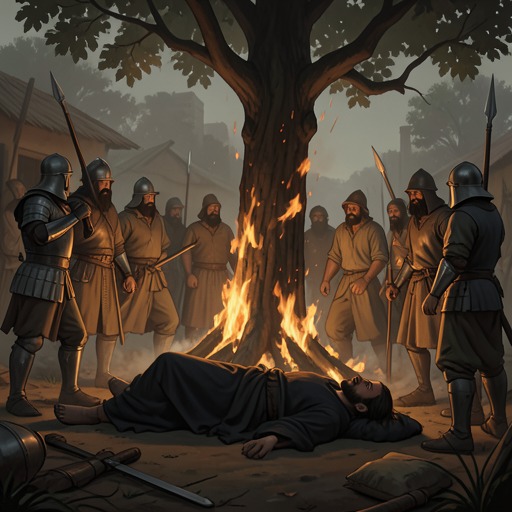
On the way to battle, Xuande notices that Pang Tong’s horse is difficult to control and exchanges it for his own grey horse. The Shu commanders, already warned of the attack, have prepared an ambush. Zheng Ren’s men see the grey horse and identify it as Xuande’s, making its rider the apparent target. Pang Tong enters a narrow valley and asks its name. When told it is Fallen Phoenix Valley, he recognizes the ominous fit with his Daoist name, Young Phoenix, and orders a retreat. The warning comes too late: the ambush falls on him and his men, and Pang Tong dies at thirty-six.
His death is registered in different ways by the survivors. Xuande hears the news after the fighting and breaks down in tears, facing west. With Pang Tong gone, the decision is made to summon Kong Ming from Jingzhou; Xuande forbids further attempts to provoke battle until he arrives. Kong Ming, still in Jingzhou, sees a huge star fall and understands that Pang Tong has died before the message reaches him. He too grieves. The fallen star extends the story’s chain of signs, but it does not undo the earlier warning: Pang Tong had seen the danger and recognized the valley’s name, only after dismissing the warnings that might have kept him from entering it.
Narrative Role
Pang Tong’s arc sets strategic ingenuity beside fallibility. At the river, he identifies a weakness in Cao Cao’s fleet and gives the enemy advice that can be turned against him. In Xuande’s service, he contributes a forceful argument for territorial expansion and works beside Kong Ming, but his need to press the campaign leads him to discount both a warning from his colleague and Xuande’s own apprehension. The same confidence that makes his counsel decisive becomes dangerous when it shuts out contrary evidence.
The name Young Phoenix also binds his death to the story’s language of portent. At Fallen Phoenix Valley, the realization comes in a moment of recognition, immediately followed by an attempt to withdraw. His death therefore marks both the end of a gifted strategist’s work and a break in Xuande’s campaign: the loss calls Kong Ming back from Jingzhou and leaves the allied leadership to continue without the man who had helped shape its plans.