Political decay of Shu Han
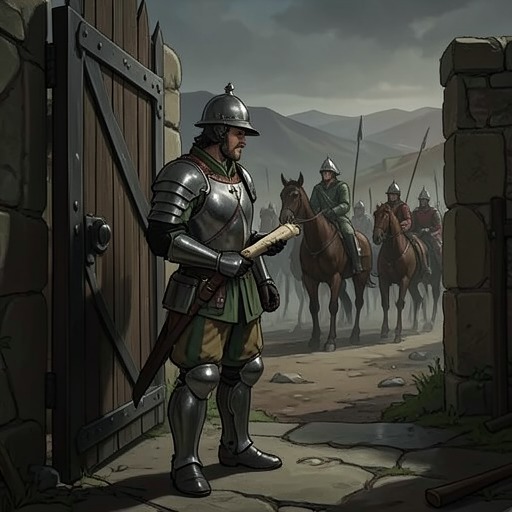
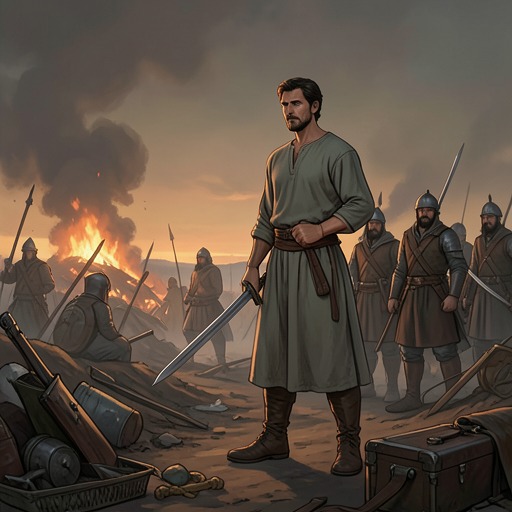
The Romance of the Three KingdomsPolitical decay of Shu Han is presented as more than a weakening of the state: it is the erosion of the institutions and judgments needed to preserve it. A court burdened by corruption and luxury neglects the people, while the eunuch Huang Hao obstructs military warnings and undermines Jiang Wei. As Wei’s threat grows, decisions at the center repeatedly frustrate the defense of the kingdom, making political disorder and military vulnerability inseparable.
Origins and Political Inheritance
The novel places the later decay of Shu within a wider cycle of division and reunification. Its account of the fall of the Han traces imperial collapse to failures of government, including rulers who favored eunuchs over capable ministers and a court that allowed the Ten Imperial Attendants to dominate. That earlier history supplies a pointed precedent for the later Shu court: an influential eunuch can become a symptom and an instrument of a much broader political failure.
The political stakes of Shu’s founding were framed in terms of legitimate rule. When Xuande sought Kong Ming’s counsel, Kong Ming described Cao Cao as powerful in part because he controlled the emperor, while identifying Sun Quan as a potential ally and Jingzhou as essential to the future. Later, after Xuande’s military successes, Kong Ming urged him to accept the imperial title, arguing that he could rule justly and destroy the traitor. The contrast between that founding claim of benevolent, legitimate government and the later court’s reported corruption gives Shu’s decline its dynastic weight: the state loses not only strength, but the standard by which it had justified its rule.
Public Hardship and Court Corruption
The account of late Shu describes broad deterioration in the conditions of government. After Sun Xiu of Wu sends an envoy to learn about Shu, the report returned to him identifies eunuch corruption, dishonesty in the court, and poverty among the people. The envoy compares the kingdom to sparrows unaware that the building above them is about to burn. The image captures a dangerous separation between the court’s apparent calm and the risks accumulating beyond its immediate concern.
A formal petition by Qiao Zhou makes the political criticism more specific. He condemns repeated campaigns against Wei as evidence of a weak kingdom lacking wisdom, and argues that Shu’s court has become saturated with wealth and luxury, encouraging vice and corruption. Huang Hao, he says, disregards proper processes of rule and exploits his position for personal gain. Jiang Wei reads the essay and responds with anger, throwing it aside rather than reconsidering his plans. The passage therefore presents both institutional criticism and a failure to act on it: the warning reaches a senior military figure, but does not redirect policy.
The later petition of Lü Kai, during Sun Hao’s rule in Wu, retrospectively describes the collapse of both the Xuande and Cao Cao lineages through abuse. Lü Kai lists poverty despite the absence of disaster, an empty treasury, less than a year’s supply, officials demanding resources the people cannot provide, and a palace harem that has grown from fewer than a hundred women under Sun Quan to more than a thousand. His comparison does not make Shu’s court identical to Wu’s; it places the fall of Shu within a larger pattern in which abuses of rule weaken dynasties and expose their successors to the same danger.
Huang Hao and the Breakdown of Decision-Making
Huang Hao’s influence turns court corruption into a direct obstacle to defense. After Jiang Wei’s forces have been engaged in battle with Deng Ai, the Wei commanders resort to undermining his standing with Liu Shan and Huang Hao. They bribe Huang Hao, and rumors spread in Chengdu that Jiang Wei, dissatisfied with his authority, intends to defect to Wei. Huang Hao uses these rumors to petition Liu Shan to recall him. Jiang Wei is then ordered home while trying to engage the Wei army; Wei’s forces advance as the Shu army withdraws, making the recall a military setback as well as a political one.
The same pattern is repeated when Wei prepares a larger campaign. Jiang Wei sends a memorial requesting additional help to defend Shu, but Huang Hao intercepts it and represents it to Liu Shan as an attempt by Jiang Wei to increase his own power. Instead of addressing the military warning, Huang Hao proposes consulting a shaman. The shaman performs a ritual at court and, in a trance, announces that Shu’s lands are at peace and that Wei’s territory will soon belong to Liu Shan. Liu Shan believes the prediction. Huang Hao is thereby able to ensure that the ruler ignores Jiang Wei’s letters, leaving the kingdom’s defense exposed as Wei’s successes continue and Hanzhong falls.
The comparison with the Ten Imperial Attendants makes the repetition explicit. When Jiang Wei confronts Liu Shan after being recalled from a campaign in which he believed victory was within reach, he accuses Huang Hao of taking power just as the eunuchs did under Emperor Ling. He argues that Huang Hao must be removed if peace and prosperity are to return. But the episode establishes a political failure rather than a successful correction: Jiang Wei’s warning comes after the recall, and the court’s dependence on Huang Hao has already interfered with military decisions.
Military Consequences and the Meaning of Decline
The decline is not depicted as an immediate absence of military capacity. Jiang Wei still wins battles: after Deng Ai’s forces are defeated, the Wei commanders try to discredit him rather than confront him openly, and their plan succeeds at court. Later, in the winter of 263, Jiang Wei again prepares to attack Wei despite opposition from Liu Shan and many councillors. He invokes Kong Ming’s repeated campaigns as precedent and threatens those who oppose him. In the ensuing campaign, Xiahou Ba enters Taoyang expecting an empty city, only to find a trap; he and almost all his men perish. This success, however, does not restore the kingdom’s political cohesion. A Wei night attack throws the Shu army into disorder, and as Jiang Wei seeks to regain the advantage he is recalled after Huang Hao again casts doubt on his reliability.
Repeated recalls and ignored warnings reveal the central mechanism of the decay: military decisions are increasingly shaped by palace influence and distrust rather than by the needs of the campaign. Jiang Wei’s persistence cannot compensate for a court that fails to provide coherent support. The book’s contrast is especially sharp beside the founding claim that Xuande would bring peace and rule through benevolence. Late Shu is described instead through poverty, official dishonesty, personal enrichment, and a ruler persuaded that no danger exists while the kingdom’s defenses are being overcome.
Political decay thus functions as a cause of vulnerability, not simply as a moral label applied after defeat. Corruption diverts authority from public and military needs; false assurances displace intelligence; and the recall of an active commander disrupts a campaign. The court’s failure to heed warnings culminates in the loss of Hanzhong and the deepening danger to Shu. In this account, the kingdom’s political and military decline advance together because the institutions charged with protecting it no longer reliably recognize or respond to the threat.