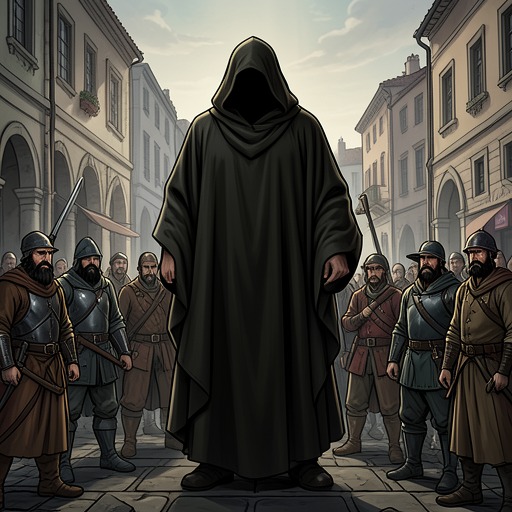
Sun Liang
The Romance of the Three KingdomsSun Liang is the young ruler of Wu whose short reign is defined by the gulf between imperial title and actual power. Enthroned by Zhuge Ke after Sun Quan’s death, he remains under the control of powerful ministers; when he tries to overthrow Sun Chen, the plot is exposed through a family connection, and Sun Chen removes him from the throne.
Accession and the Balance of Power
Sun Liang becomes emperor after Sun Quan’s death, when Zhuge Ke, son of Zhuge Jin, holds power and installs the heir apparent as ruler. The accession places Sun Liang at the center of Wu’s succession, but not in command of its government: Zhuge Ke has taken control of the court and country, appoints himself the dominant authority, and rules extravagantly. The narrative thus introduces Sun Liang’s reign as one in which succession has been settled formally while political power lies elsewhere.
Zhuge Ke’s failed campaign against Wei further unsettles the state around the young emperor. After the expedition ends in losses and retreat, Zhuge Ke hides at home, pretending to be ill. His military failure compounds resentment over his abuse of power, and members of the Sun family begin plotting against him. Sun Jun seeks the emperor’s permission to have Zhuge Ke killed at a banquet, with Sun Liang expected to give the signal. Sun Liang is therefore involved in a court conspiracy before the narrative describes him as attempting to free himself from a regent’s control.
Attempt to Overthrow Sun Chen
By the time Sun Chen dominates Wu, Sun Liang is sixteen and, according to the narrative, entirely under Sun Chen’s control. The young ruler attempts to reverse that dependence by plotting with his brother-in-law to seize the city and kill Sun Chen. The plan is betrayed from within the family: the brother-in-law informs his father, who is Sun Chen’s eldest sister’s husband, and Sun Chen learns of the conspiracy.
Sun Chen answers the plot by deposing Sun Liang. He presents the removal as justified by alleging that the emperor is morally corrupt and unable to perform the imperial rites for the ancestors. The accusation supplies a public rationale for a change driven by the struggle over political control. Sun Liang is seized and sent into internal exile; the account emphasizes his departure in tears, marking the personal consequence of the failed attempt to escape Sun Chen’s dominance.
Deposition and Political Significance
Sun Liang’s fall does not restore authority to the imperial office. Sun Chen seizes power, appoints his relatives to key posts, and installs Sun Xiu, another relative of the deposed ruler, as emperor against Sun Xiu’s wishes. In this sequence, Sun Liang’s removal is part of Sun Chen’s consolidation of control, not an isolated succession dispute. A poem mourns Sun Liang as a wise ruler who will no longer enter the court, offering a sympathetic counterpoint to Sun Chen’s charge that he is unfit to rule.
The episode echoes the larger account’s recurring contrast between formal legitimacy and effective power. Sun Liang holds the title of emperor but cannot command the court; his attempt to act independently ends in deposition, while Sun Chen uses court authority and a charge concerning ritual competence to secure his position. Sun Liang’s brief reign therefore illustrates how vulnerable Wu’s succession became when the ruler was young and political power rested with an ambitious minister.