Tao Qian
The Romance of the Three KingdomsTao Qian is the governor of Xuzhou whose hospitality toward Cao Cao’s family is followed by a devastating political misunderstanding. Although the family is killed by its escort, Zhang Kai, Cao Cao holds Tao Qian responsible and launches a brutal invasion. Tao Qian’s later appeal to Xuande to take over Xuzhou offers a contrasting response to the violence: he seeks to protect the city by transferring authority rather than prolonging the conflict.
Governor of Xuzhou
The narrative introduces Tao Qian as the imperial governor of Xuzhou and describes him as a genuinely good man. When Cao Cao brings more than forty family members, around one hundred servants, and over one hundred wagons through the province on their way to Yanzhou, Tao Qian meets them as they enter his territory and hosts them in the city. He then assigns Zhang Kai, a former Yellow Headband rebel leader, and his men to escort the travelers to the border.
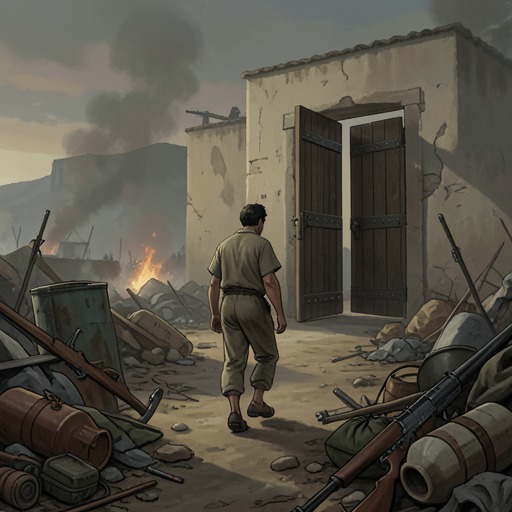
The account makes Tao Qian’s hospitality the setting for disaster, but not its cause. A storm forces the party to shelter at an old temple. Zhang Kai and his soldiers, angry at their circumstances and tempted by the wealth in the wagons, decide to kill the family and take the goods. They carry out the attack and flee to Huainan. Tao Qian had offered the travelers a welcome and arranged their escort; the betrayal comes from the men charged with protecting them.
The invasion and Tao Qian’s appeal
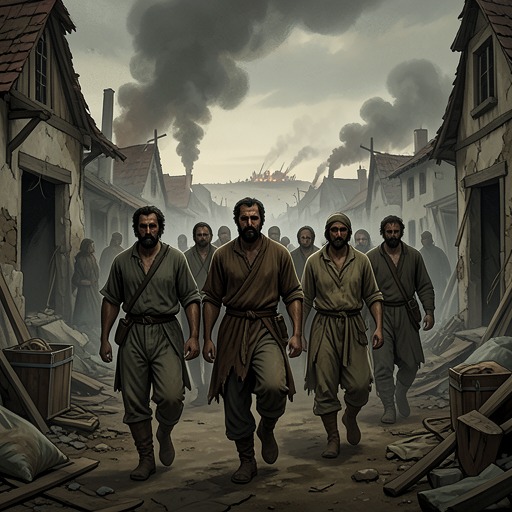
When Cao Cao hears of the killings, he assumes Tao Qian plotted against his family. Overcome with grief and anger, he orders an invasion of Xuzhou and insists that its people be killed when the city falls. His army terrorizes the province, and the destruction extends even to graves. Tao Qian rides out to meet Cao Cao and tries to explain that both men have been betrayed by Zhang Kai, but Cao Cao will not listen.
Back in the city, Tao Qian tells his advisers that he considers the invasion his responsibility and offers himself to Cao Cao in the hope of preventing further violence. The gesture does not resolve the crisis: the evidence does not describe Cao Cao accepting the offer, and Tao Qian remains in danger as the assault continues. His willingness to bear the cost himself nevertheless distinguishes his response from Cao Cao’s retaliatory campaign, which punishes the province for a crime Tao Qian did not order.
Succession and the people’s choice
Later, on his deathbed, Tao Qian again asks Xuande to take over as governor. Xuande refuses, and Tao Qian continues to plead even with his last breath. Only when the people of the city themselves come and ask Xuande to govern does he agree, and then only temporarily. Tao Qian’s transfer of authority is thus not completed simply by his personal request: Xuande’s acceptance follows the inhabitants’ appeal.
Tao Qian’s place in the story is brief but consequential. His welcome to Cao Cao’s family precedes the mistaken accusation that brings Xuzhou under attack, while his final appeal sets up Xuande’s temporary governorship. The contrast is between two responses to crisis: Cao Cao turns grief into collective punishment, whereas Tao Qian tries to avert further harm by offering himself and, later, by urging a successor to assume responsibility for the city.