Wei Guan
The Romance of the Three KingdomsWei Guan is a military officer whose actions shape the final struggle among the Wei commanders in Shu: he helps arrest Deng Ai, survives Zhong Hui’s failed bid for power, and restores order, but then has Deng Ai and his son killed. His role turns on shifting loyalties and the danger of being caught between commanders competing for control.
Position in the Struggle
After the fall of Shu, Zhong Hui plots against Deng Ai and asks Jiang Wei how to proceed. Jiang Wei advises sending Wei Guan to arrest Deng Ai, on the assumption that Deng Ai might kill the arresting officer and thereby give Zhong Hui grounds to attack him. The scheme places Wei Guan at the center of a contest in which an official arrest is meant to provoke a wider confrontation.
Wei Guan and the men assigned to the mission understand that Zhong Hui may be using them as expendable instruments. Rather than proceed unaware, Wei Guan sends secret messages to Deng Ai’s officers. He offers to spare them from arrest if they cooperate, warning that refusal could put their lives and their families at risk.
Arrest of Deng Ai
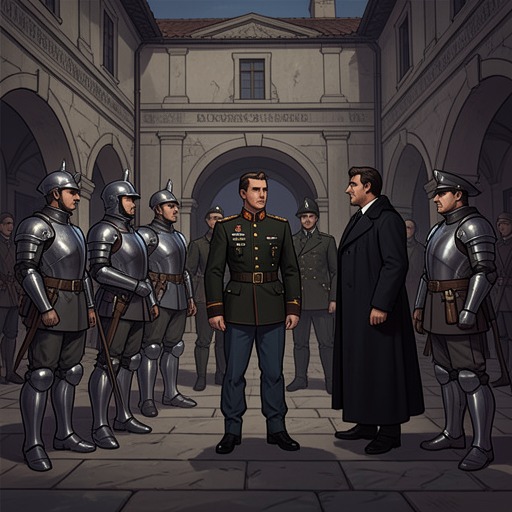
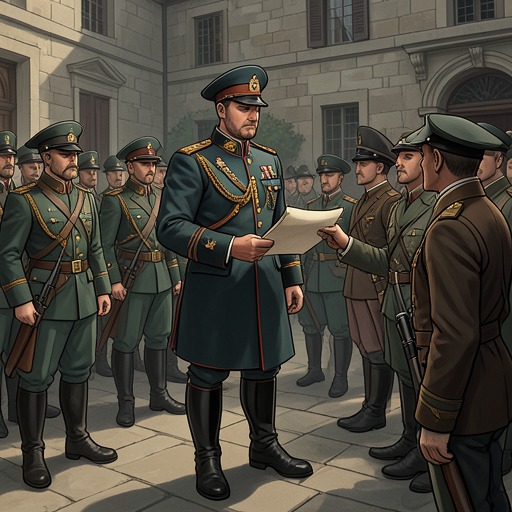
The officers accept Wei Guan’s offer and come to him at daybreak, bowing in submission. With their backing, he enters Deng Ai’s quarters while Deng Ai is asleep and arrests him and his son. Zhong Hui and Jiang Wei arrive almost immediately and abuse and beat the captured commander. Wei Guan’s seizure of Deng Ai thus supplies Zhong Hui with the immediate result he sought, while also showing Wei Guan’s ability to win the cooperation of the men under the target’s command.
Deng Ai and his son are sent toward Luoyang as prisoners. Zhong Hui then conscripts Deng Ai’s troops into his own army, converting the arrest into a direct consolidation of military power. Wei Guan’s action is therefore not an isolated custodial task: it is the first step in a chain of maneuvers that leaves Zhong Hui with control of the forces formerly commanded by his rival.
Zhong Hui’s Revolt and Its Collapse
Zhong Hui’s growing ambitions are checked when he learns that Sima Zhao is on his way from Chang’an. Zhong Hui understands the announcement as evidence that Sima Zhao distrusts him and suspects that he may act independently. He begins planning to secure control of Shu, while Jiang Wei secretly encourages hopes of restoring the Han. Their designs soon collide with opposition from officers and troops who remain outside Zhong Hui’s circle.
When the revolt breaks into open violence, Zhong Hui is killed and Jiang Wei dies by suicide. Wei Guan is the one able to restore order. His survival contrasts with the deaths of the men whose struggle had drawn him into the crisis, and his position shifts from the agent who helped remove Deng Ai to the official responsible for containing the aftermath.
Deng Ai’s Death and Wei Guan’s Role
Order proves temporary. Wei Guan learns that Deng Ai and his son have been released by their supporters, and he fears for his own safety. An officer with personal reasons for wanting Deng Ai dead offers to undertake the killing and sets out with five hundred men. Deng Ai mistakes the approaching force for supporters and goes to meet them without protection; he and his son are killed.
The episode gives Wei Guan a consequential but indirect role in Deng Ai’s death: after arranging the arrest, he faces the danger created by Deng Ai’s release and allows an officer to resolve it through violence. His arc is defined less by allegiance to one stable cause than by practical choices under pressure—first securing cooperation to carry out Zhong Hui’s order, then restoring order after the rebellion, and finally confronting the risk posed by a returned prisoner.
Narrative Significance
Wei Guan’s story reflects the volatility of political authority at the end of the Three Kingdoms. Formal commands and military offices do not settle who holds power: Zhong Hui uses an arrest to gather Deng Ai’s troops, while Wei Guan depends on private messages and the officers’ consent to carry it out. Once Zhong Hui’s bid collapses, Wei Guan can restore order, but the release of Deng Ai reopens the danger and ends in another killing. The sequence makes his rise through the crisis inseparable from the unstable loyalties and retaliations that follow the conquest of Shu.