Wugu tribe
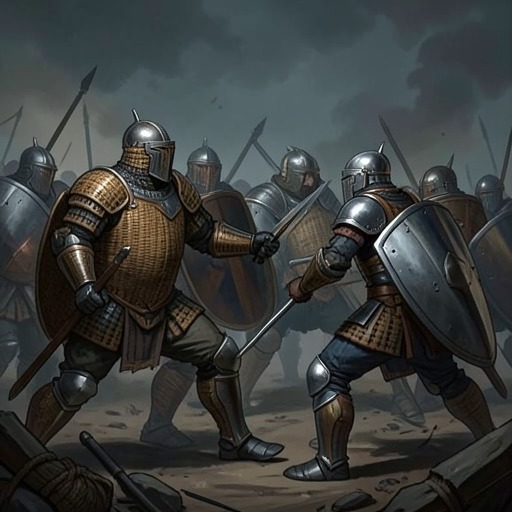
The Romance of the Three KingdomsThe Wugu tribe is a southern people whose celebrated rattan armor first defeats the Shu army and then becomes the means of their annihilation. Drawn into Kong Ming’s trap at the Serpent Winding valley, the tribe’s warriors and their chieftain Wutugu are consumed by fire. Their destruction is one of the most devastating episodes of the southern campaign, and it stands in stark contrast to the political settlement that follows, in which Meng Huo submits and is appointed ruler over lands conquered by Shu.
Identity and Military Strength
The Wugu tribe enters the campaign as the last great source of support for Meng Huo’s resistance. After another defeat leaves him with only about a thousand men, Meng Huo is told that the tribe may still help him withstand Kong Ming. He travels hundreds of miles to reach Wugu territory, where the people live in caves rather than houses. Their chieftain, Wutugu, agrees to join him, and about thirty thousand fighters answer the call.
The tribe’s defining military advantage is its rattan armor. The rattan is soaked in oil repeatedly, as many as ten times, until the armor is impervious to arrows and swords. It also floats, allowing the soldiers to cross rivers with ease. In the first battle against Kong Ming’s army, Shu’s weapons cannot penetrate the armor. The Shu troops retreat, and the Wugu soldiers return to their camp rather than pursuing them. The armor therefore appears to secure a decisive tactical advantage, but its oil-soaked construction also creates the vulnerability Kong Ming will exploit.
Alliance with Meng Huo
Wugu’s intervention comes after Meng Huo has repeatedly failed to dislodge the Shu forces. With his remaining following reduced to roughly a thousand, he seeks the tribe as a final military ally. Wutugu’s agreement gives the rebellion a new force of around thirty thousand and carries the conflict to Peach Blossom river, where the Wugu army confronts Kong Ming directly.
The alliance changes the balance of the immediate battle, but not the larger course of the campaign. The rattan armor repels the Shu attack, yet the Wugu army does not convert its advantage into pursuit. Kong Ming’s advisers urge withdrawal, reasoning that the desolate land offers little worth fighting for. Kong Ming refuses to abandon the progress already made and reconnoitres the terrain himself. He finds a winding valley whose shape suits his plan, then uses a sequence of retreats and white flags to draw the Wugu forces toward it. The tribe’s strength thus becomes entangled with a campaign of deception: what looks like an unbroken advance is a movement into a prepared trap.
The Trap at the Serpent Winding Valley
On the sixteenth day of the pursuit, Wutugu enters the valley mounted on a white elephant and wearing a wolf-fur helmet decorated with the sun and moon; his cloak is adorned with gold and pearls. He sees the bare valley sides and assumes there is no danger of an ambush. When his soldiers pass apparently abandoned wagons, they take them as evidence that the Shu army has fled in haste and left its supplies behind.
The route closes behind them. At the far end, large tree trunks block the way, and rocks tumble down from above. While Wutugu’s men try to clear these obstacles, blazing wagons appear in the roadway. The carts behind the army are also set alight, sealing the retreat. Although Wutugu notices that the bare slopes themselves will not readily catch fire and tries to lead his men uphill, flaming brands are thrown down at selected points. They ignite fuses and landmines buried in the ground, and the valley erupts in fire.
The rattan armor, designed to withstand blades and arrows, becomes lethal once the oil-treated material catches fire. The soldiers cannot escape their burning protection. Thirty thousand men, including Wutugu, die in the valley. From the cliff above, Kong Ming watches the destruction and weeps at the terrible sight. His victory is complete, but the narrative makes its human cost unmistakable: the strategist who arranged the trap is not depicted as untouched by what it accomplishes.
Destruction and the Campaign’s Settlement
The tribe’s defeat removes Meng Huo’s strongest remaining military support, but the campaign’s conclusion is framed through submission as well as force. After the final confrontation and another capture, Kong Ming asks Meng Huo whether he now submits. Sobbing, Meng Huo says that his people will remain grateful for being spared and accepts submission. Kong Ming and Meng Huo celebrate late into the night, and Meng Huo is appointed ruler over all the lands conquered by Shu. The Man people rejoice, leaping and dancing.
The contrast is severe. Wugu’s thirty thousand are destroyed in a fire whose mechanism turns their armor against them, while Meng Huo survives to govern under Shu’s authority. The tribe’s military resistance ends in annihilation, whereas the wider southern settlement is presented as a transfer of rule secured through Meng Huo’s submission. Wugu therefore embodies both the formidable force that Shu must overcome and the extreme violence within the campaign’s conclusion: the territory is brought under control, but not without a battlefield catastrophe that Kong Ming himself watches in grief.