Xuchang
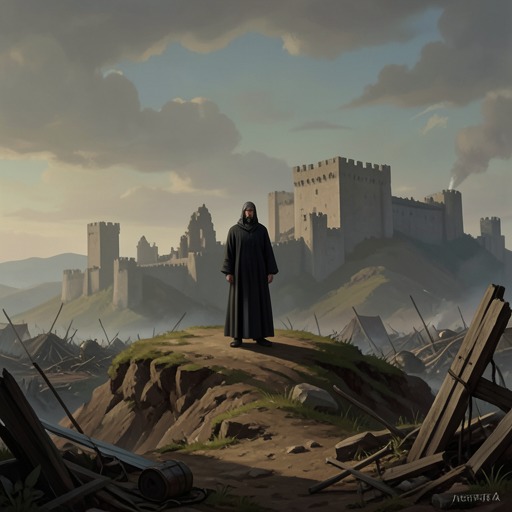
The Romance of the Three KingdomsXuchang is the city where Cao Cao turns military strength into control of the Han court. Chosen as the emperor’s new seat after the court’s return to a ravaged capital, it becomes at once a center of government, a source of political legitimacy, a storehouse for military supplies, and a target whose safety shapes the campaigns of rival leaders.
From court refuge to political center
When the emperor and his court face renewed danger, Yang Biao recommends summoning Cao Cao because he commands the strongest army. Cao Cao sets out for the capital, but reports that Li Jue and Guo Si are advancing prompt the court to begin withdrawing. The procession has barely passed beyond the city gate when Cao Cao’s troops arrive. The emperor returns, and Cao Cao’s forces drive the rebels away into the mountains.
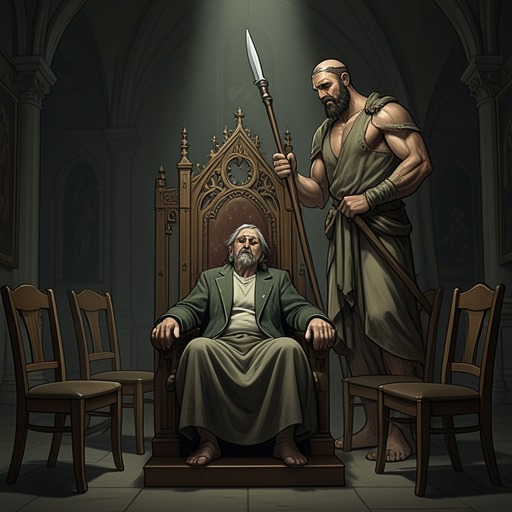
Once Cao Cao is quartered in the capital, the emperor summons him through Dong Zhao. Cao Cao is impressed by Dong Zhao’s directness and asks how he has kept himself in good condition while the people around him appear to be suffering from hunger. Dong Zhao explains that he has been a soldier for thirty years and has learned to live simply. More importantly, he proposes moving the emperor to Xuchang, where Cao Cao can control access to him and exclude rival commanders such as Yang Feng. The plan is presented as a practical response to food shortages: the court can be told that more provisions are available in Xuchang. The emperor assents, unable to oppose Cao Cao’s strength.
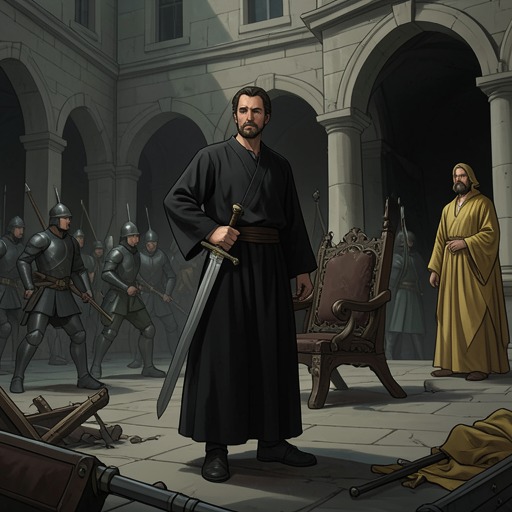
Yang Feng tries to block the procession on the way, but Cao Cao wins over Yang Feng’s champion, Xu Huang. Xu Huang refuses a suggestion that he kill his former commander as proof of loyalty, and Yang Feng retreats when he learns that his champion has left. The emperor reaches Xuchang under Cao Cao’s protection, but that protection also enables Cao Cao to consolidate his hold over the court. The move thus changes more than the court’s location: it makes the emperor’s residence a political instrument in Cao Cao’s hands.
Government, legitimacy, and rivalry
From his new base, Cao Cao confronts the problem of Xuande’s power in Xuzhou and Lü Bu’s presence at Xiaopei. Cao Cao fears that the two might combine against him. His adviser Xun Wenruo recommends exploiting the tension between them: have the emperor promote Xuande to high office, while secretly instructing him to kill Lü Bu. If Xuande obeys, Cao Cao benefits; if he fails, Lü Bu may destroy him. Cao Cao sends the imperial commission and secret order to Xuande. Xuande welcomes the promotion but declines to act against Lü Bu, recognizing the design. Xuchang is therefore not merely a refuge for the emperor; imperial authority issued from the city can be used to interfere in rival relationships and provoke conflict.
That political strategy sits within a wider contest over who may claim to represent the Han. When Yuan Shao prepares to attack Cao Cao, Chen Lin drafts a formal denunciation accusing Cao Cao of grave abuses, including moving the capital and effectively confining the emperor within a palace surrounded by Cao Cao’s men. The document circulates until it reaches Cao Cao in Xuchang. Although ill with a migraine, he reads it, becomes furious, and demands the author’s identity. He mocks the power of Chen Lin’s writing in the absence of an army, but the denunciation hardens his determination to deal with Yuan Shao. The city is thus also the setting in which Cao Cao encounters a public challenge to the legitimacy his command of the court is meant to secure.
A capital under military pressure
Xuchang’s value is repeatedly measured in provisions and access. During the confrontation with Yuan Shao, Cao Cao’s forces destroy a grain convoy led by Han Meng, prompting Yuan Shao to reinforce the supply base at Wuchao. Later, Yuan Shao captures a messenger carrying a letter that reveals Cao Cao is running dangerously short of food. Xu You urges Yuan Shao to attack both Cao Cao’s camp near Guandu and his capital at Xuchang, arguing that the shortage creates an immediate opportunity. Yuan Shao distrusts the letter and suspects Xu You of serving Cao Cao’s interests; instead of acting, he dismisses his adviser. The episode makes the city’s supply position a strategic vulnerability, even as its political importance makes it an appealing target.
After Cao Cao defeats Yuan Shao at Cangting, news arrives that Xuande is advancing on Xuchang. Cao Cao has to leave his respite and hurry back toward the capital. He encounters Xuande at Rang Mountain and reminds him that he had once been his guest and had received his hospitality. The challenge to Xuchang therefore draws Cao Cao away from one front and into a personal and political confrontation with a former associate. The city’s defense is inseparable from the broader contest for control of the Han realm.
The struggle over the Yuan family further shows how Xuchang serves as a launch point for expansion. When Yuan Tan seeks Cao Cao’s help against Yuan Shang, Cao Cao recognizes that the northern territories are vulnerable: the Yuan household is divided, and the people resent its rule. Cao Cao advances while Yuan Tan pursues his brother. The alliance gives way to further deception and conflict, and Cao Cao ultimately floods Jizhou by diverting the Zhang River. He orders that members of the Yuan clan be spared. Although this campaign is not fought at Xuchang, the capital is the political and military base from which Cao Cao’s power reaches outward.
A recurring measure of power
Xuchang also figures in plans beyond Cao Cao’s own campaigns. In Kong Ming’s assessment of the political landscape, Cao Cao’s strength derives not only from a vast army but from control of the emperor and the support of many nobles that this brings. That analysis identifies the court’s location as part of a larger structure of power: command of the emperor gives Cao Cao advantages that cannot be measured by troop numbers alone.
Later, when Cao Cao celebrates the defeat of a western army and returns to Xuchang, the emperor honors him and grants him special distinctions, further extending the reputation that accompanies his victories. Yet the city remains exposed to the consequences of distant campaigns. When Cao Cao retreats from the Hanzhong region under pressure, Kong Ming anticipates his route and sends Ma Chao to harass the withdrawing forces. Cao Cao reaches Chang’an before he and his men feel safe; meanwhile, territories around Hanzhong fall to Xuande’s forces, and some submit in expectation of peace. Xuchang represents the durable center of Cao Cao’s authority, but it cannot prevent reversals at the edges of his domain.
Its importance continues into the first Northern Expedition of Shu. After Ma Su’s failure at Jieting, Kong Ming retreats to Xicheng, where the army’s supplies are kept. With only five thousand men, he faces Sima Yi’s advancing force of 150,000. Kong Ming clears away signs of occupation and sits on the city wall in Daoist robes with a lute, accompanied by two boys. Sima Yi interprets the apparently undefended city as a possible trap and withdraws. The episode places the strategic value of a supply center in sharp contrast with its vulnerability: control of stores matters, but so does the enemy’s belief about what the city conceals. Across its changing fortunes, Xuchang remains both a seat of authority and a point in the military geography through which political power must be defended, supplied, and made credible.