Xuzhou
The Romance of the Three KingdomsXuzhou is a contested political and military center whose changing fortunes expose the costs of vengeance and the unstable bargains among the warlords of the collapsing Han. It is the setting of Cao Cao’s devastating campaign, Xuande’s reluctant assumption of authority, and Lü Bu’s successive advances and retreats. Its importance lies not only in who controls it, but in the recurring question of what rule is for: punishment, private power, or the protection of ordinary people.
Setting and Strategic Importance
In the wider contest that gives rise to the Three Kingdoms, Xuzhou is one of the territories carved from the weakening Han. Cao Cao passes through it while bringing his family toward Yanzhou, and its governor, Tao Qian, receives the travelers and arranges for an escort. That connection turns Xuzhou into the center of a personal catastrophe: former Yellow Headband commander Zhang Kai and his men attack Cao Cao’s family during their journey through the province.
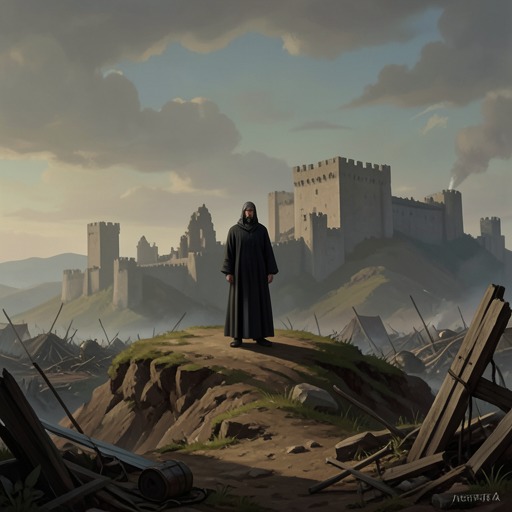
The consequences reach far beyond the original attack. Cao Cao concludes that Tao Qian is responsible and invades Xuzhou to avenge his family, although Tao Qian tries to explain that Zhang Kai acted independently. Cao Cao’s campaign devastates the province, and his troops desecrate graves as well as terrorizing its inhabitants. The mismatch between Tao Qian’s responsibility as governor and Cao Cao’s accusation transforms Xuzhou into the arena for a war driven by grief, mistaken blame, and the failure of appeals to restraint.
Tao Qian, Xuande, and the Governorship
When Kong Rong asks Xuande to aid Tao Qian against Cao Cao, Xuande initially points out that he has no personal quarrel with Cao Cao. Kong Rong persuades him that the invasion must nevertheless be resisted. Xuande then tries to prevent further bloodshed by writing to Cao Cao: the letter attributes the deaths to Zhang Kai and urges Cao Cao to withdraw and unite with other supporters of the Han. Cao Cao rejects the appeal, executes its messenger, and orders a full attack on Xuzhou.
Tao Qian later asks Xuande to take over the governorship. Xuande refuses even as Tao Qian repeats the request on his deathbed; only when the people of the city appeal to him does he consent, and then only temporarily. The succession therefore emerges not as a prize Xuande actively pursues but as an obligation pressed upon him by a dying governor and the inhabitants. His reluctance contrasts with the surrounding struggle to seize territory and frames his authority in terms of service to the people.
A Vulnerable Capital in the Struggle for Power
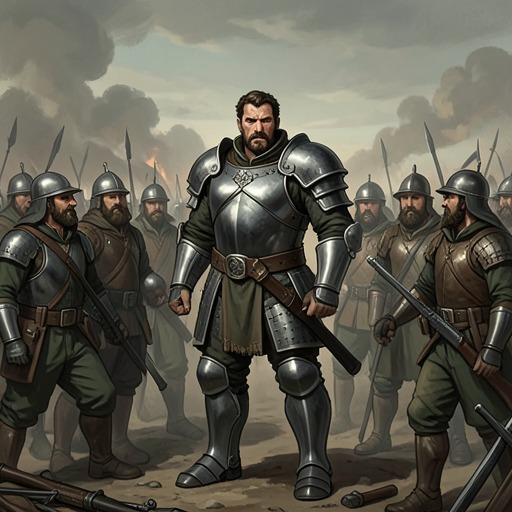
Xuzhou remains vulnerable to abrupt reversals. While Xuande is away, Zhang Fei’s conflict with Cao Bao leads Cao Bao to send word to Lü Bu that the city can be taken. Lü Bu rides through the night with five hundred horsemen and captures it; Zhang Fei flees, leaving Xuande’s family in Lü Bu’s hands. This defeat makes the city’s security dependent not only on armies and walls but on discipline, trust, and the personal conduct of its defenders.
The struggle over Xuzhou also draws in rival claimants beyond Xuande and Lü Bu. When Yuan Shu launches seven armies against it, two commanders, Han Xian and Yang Feng, turn against Yuan Shu at the crucial moment. Han Xian’s first loyalty is to the Han, and the defections break Yuan Shu’s offensive; Guan Yu is among the forces supporting Lü Bu. Xuzhou thus becomes a point where competing claims of loyalty and ambition have direct military consequences.
Later, Cao Cao and Xuande campaign against Lü Bu. Lü Bu moves his reserves and family to Xiapi, while Chen Deng secretly informs Cao Cao of Lü Bu’s plans. Chen Deng’s betrayal helps bring about the fall of Xuzhou and Xiaopei: he misleads Lü Bu’s commanders into leaving, then opens the gates to Cao Ren. When Lü Bu falls back toward Xiaopei, he finds it in enemy hands and must withdraw to Xiapi. Control of Xuzhou changes through intelligence and deception as much as through open fighting.
Political Meaning and Narrative Role
The city’s repeated changes of hands make it a measure of the fragility of authority during the collapse of the Han. Cao Cao’s attempt to punish Xuzhou for the loss of his family widens private grief into public catastrophe. Xuande’s acceptance of the governorship, by contrast, follows appeals from Tao Qian and the people, and his resistance to Cao Cao is presented as a defense of the province rather than a personal feud. Later campaigns show how quickly that ideal is tested when military necessity, treachery, and rival alliances shape who can hold the city.
Xuzhou also belongs to the larger argument over political legitimacy. Kong Ming describes Cao Cao as powerful in part because he controls the emperor, while treating Sun Quan as a potential ally because he has popular support. In the subsequent call for Xuande to become emperor, Kong Ming argues that Xuande’s benevolent rule and the peace restored in his territories justify his claim. The discussion reflects the novel’s broader contention that possession of land alone does not settle the question of rightful rule: ancestry, loyalty to the Han, public welfare, and the Mandate of Heaven all become competing measures of authority. Xuzhou’s history gives those abstractions a concrete setting, where the consequences of political claims fall on a besieged province and its people.