Yuan Tan
The Romance of the Three KingdomsYuan Tan is the eldest son of Yuan Shao and the older brother of Yuan Shang and Yuan Xi. Passed over when Yuan Shao dies, he becomes a rival to Yuan Shang and, in time, a temporary partner and then opponent of Cao Cao. His struggle for power helps expose the fractures within the Yuan family, while Cao Cao turns those fractures into a route to conquering the north. Yuan Tan’s ending is military defeat, but the account gives its final emphasis to the loyalty of a former subordinate who dares to mourn him.
Identity and Succession
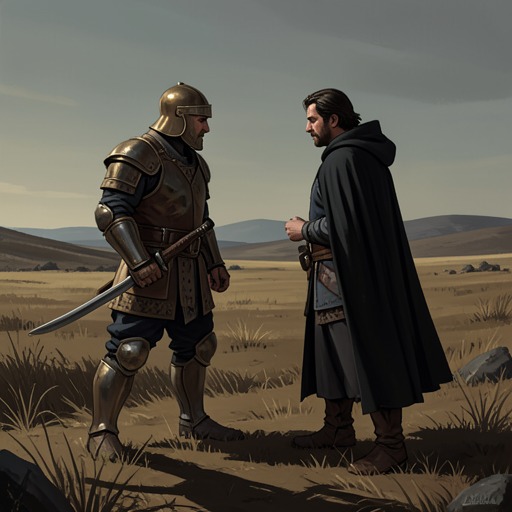
The contest over succession begins with a divided household. After Yuan Shao’s death, his widow has Yuan Shang installed as ruler. Yuan Tan, the elder son, is left with a grievance that is both political and personal: he has been passed over, and his younger brother now holds the authority he believes should have been his. Yuan Shang treats him not as a brother whose forces might be needed against a common enemy, but as a rival to be weakened. When Yuan Tan requests reinforcements to fight Cao Cao, Yuan Shang sends so few that Cao Cao’s forces quickly defeat them, pursuing a strategy that leaves Cao Cao to eliminate Yuan Tan for him.
The succession quarrel is sharpened by conduct within the household. Yuan Shao’s widow has five of her husband’s concubines killed after his death, and their bodies mutilated so they cannot follow him into the Underworld. The account places this episode beside the brothers’ conflict, making the family’s political collapse part of a broader portrait of a household turned against itself.
Rivalry and Cao Cao’s Opening
In the early months of 203, Cao Cao attacks but cannot take Jizhou, and withdraws. His adviser Guo Jia then identifies the brothers’ resentment as an opportunity: if Yuan Tan and Yuan Shang fall into open conflict, Cao Cao can benefit from their division. Yuan Tan is especially susceptible because he resents having been passed over as the elder son. He enters into a conspiracy with Cao Cao, converting his claim against Yuan Shang into a means for Cao Cao to intervene in the Yuan family’s affairs.
The rivalry becomes explicit at a banquet. Yuan Tan’s adviser Guo Tu recommends inviting Yuan Shang and attacking him during the feast. Others counsel against turning on a brother, comparing brothers to a person’s two arms: a limb should not be severed while facing another enemy. Yuan Shang arrives with fifty thousand men, showing that the plot has been discovered. Yuan Tan rides out to fight him, loses, and flees to Pingyuan. He gathers more troops and attacks again, but is defeated a second time and retreats to the same refuge.
After these losses, Guo Tu advises Yuan Tan to seek Cao Cao’s help formally. Cao Cao accepts, recognizing that the north is vulnerable: the people resent the Yuan family, the brothers are divided, and the ruling house lacks the support enjoyed by the Liu Biao regime in Jingzhou. Cao Cao advances. When Yuan Shang withdraws from the siege of Pingyuan, Yuan Tan pursues him and attacks from behind. The arrangement nevertheless remains unstable. Cao Cao and Yuan Tan plot against each other even while their interests temporarily overlap, and Cao Cao eventually decides that Yuan Tan’s usefulness is at an end.
Alliance, Defeat, and Death
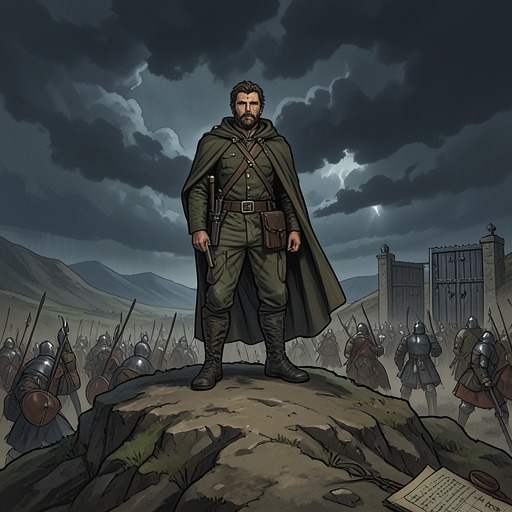
As the struggle for the north shifts between Cao Cao and Yuan Shang, cities fall and armies are routed. Cao Cao returns to Jizhou and diverts the River Zhang to flood the city. He gives strict orders that members of the Yuan clan are not to be harmed. The fall of Jizhou does not resolve the family conflict: Yuan Tan rallies men who had served Yuan Shang and prepares to fight Cao Cao, while Yuan Shang, disheartened by failure, takes refuge with their brother Yuan Xi.
Yuan Tan tries to build a new alliance with Liu Biao, but Liu Biao has little interest in backing a collapsing family against Cao Cao’s growing power. At Xuande’s suggestion, Liu Biao uses Cao Cao’s own method of division: fake letters encourage the brothers to reconcile and persuade each that he needs the other to resist Cao Cao. Cao Cao regards Yuan Tan’s actions as betrayal and besieges him at Nanpi.
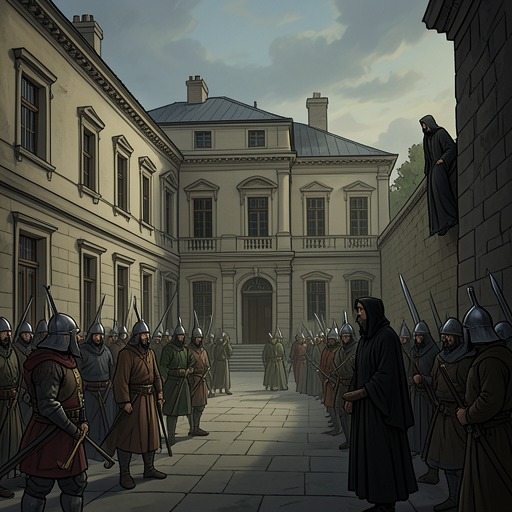
During the siege, Guo Tu proposes forcing the civilian population out so Yuan Tan can escape through them. The attempt fails: Cao Hong, a cousin of Cao Cao, kills Yuan Tan, and Guo Tu is also found and killed. After Nanpi falls, Cao Cao orders Yuan Tan’s head displayed and forbids anyone to mourn him. The order makes the aftermath a test of loyalty as well as a declaration of victory.
Loyalty and Narrative Significance
One man disobeys Cao Cao’s command. Arrested and questioned, he explains that he had served Yuan Tan when Yuan Tan governed Qingzhou, but left after openly criticizing the way he ruled. Despite that rupture, the former subordinate believes Yuan Tan deserves a respectful farewell. Cao Cao’s order calls for his execution, yet he is moved by the man’s loyalty and sense of honor. He pardons him and gives him a post in the new administration.
The episode distinguishes personal allegiance from approval of a ruler’s conduct: the man could oppose Yuan Tan while he lived and still honor him after his death. It also contrasts Yuan Tan’s divided, self-defeating alliances with a loyalty that survives defeat. Yuan Tan’s claim as the elder son initially fuels his rivalry with Yuan Shang; his repeated search for military advantage draws Cao Cao into the contest; and the contest ends with Cao Cao’s conquest of Nanpi and the destruction of Yuan power. The final act of mourning cannot restore Yuan Tan’s position, but it gives his story an intimate counterpoint to the political opportunism that has governed his rise and fall.