Zhang Fei
The Romance of the Three KingdomsZhang Fei is one of Xuande’s sworn brothers, a formidable fighter whose fierce loyalty helps bind the brotherhood together and propel its campaigns. His story also exposes the cost of ungoverned anger: the same force that makes him fearless in battle leads him to mistreat subordinates, and after Guan Yu’s death that habit culminates in his murder before the invasion he is preparing can begin.
Identity and Introduction
Zhang Fei first appears when Xuande, reading Governor Liu’s call to arms, sighs over the crisis facing the Han. Zhang Fei challenges him to serve the emperor rather than merely lament the danger. His imposing appearance and powerful voice establish an outsized presence, but his practical circumstances are humble: he says his family has farmed locally for generations and traded wine and pork. He has begun seeking men of spirit to join him, and Xuande’s response to the proclamation prompts him to make contact.
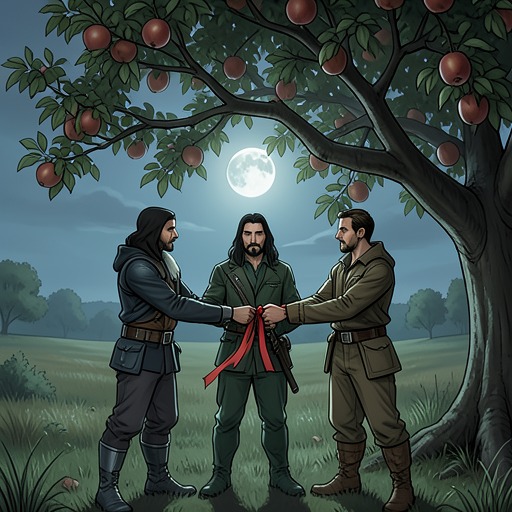
Zhang Fei soon meets Guan Yu, who explains that he has left home after killing a bully who terrorized local people and has spent several years travelling. When the two learn that their intentions align with Xuande’s, Zhang Fei invites them from the inn to his nearby manor. He then proposes that the three bind themselves together in the peach orchard behind his house, where the trees are in flower. The following day they make offerings, including a black bull and a white horse, and swear their brotherhood before Heaven and Earth. The orchard vow gives their alliance a sacred and enduring purpose: to fight side by side, though they come from separate families.
Warrior and Brother
At Tiger Cage Pass, Zhang Fei’s courage becomes visible in action. When Lü Bu pursues Gongsun Zan after killing challengers from Yuan Shao’s forces, Zhang Fei intervenes and draws Lü Bu away from his target. He fights Lü Bu for fifty rounds without either gaining the advantage. Guan Yu joins his sworn brother, but even their combined attack cannot defeat Lü Bu. The brothers’ intervention helps turn the confrontation into a wider retreat by Lü Bu’s forces, with Xuande and his brothers pursuing them toward the pass. Zhang Fei’s bravery is therefore both personal and collective: he risks himself to protect an ally and fights as part of the sworn trio.
His later role under Kong Ming reveals the tension between martial confidence and strategic command. When Kong Ming receives authority to direct the defence of Xinye, Zhang Fei and Guan Yu resent Xuande’s choice of adviser and doubt Kong Ming’s plans. Kong Ming assigns Zhang Fei to hide in the valleys behind a forest and attack the enemy’s stores at Bowang when the signal flames appear. Zhang Fei and Guan Yu remain dismissive, particularly because Kong Ming himself will not be near the fighting. Their scepticism tests the new commander’s authority, while the assigned plan makes Zhang Fei’s strength part of a coordinated operation rather than a solitary challenge.
Temper and Its Consequences
The danger in Zhang Fei’s character appears well before his final days. While Xuande is away, Zhang Fei holds a feast and insists that his men drink with him. Cao Bao refuses, explaining that he does not drink; Zhang Fei mocks him and forces him to accept a toast. When Cao Bao refuses again as Zhang Fei comes round a second time, Zhang Fei orders him seized and punished. Chen Deng reminds Zhang Fei that Xuande had warned him against this kind of behaviour. Cao Bao pleads for mercy by invoking his relationship to Lü Bu, whom Zhang Fei hates, and Zhang Fei responds with further violence before others at the feast calm him.
The consequences move immediately beyond the banquet. Cao Bao’s resentment leads him to send word to Lü Bu that Xuzhou can be taken while Zhang Fei is drunk. The scene makes Zhang Fei’s drinking more than a private failing: his abuse of authority gives a political enemy an opening against the city he is meant to protect. Later, Xuande recalls this pattern directly, warning that Zhang Fei becomes violent when drunk, beats men, and then tries to compensate by adding them to his personal escort. His warning anticipates the fatal danger of Zhang Fei’s failure to govern his temper.
Revenge and Death
After Guan Yu is killed, Zhang Fei is at Langzhong. He grieves for days, his sorrow turning into rage; wine does not soothe him but intensifies his anger, and he orders men around him punished, sometimes with fatal consequences. His appointment as supreme commander for the revenge campaign briefly calms him, but he remains troubled that officials at court oppose attacking Wu before dealing with Wei. He travels to Chengdu and confronts Xuande, insisting that the peach-orchard oath cannot be set aside now that Xuande has become the first ruler. Xuande says others oppose the campaign; Zhang Fei answers that he will go regardless, even if he dies in the attempt. Xuande agrees to join him, arranging to meet Zhang Fei’s force at Jiangzhou.
Before they part, Xuande again warns Zhang Fei to be more tolerant and compassionate. Zhang Fei bows but the narrative gives no indication that the warning changes his conduct. He orders his troops to prepare within three days and requires their banners and surcoats to be white for mourning. When Fan Jiang and Zhang Da say the preparations cannot be completed so quickly, Zhang Fei has them bound and flogged, then threatens their lives if the work is not finished by the next day. The severity of the deadline and punishment leaves the two officers fearing that they will be killed whether or not they comply. They decide to murder Zhang Fei first.
Unable to sleep because of his anger, Zhang Fei drinks heavily and falls asleep. Fan Jiang and Zhang Da enter his tent and kill him while he sleeps. He is fifty-five. They cut off his head and flee south toward Wu; by the time his death is discovered, it is too late to pursue them. The sequence gives his established weakness a final, irreversible consequence: the commander charged with leading a great revenge campaign is killed by subordinates he has driven to fear for their lives, before he can set out.
Loyalty, Legacy, and Narrative Role
Zhang Fei’s death intensifies rather than resolves the family grief driving the campaign. Xuande learns of it while travelling to join his brother and collapses in grief. Zhang Bao, Zhang Fei’s son, and Guan Xing, Guan Yu’s son, then arrive at the army camp with their own troops, seeking to avenge their fathers and stand with their uncle. Their arrival renews the force of the peach-orchard vow across generations: the brothers’ sons inherit the conflict created by the deaths of their fathers.
The story later returns to Zhang Fei through a vision experienced by the dying Xuande. Alone in his room at Baidi, Xuande sees Guan Yu and Zhang Fei and at first believes they are alive. Guan Yu tells him that they are ghosts and that the Supreme Lord has made them gods because they remained faithful to their vow. The vision binds Zhang Fei’s ending back to the orchard oath: in the story’s supernatural terms, their loyalty survives death, even as Zhang Fei’s earthly conduct has helped bring about his death. His narrative role rests on that contrast. He is a brave defender and steadfast brother, but also a commander whose unrestrained anger repeatedly imperils the people and cause to which he is devoted.