Zhang Song
The Romance of the Three KingdomsZhang Song’s importance lies in the dangerous bridge he builds between Yizhou and Xuande: sent to seek aid from Cao Cao, he returns convinced that Xuande should take Shu instead, and secretly supplies the maps and political connections to make that ambition possible. His mission becomes a turning point in Xuande’s approach to Yizhou, but Zhang Song’s own intervention ends in exposure and execution.
Identity and Background
Zhang Song is introduced through an unusually memorable physical description. He is very short, with a pointed head, bulging forehead, flattened nose, and protruding teeth, yet his voice is deep like a great bell. The contrast between his appearance and the scale of his political judgment gives him an immediate distinctness: he is a minor official in stature, but one who sees how a change in rulers might reshape the region.
He serves Liu Zhang, the ruler of Yizhou. When Liu Zhang considers how to respond to the threat from Zhang Lu, Zhang Song proposes seeking Cao Cao’s help. His stated reasoning is strategic: Cao Cao is now unrivalled across the land, and if he attacks Zhang Lu, Zhang Lu will be unable to invade Shu. Liu Zhang approves the proposal and prepares gifts of gold and pearls for the mission.
Mission to Cao Cao
Before leaving for the capital, Zhang Song secretly gathers maps of Shu. The maps are a second, concealed purpose of his journey: while his official mission is to seek Cao Cao’s support, he is already carrying information that could help another power enter Yizhou. Xuande’s spies notice Zhang Song’s journey and report it to Kong Ming, who sends them back to watch what happens.
At Xuchang, Zhang Song spends day after day trying to obtain an audience with Cao Cao. He is initially ignored, and gains access only after bribing Cao Cao’s servants. When Cao Cao abruptly asks why Liu Zhang has failed to send tribute for years, Zhang Song answers that thieves and robbers make the roads unsafe. The exchange places the envoy in a precarious position: he has come to court Cao Cao, but finds a ruler whose sense of importance leaves little room for a provincial mission.
Turning to Xuande
Zhang Song’s judgment changes the direction of his mission. He comes to regard Cao Cao as a traitor who neither works with worthy people nor makes use of the wise, and instead approaches Xuande. Speaking frankly, he argues that Liu Zhang is unfit to rule Yizhou: he is weak, neglects capable people at court, and faces a northern threat from Zhang Lu. Zhang Song tells Xuande to take the Riverlands, beginning under the pretence of advancing toward Hanzhong, and offers to help.
Xuande resists because he does not want to attack a member of the same imperial family. Zhang Song counters that another claimant may take Yizhou first, leaving Xuande to regret his hesitation. When Xuande cites the bad roads and impassable mountains as an obstacle, Zhang Song produces the maps he has secretly taken and shows him a route into Shu. He also assures Xuande that his own friends will support the advance. The maps turn a disputed proposal into a practical possibility: Zhang Song supplies both an argument for intervention and a means of approaching the territory.
Xuande promises that Zhang Song will be rewarded, but Zhang Song declines payment, saying that meeting a wise and benevolent lord was reason enough to act. His language casts his choice as service to a ruler he considers worthy, rather than a bargain for personal gain. Back in Yizhou, he shares the plan with Fa Zheng and Meng Da; both agree, and they arrange to be sent as envoys to Jingzhou, extending the circle of cooperation beyond Zhang Song himself.
Exposure and Ending
Zhang Song helps shape the message Liu Zhang receives after he returns to Yizhou. He describes Cao Cao as ambitious and dangerous, then recommends inviting Xuande to help defend against both Cao Cao and Zhang Lu. Liu Zhang accepts the proposal and agrees that Fa Zheng and Meng Da should be sent as ambassadors. Zhang Song’s effort has therefore made Xuande’s involvement appear to be assistance requested by Liu Zhang, even though Zhang Song’s private aim is to encourage Xuande to take the region.
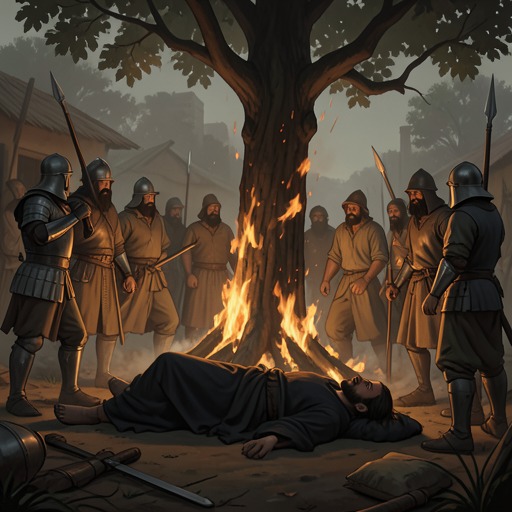
The arrangement collapses when Xuande later writes to Liu Zhang that he must return home. Zhang Song hears of the letter and believes Xuande is truly abandoning the undertaking. Anxious at the prospect that his efforts will come to nothing, he prepares a letter lamenting Xuande’s departure and offering to help seize the city if Xuande will attack. Before he can send it, his brother visits and the letter is discovered. Liu Zhang is informed, and Zhang Song and his entire family are executed in the public square.
Narrative Role and Significance
Zhang Song’s story turns on a sharp divide between what can be said openly and what must be carried in secret. His official journey seeks Cao Cao’s aid; his hidden maps prepare another course. His public counsel presents Xuande’s intervention as a response to Yizhou’s danger, while his private letter reveals how far he is prepared to go to bring about a change of rule. Once discovered, that private intention leaves him no space to continue as mediator.
His episode also links political legitimacy to practical access. Xuande’s claims to benevolence and imperial descent do not by themselves open the mountain routes into Shu; Zhang Song’s maps, his assessment of Liu Zhang’s weakness, and the contacts he cultivates give those claims a political and strategic foothold. His execution ends his personal role, but the proposal he advanced has already connected Xuande’s ambitions to Yizhou’s internal divisions.