Checquy Screening Protocol Following Grafter Infiltration
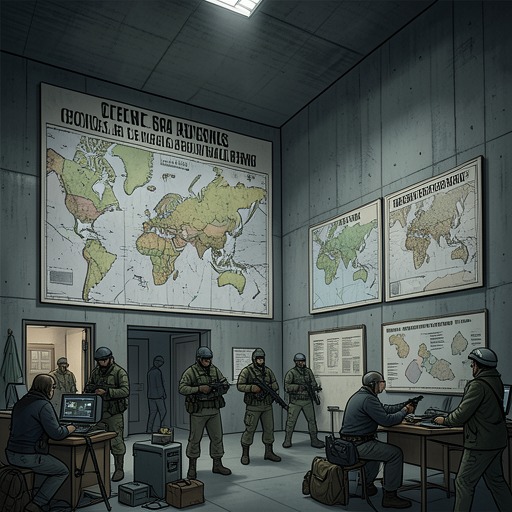
The RookThe Checquy Screening Protocol Following Grafter Infiltration is an emergency internal security procedure introduced after Myfanwy Thomas concludes that the Grafters have penetrated the Checquy. Its immediate aim is to find the implants discovered in the infiltrators exposed at the reception, while its elaborate checks also acknowledge a deeper problem: the organization cannot assume that its own doctors, staff, or established procedures are trustworthy. The protocol makes the search for compromised bodies a test of the institution’s ability to scrutinize itself.
Origin and Security Rationale
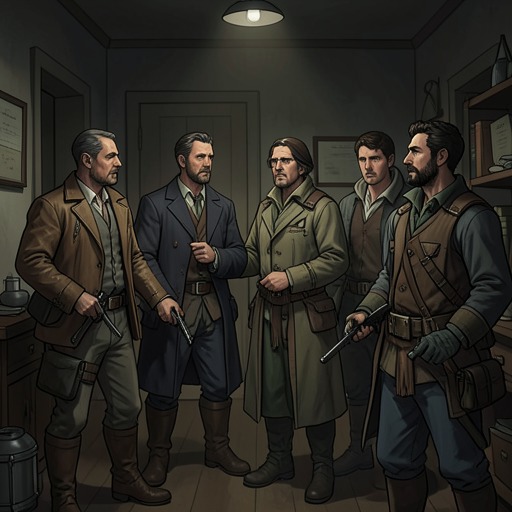
The procedure follows the identification of the Grafters as the force behind deliberate bodily modifications among members of the Checquy. Myfanwy states that the organization has been infiltrated; the discovery turns suspicion from a few compromised individuals into a question about the reliability of the institution as a whole. The threat is sharpened by the case of Richard Whitlam, a long-serving aide remembered as kind and devoted to the Checquy, who attacked a Bishop at the reception. Ingrid Woodhouse warns Myfanwy that the Grafters already know the organization’s secrets, and that infiltrators need not attack openly if they can simply open doors for others.
The response is grounded in a concrete clue, not a claim that implants will expose every enemy. Security Chief Clovis says that all the traitors at the reception had Grafter implants, making the implants a practical starting point for screening. In the same conversation he cautions that not every Grafter agent will necessarily have them. The protocol therefore treats a positive finding as useful evidence while leaving open the possibility that a negative examination cannot establish that someone is loyal.
Examination and Oversight
Clovis tells Myfanwy that the new protocol will examine every member of the Checquy for Grafter implants. These are to be physical examinations conducted in-house, a choice that brings the task under the organization’s own medical system but also creates a risk of tampering. The work is expected to be unpleasant and intrusive, and the medical staff will be heavily overworked for several months.
To guard against manipulation, randomly selected groups of three observers are to be placed in examination rooms until all the organization’s doctors have themselves been examined. Every test’s verdict must then be agreed by the Checquy doctors and a randomly selected civilian medical practitioner. Results are to be sent to thirty-five doctors around the world. Clovis reasons that it is highly unlikely all the Checquy doctors are Grafter moles; if they were, the outside civilian doctor would provide an additional check. The safeguards thus distribute scrutiny across observers, clinicians, and a practitioner beyond the organization, while revealing how difficult it is to create trustworthy oversight inside a compromised institution.
The order of examination is deliberate. The members of the Court are to be screened before the rest of the organization, beginning the next day. Myfanwy is asked to prepare herself, and Clovis notes that guards will remain at her office until her examination. When she later goes to the medical center, Ingrid explains that Clovis has randomly reassigned appointments because he believes randomness will keep the Grafters from evading the detection methods. Myfanwy’s earlier request for an afternoon appointment is therefore overridden; she is told about the change while being escorted to the medical floor.
Implementation and Limits
The procedure is presented through administrative details rather than a single decisive test: schedules are changed, rooms are staffed, doctors are checked, and results are routed for review. At Myfanwy’s examination, two doctors accompany her and Ingrid, and a third doctor, Dr. Wills, joins them. The scene makes the protocol’s personal intrusiveness tangible without suggesting that its discomfort is incidental: the checks demand access to the bodies of the very people the Checquy is trying to protect from infiltration.
Its reach is nevertheless bounded by the evidence on which it rests. The reception attackers had implants, but Clovis explicitly refuses to treat that finding as a guarantee that all Grafter agents will be identifiable in the same way. The protocol is a first screening measure, not proof that the Checquy has found every infiltrator or restored security. Its importance lies as much in the suspicion it formalizes as in the examinations themselves: even doctors require oversight, even a verdict must be corroborated, and randomness becomes a tool against an enemy capable of hiding in familiar positions.
Institutional Significance
The screening procedure exposes the organizational cost of infiltration. The Checquy cannot rely solely on rank, longstanding service, or personal reputation: a trusted aide can be an agent, and a member’s apparent place in the institution does not settle where their loyalties lie. In response, scrutiny expands from the suspected traitors to the Court, the medical staff, and eventually every member. The organization’s effort to secure itself becomes an effort to verify its own channels of judgment.
That effort takes place within a secret institution already structured around controlled information. The Checquy gathers intelligence through analysts and discreet government contacts, keeps its computer network separate from external systems, and routes reports through concealed channels. The screening protocol applies the same logic inward: access and trust are no longer presumed, but checked through procedures designed to limit what any one person can alter or conceal. Its safeguards promise greater confidence without eliminating uncertainty, because the very possibility of hidden agents prevents the examination from serving as a final guarantee.