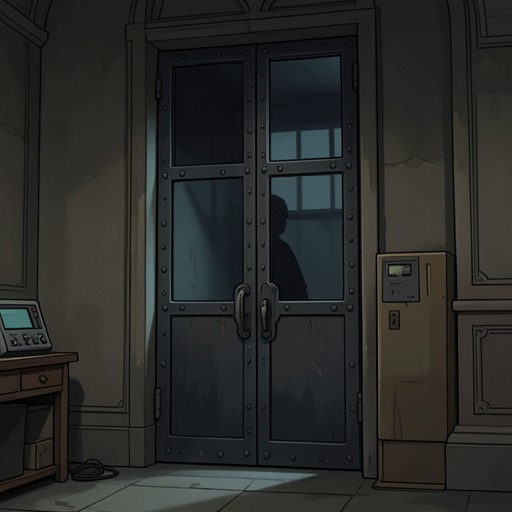
Checquy Standard Operating Procedure for Responding to Supernatural Events
The RookThe Checquy Standard Operating Procedure for Responding to Supernatural Events is a layered system for turning reports of unnatural activity into discreet, coordinated action. It links government intelligence and local contacts to field teams, sets expectations for communications and public cover stories, and provides escalation steps when an incident overwhelms the initial response. The procedure’s recurring invocation in the Bath operation conveys both its institutional authority and its limits: a manual can govern the response, but it cannot guarantee that the people sent into danger will return.
Purpose and Information Network
The procedure depends on a steady flow of information from outside the Checquy. Reports of unnatural activity arrive through the civil service, while analysts sift through large volumes of files and figures for patterns that might otherwise be missed, including the possibility that a vampire is manipulating the wheat market. The system is meant to catch incidents not only in locations already associated with the supernatural, but also in ordinary settings where an unnatural occurrence may be especially difficult to explain to the public.
The Panic Lines connect the organization to officials in national and local government. Those officials receive briefings designed to be specific enough to prompt action but vague enough to preserve secrecy: they are not asked to watch for particular creatures, but are given a framework for recognizing something broadly unnatural. Their calls, together with information from Checquy personnel placed in key organizations, help move a local warning toward the appropriate response team.
This network brings in police chiefs, ministers, military officers, councillors, intelligence agents, churchmen, surgeons, diplomats, and hospital administrators. The range matters: the system treats supernatural incidents as matters that can surface across ordinary public institutions, rather than as problems confined to specialist settings. Information reaches the Checquy by indirect channels, and its computer network is kept separate from external systems. The organization’s name is kept off documents outside its own walls, while discreet phone numbers and concealed reporting routes preserve the secrecy on which the system relies.
Recruitment, Training, and Institutional Readiness
The procedure rests on an organization built to maintain specialized personnel. The Checquy has authority to claim citizens with powers; some children are released by parents under pressure or inducement, while adults may be recruited through offers of service, wealth, or power. Initiation combines ancient oaths with modern contracts and secrecy obligations. By the time a person becomes a full member, the organization has bound that individual through many institutional ties. The operational system is therefore supported by a recruitment structure that makes personnel available, while sharply limiting the ease with which they can leave.
At the Estate, preparation combines ordinary academic lessons with practical and physical training. Pupils study subjects such as chemistry and classics, learn to handle assault rifles, and train in observation, physical fitness, and their own unusual abilities. Medical assessment is also systematic: a new pupil is extensively examined, identified through multiple biometric records, and evaluated for physical and psychological needs. The examinations recur monthly for every pupil, even though the staff often cannot explain the origin of particular abilities. They collect and preserve the data in the hope that later workers may understand what current investigators cannot.
This emphasis on assessment and records has an operational counterpart in the Checquy’s adult response systems. The organization gathers reports, builds a picture from scattered details, and uses examination and analysis to reduce uncertainty. Yet the material also shows the tension in that approach: people are not only trained to act, but measured, documented, and organized as resources for future work. Readiness is produced through institutional care and scrutiny together.
Field Response and Public Cover
The Bath incident shows how an initial report can activate the local response chain. After a resident reported screams and chanting from a neighbor’s house, the emergency services supervisor alerted the chief of police. Following long-standing instructions, the police chief contacted the local Checquy office, and the team mobilized. This sequence turns an alarming local report into an organizational response without requiring the public authorities to know the full nature of the threat.
Once the response was underway, the team sealed off the street and established a perimeter. The first group sent into the house failed to emerge in recognizable form after a brief interval of unusual lights and screams; a torrent of viscous material then came through a window, and investigators began checking whether it contained any personnel. Despite this apparent escalation, standard procedure did not automatically classify the incident as an emergency. A larger second team was sent in with cameras and continuous radio contact. When the camera feed failed, radio contact stopped, and the house again produced screams and material, the local official contacted the Rookery. A special Barghest team was dispatched, and Rook Thomas was notified.
Public explanations formed part of the same response. The local police were told that a religious cult had tampered with the gas mains and that the matter needed to remain quiet; neighbors were told that the house had a gas leak and asbestos. These accounts translate an incident the public could not safely be told about into familiar explanations, while the perimeter and police coordination keep the area controlled. The procedure therefore manages both the threat itself and the information surrounding it.
Escalation and Its Limits
The procedure’s authority is clearest when its stages reach their prescribed limit. In the Bath command center, Pawn Poppat reported the deaths of the first two teams and described the expected next step: the house was to be destroyed, either with explosives or by surrounding it with a ring of fire. His account presents destruction as an established contingency, not an improvised response. Yet before it could be carried out, a technician announced that the Barghests were alive, and the command center turned to their vital-sign monitors. The sudden reversal shows why the system’s procedures must be understood as conditional: apparent loss of life had prompted preparations for destroying the site, but monitoring information changed the situation before that action proceeded.
The response also demonstrates how procedure can organize failure as well as success. The first teams’ disappearance, the lost camera and radio links, and the proposed demolition all occur within a chain of actions described as standard practice. Procedure supplies decisions when evidence is incomplete, but it does not remove the uncertainty at the center of an event. In the Bath operation, the decisive new information comes not from the manual but from the monitors that reveal the Barghests’ vital signs.
Scope, Secrecy, and Exceptional Authority
The organization’s ordinary concealment depends on many small, coordinated acts: discreet briefings, indirect reporting, restricted networks, sealed streets, and plausible explanations for neighbors and police. The same institutional logic appears at larger scales. The Checquy can send trained teams into an incident and maintain a public account that conceals its supernatural character; it can also invoke extraordinary authority when the response requires a person classified as a Force of Physical Obliteration.
When Myfanwy Thomas summons Harper Callahan for service on British soil, she recites a formal declaration identifying herself by her offices in the Checquy and invoking his duty to the unknowing public. The statement transfers responsibility for the operation to her. The power to authorize such a deployment is restricted to the Rooks, Bishops, and the Lord and Lady of the Checquy. Using an agent at that level requires informing the Prime Minister, the Minister of Defense, the ruler of the country, and every member of the Checquy Court. The call to the Estate follows as the declaration is completed.
This exceptional authorization is not simply another field checklist. It makes visible the political scale concealed beneath the routine procedures: the Checquy acts for the protection of people who do not know it exists, while extraordinary operations require a narrow set of officials to accept responsibility. Across its reporting network, training regime, Bath response, and high-level authorization, the procedure joins secrecy to readiness. Its promise is coordinated protection; its recurring limit is that the supernatural event may outrun what any protocol can predict.