Checquy emergency lockdown
The RookThe Checquy emergency lockdown is the organization-wide security regime imposed after the attack on its reception, transforming the Court’s ordinary routines into a system of confinement, surveillance, and armed protection. Its immediate purpose is to guard the Checquy leadership against further attack; its wider context is a renewed confrontation with the Grafters, an old enemy whose hidden survival and infiltration make the boundary between defense and preparation for war dangerously thin.
Trigger and Historical Background
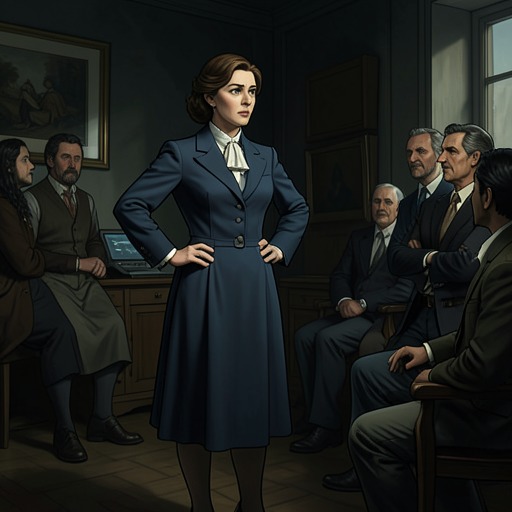
The lockdown follows an assault at the Checquy reception. When Security Chief Clovis arrived at Apex House on the night of the attack, he declared that Court members could not return to their homes for the immediate future. Instead, they were to live in secure apartments in the organization’s three headquarters. The response therefore began not as a limited precaution for a single journey, but as a reordering of where the Checquy’s senior officials could live and move.
The organization’s alarm has a long historical precedent. In 1677, creatures created by the Grafters emerged from the ocean and brought supernatural war to British soil. The Checquy deployed its Pawns under the direct command of the Rooks; fighting continued for three weeks, killed hundreds of civilians, and cost the Checquy dozens of soldiers for each Grafter creation it brought down. Twelve troops, the last anthropophagi in the British Isles, killed seventeen monsters, while a village was leveled and surrounding fields made toxic. The battle ended only when Crimson Rook John Perry linked his mind with the invulnerable Grafter general and shot himself, killing them both.
That catastrophe produced a settlement founded on mutual fear rather than trust. Charles II might have wanted to invade Belgium after the Checquy appeared to have prevailed, but the organization’s leaders persuaded him that their own forces and most capable generals had been devastated. Negotiations instead led the Belgian ruler to agree to dissolve the Grafters: funding was withdrawn, experiments were terminated, and estates and property were confiscated. The dismantling included killing the altered beings, burning facilities and barracks, and disposing of the remains of the scientists and leaders. The Checquy believed the threat finished; the later crisis exposes how fragile that confidence was.
Measures and Reach
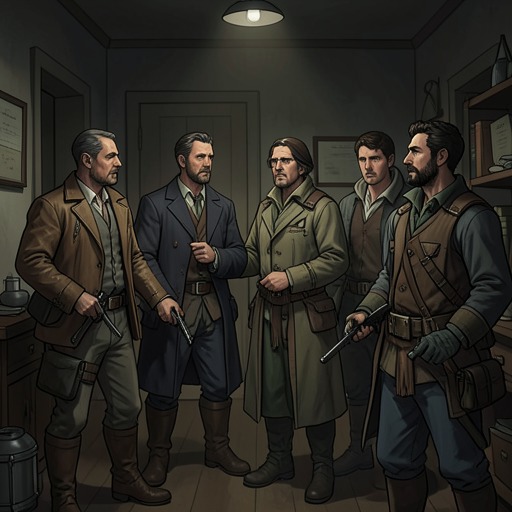
The lockdown extends across the Checquy’s British operation. Panic buttons are distributed to everyone, facilities around the country enter lockdown mode, and each Court member receives two honor guards whenever outside their quarters. Two guards also remain outside each member’s office. Rather than relying on a single secure building, the system combines restricted residence, constant protection, and organization-wide readiness.
The journey Myfanwy makes to Gallows Keep Prison shows what these measures look like in practice. On a Sunday morning, she travels through the barren wastes of southwestern Scotland in a convoy: two armored limousines, four heavily armed motorcyclists, a van of soldiers, and a satellite tracking the party from many kilometers above. A septuagenarian Pawn who can breathe cyanide and sweat tear gas accompanies the detail. Myfanwy is embarrassed by the small army around her, but Joshua Eckhart and Clovis insist on the heightened protection. They say the guards are trusted because they have powers and underwent the Estate’s indoctrination, and also because Eckhart and Clovis threatened them severely if anything happened to her.
The precautions are presented as exceptional even by the Checquy’s own standards. Clovis says the organization has not operated at this level of security since the unsettling blond children were wandering around in Winshire. He also insists that every Pawn and Retainer be accounted for. The comparison makes the lockdown more than a routine tightening of protection: it signals a perceived threat serious enough to revive memories of an earlier emergency.
International Precautions
The response crosses the Atlantic as well as spreading through Britain. Since Shantay Petoskey returned to Washington, D.C., she and Myfanwy have spoken several times by telephone. Shantay oversees protection details for high-ranking American figures, and the Checquy and its American counterpart both put substantial security arrangements in place. Myfanwy has had to approve several of them herself, making the crisis an administrative responsibility as well as a personal danger.
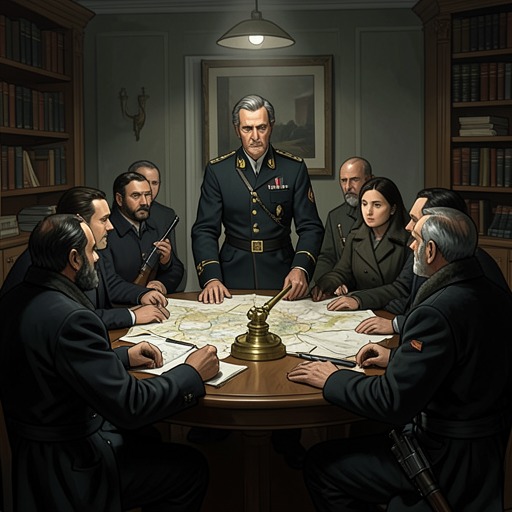
Public figures receive discreet Checquy protectors, border security is increased, and the terrorism alert is raised. The alert is presumably bewildering to ordinary human terrorists, because the concealed threat comes from the supernatural conflict rather than a publicly explained danger. At the same time, Lady Linda Farrier and Conrad Grantchester meet a secret council that includes the Prime Minister, the Home Secretary, the Minister of Defense, the heads of MI5 and MI6, the ruler of the country, and the first in line to the throne. The government’s highest officials must be briefed, but Myfanwy recognizes the difficulty of explaining the problem without exposing the secret world the Checquy exists to protect.
Secrecy, Threat, and Political Stakes
The historical memory of the 1677 invasion gives the lockdown a double meaning. The Checquy once tried to end the Grafter threat by destroying its facilities and altered creations, yet a later Grafter leader describes the old invasion as a disastrous first effort, driven largely by his country’s rulers. He insists the Grafters were not ultimately seeking territorial conquest: their later strategy was a feint, using visible pressure to conceal a more consequential threat against the Checquy. In this account, the organization’s power over the Grafters arose from controlling a secret world whose exposure neither side could afford.
That logic sharpens the lockdown’s central dilemma. Myfanwy argues that an open war would be difficult to conceal and that secrecy is the Checquy’s mandate. The Grafter leader, Ernst von Suchtlen, agrees that the Checquy would not surrender, but argues that the conflict need not end in a fight. He says the old hostility came from the destruction of Grafter homes and the killing of friends, yet over generations he came to see the Checquy as a flawed but potentially suitable governing body. His gradual move toward cooperation did not mean he stopped preparing: he continued to infiltrate the organization and establish collaborators because he believed the Checquy would otherwise remain too wary to consider joining with the Grafters.
The lockdown thus protects a leadership facing danger from outside and compromised loyalties within. The earlier invasion demonstrates the civilian devastation a direct conflict could cause; the secret council and international security measures show the cost of trying to prevent that conflict from becoming public. At the same time, Ernst’s account reveals the paradox of the Checquy’s position: to preserve secrecy and avoid a destructive war, it must respond to a threat whose methods include concealment and infiltration. The emergency regime is therefore not simply a ring of guards around the Court. It is the immediate institutional expression of a deeper contest over whether two secret organizations can coexist without forcing their conflict into the open.