Checquy’s chess hierarchy
The RookThe Checquy’s chess hierarchy is the organization’s rank system, modeled on chess pieces and used to distribute executive oversight and operational responsibility. It gives a secret supernatural institution a recognizable internal order, but its titles and paired offices do not map neatly onto government, gender, or everyday work. The result is a hierarchy that coordinates action while repeatedly exposing the costs of turning people into pieces within a larger plan.
Structure and titles
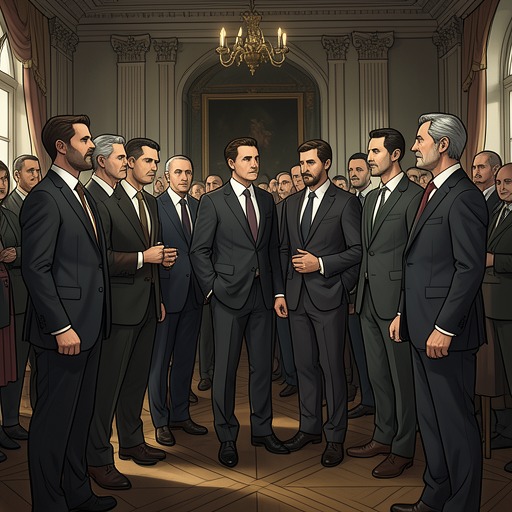
The Court is the Checquy’s executive council, charged with overseeing the organization as a whole. The hierarchy has been based on chess for as long as the game has been recognizable in the British Isles, although the text notes that the system’s full structure is more complicated than a simple set of two of each rank.
The monarchy makes the chess metaphor politically awkward at its highest level. Leaders once called King and Queen could not comfortably use those titles in a country that already had a monarch, especially when they commanded supernatural powers and a private army. After pointed conversations, the titles became Lord and Lady. That adjustment avoided the direct conflict, but retained gender-specific offices: when the most qualified person did not fit a vacant title, the system could become an obstacle rather than a neutral means of appointment. In the 1920s, Lady Richard Constable, a bearded man, kept the title after succeeding Lady Claire Goldsworthy and refused to change it even when the Lord’s position later became vacant.
Shared offices and uneven responsibilities
The hierarchy expects counterparts at many ranks to share responsibility for their bailiwicks, but their boundaries are unclear. The arrangement can require cooperation without making authority or duties precise. Rook Gestalt and Rook Myfanwy Thomas illustrate one workable division: Myfanwy handles paperwork while Gestalt undertakes fieldwork. By contrast, in 1967, the Rooks separately led two strikes against the same gorgon nest because they had refused to communicate. The paired structure therefore offers complementary coverage in principle, yet can duplicate effort when its members do not coordinate.
Other titles preserve the chess vocabulary imperfectly. Bishops are no longer necessarily clergy, and Chevaliers have not necessarily been knighted. Titles also cannot be used in front of civilians, creating practical awkwardness when members have to operate outside the organization. These compromises show how an inherited symbolic system persists even as the offices it names depart from their original associations.
Pawns, Retainers, and organizational cost
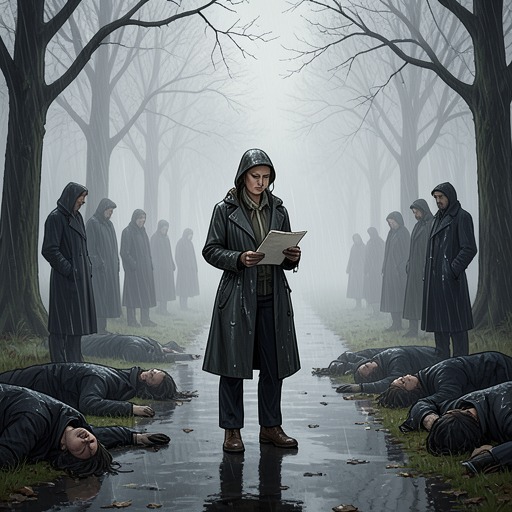
The Pawn rank carries an explicit implication of sacrifice. Members are raised knowing they may be given up for the greater good, but the idea that they might be sacrificed casually can be disheartening. The hierarchy thus makes operational risk part of a person’s institutional identity: the piece’s value is tied not only to what it can do, but also to the possibility that it will be spent.
Not everyone receives a chess title. Staff without unusual powers are Retainers rather than Pawns, a distinction that sets a substantial part of the workforce apart from titled members and does little for morale. The system consequently marks both rank and perceived role, while leaving the organization dependent on workers whose contributions are not represented by its central metaphor.
Hierarchy at work
The Checquy’s administrative and intelligence practices show the hierarchy operating through routine as well as command. Analysts sift through reports, figures, and files to identify patterns such as possible manipulation of the wheat market by a vampire. Panic Lines connect the organization to high-placed officials across national and local government: discreet briefings prompt calls from police chiefs, ministers, military officers, intelligence agents, hospital administrators, and others. The organization also places people in key institutions to report significant developments.
This network is designed to keep the Checquy informed without making its existence public. Its name appears on no outside paperwork, information reaches it through indirect channels, and its computer network is isolated from external systems. Within that concealed apparatus, Myfanwy’s meeting with the accountants gives hierarchy a mundane, administrative face: she examines figures about the covert removal and dissection of plague-infected bodies, while the accountants appear frightened of her authority. At an operational crisis, Pawn Mahesh Poppat invokes standard procedure as teams are presumed dead; the street is evacuated and police and neighbors receive different cover stories. The rank system therefore sits alongside paperwork, intelligence channels, and procedures that turn decisions into coordinated, secret action.
Historical force and institutional meaning
The hierarchy’s ranks are not merely ceremonial. During the 1677 Grafter invasion of the Isle of Wight, the Checquy deployed Pawns under the direct command of the Rooks. The fighting lasted three weeks and killed hundreds of civilians; Checquy forces lost dozens of soldiers for each Grafter creation they brought down. In the final confrontation, Rook John Perry linked his mind to the Grafter general and killed them both, ending the incursion. The episode makes visible the extreme responsibilities attached to the ranks: Rooks command, Pawns fight, and victory can depend on a senior officer taking the decisive risk.
The historical confrontation also shapes later relations between the organizations. After the invasion, the Checquy pressed for the Grafters’ dissolution, and the Belgian ruler agreed to withdraw funds, end experiments, and confiscate estates. Centuries later, Graaf Ernst von Suchtlen explains that the Grafters’ later actions were not intended as an invasion: the visible threat served as leverage in a concealed contest over the Checquy and the secret world it governed. Myfanwy answers that an open war would endanger the Checquy’s mandate, which she describes as protecting in secrecy. The hierarchy’s authority is thus bound to the institution’s capacity to command, conceal, and survive—not simply to the chessboard from which its titles came.
The hierarchy’s durability is also a form of resistance to reform. The text acknowledges that members sometimes identify its flaws and attempt change, only for those efforts to be suppressed. Its longevity therefore rests not on a perfect fit between titles and duties, but on the organization’s continued attachment to a system that makes authority legible while normalizing unequal status, divided responsibility, and the possibility of sacrifice.