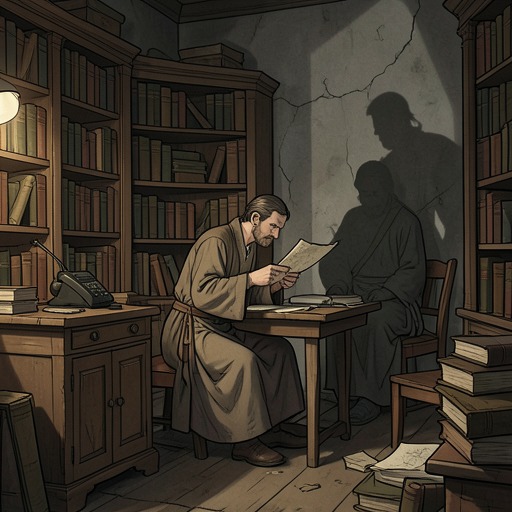
Discovery That the Grafters Still Existed During World War I
The RookThe discovery that the Grafters still existed during the First World War overturned the Checquy’s assumption that its old adversaries had disappeared. A clandestine project examining bodies recovered from no-man’s-land revealed signs of Grafter activity; a dangerous inquiry at Ypres supplied firmer proof, but the months of surveillance that followed found nothing more. The result was a lasting contradiction: the threat was real, yet remained largely unseen, and the Checquy chose both to remember it and to keep that memory from spreading.
Wartime Project and the First Clues
During the Great War, Checquy agents routinely collected bodies from the ground between the trenches. In the organization’s darker ranks, a project used cadavers for an undisclosed purpose. Bodies taken from battlefields attracted fewer questions than corpses acquired in England, but the project ultimately failed and was ordered forgotten. The later account of it depends on painstaking research, a sign that the discovery was not preserved as an openly acknowledged institutional episode.
While working with the corpses, the project’s scientists encountered anomalies they attributed to the Grafters. Their conclusion was consequential: not only had the organization survived, its skills appeared to have advanced beyond those it possessed when the Belgians were at the height of their power. The evidence did not yet amount to a complete account of what the Grafters were doing, but it challenged the comforting possibility that the old enemy had vanished.
The Ypres Investigation
The project leaders believed the Checquy had to be informed, since the Grafters were understood as a grave threat to both the organization and the country. Yet they hesitated to approach the Court with claims founded only on badly decayed bodies. As scientists, they wanted firmer evidence, and quietly sent two Pawns to the front to investigate.
The investigators were Thomas Ryan and Charlotte Taylor. Ryan was a capable soldier with telescopic vision and the ability to see through human skin; Taylor could heat a person internally. They traveled discreetly to Ypres, where the suspicious bodies had been collected. Ryan sent regular dispatches, relaying soldiers’ accounts of unnatural figures moving through the wasteland and among the dead. The descriptions included figures crossing barbed wire with uncanny ease, and one briefly seen in poisonous gas; gunfire could be followed by the absence of any body to recover.
Ryan and Taylor respected the soldiers around them, young men who seemed unlikely to survive the war, and did not want to intensify the fear already present in the trenches. They nevertheless gathered what details they could and decided that observation alone would not suffice: they would have to venture beyond the trench line themselves.
Evidence from No-Man’s-Land
On a stormy night, the Pawns climbed out of their trench and crossed into no-man’s-land. The surviving account describes the hazardous ground and the bodies they had to pass, but does not record how far they traveled. At some point, they encountered the evidence they were seeking. The narrative marks the discovery tersely before turning to Taylor’s sole dispatch.
Taylor reported that the mission had cost her boots to the mud, Ryan to an explosion, and one eye to an unnatural creature’s claws. She also stated that the desired evidence had been collected and was being sent back. The samples established that the Grafters were continuing their work. Ryan’s fate and Taylor’s losses thus accompany the proof that transformed the project’s suspicions into a credible warning; the account gives no further detail about the nature of the samples or the mission’s precise findings.
Alarm, Silence, and the Unresolved Threat
The Court reacted with panic, convinced that the Grafters might be preparing to sweep down on the Checquy. More Pawns were dispatched to the front, but months of observation in areas considered especially bleak and uncertain yielded no further trace. The initial confirmation therefore did not develop into a sustained picture of Grafter operations: it established survival without revealing the adversary’s plans or whereabouts.
The war ended without another development, and the Grafters did not appear during the Second World War. With no hostile action in view, the Checquy gradually relaxed, entertaining the possibility that its enemies were absorbed in their obscure studies rather than seeking revenge. That speculation never amounted to certainty. Decades passed without the Grafters surfacing, while doubt persisted and the Court judged that memories of the invasion remained too frightening to share widely among the rank and file. At the Estate, students instead told stories about the Grafters to frighten one another. The discovery became both a suppressed security concern and a rumor passed on in a diminished, almost folkloric form.