John Perry
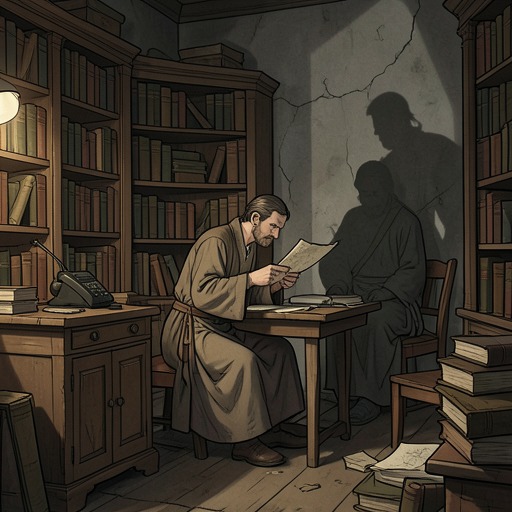
The RookJohn Perry, known as the Crimson Rook, was the only Rook still alive when the Grafters’ 1677 invasion of the Isle of Wight reached its final confrontation. By linking his mind to the invulnerable Grafter general and killing them both, Perry ended the invasion at the cost of his own life. His death became the decisive act that stopped the fighting, while leaving the Checquy too depleted to pursue further war.
Identity and Position
Perry held the Checquy rank of Rook and commanded Pawns during the invasion alongside the other Rook commanders. By the campaign’s end, he was the only surviving Rook. The account identifies him as both the Checquy’s remaining senior commander and the predecessor whose extreme decision would bring the conflict to a close.
The Invasion and Its Cost
The fighting began in 1677, when Grafter creations came ashore on the Isle of Wight. The Checquy responded by unleashing the Pawns under the Rooks’ direct command. Battles continued for three weeks, hundreds of civilians died, and defeating each Grafter creation cost the Checquy dozens of soldiers. The account’s scale of loss explains the desperate circumstances in which Perry made his final choice.
The campaign also included the actions of twelve troops described as the last anthropophagi in the British Isles, who joined forces and killed seventeen monsters. An entire village was destroyed and nearby fields made toxic during that battle. Pawn Hamish McNeil, a leper, released an abnormal disease among the Grafter troops, causing their bodies to fail under their own exertions. These measures helped reduce the invading force, but they did not overcome its final and most formidable fighter.
The Final Confrontation
When the other invaders had been defeated, the Grafter general remained. A massive warrior, it proved invulnerable to every form of attack the Checquy could bring against it. Perry responded by linking his mind to the general’s and shooting himself. The act killed both of them, resolving a stalemate that ordinary force had been unable to break.
Perry’s death was therefore not incidental to the Checquy victory: it was the means by which the last invasion force was stopped. With the general dead, the Grafter incursion into England ended. The account presents the outcome as an act of individual self-sacrifice made under the pressure of the Checquy’s near-total military and leadership losses.
Aftermath and Significance
The end of the invasion did not leave the Checquy in a position to continue the war. Charles II was reportedly eager to invade Belgium, but the Lords and Ladies of the Checquy pointed out that their forces had been decimated and their most capable generals killed. The king accepted their argument, and negotiations with the Belgian ruler followed. A treaty favorable to the Checquy was secured partly because the Belgian side believed further Checquy attacks remained possible; the Checquy concealed how badly weakened it actually was.
Perry’s sacrifice thus produced a double consequence: it secured an end to the immediate fighting, but it also left the Checquy’s remaining leaders to convert a costly battlefield victory into a negotiated settlement. The later dismantling of the Grafter project followed under the treaty, while Perry himself remained the figure whose final action had made the invasion’s end possible.