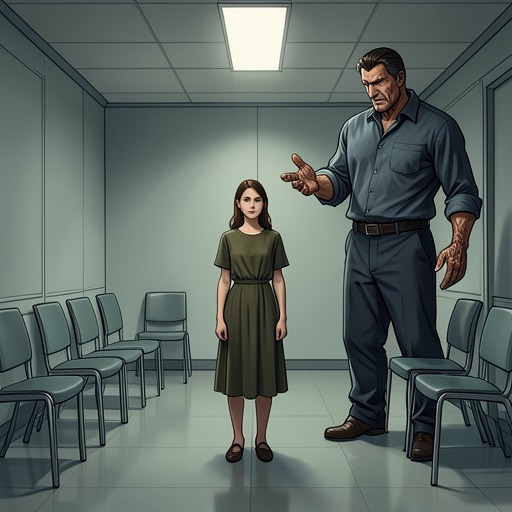
Lisa Constanopoulos predicts Myfanwy will be betrayed
The RookLisa Constanopoulos’s prophecy of Myfanwy Thomas’s betrayal turns an extravagant social visit into a warning about the Checquy’s vulnerability from within. Lisa predicts that a Court member will betray Myfanwy and describes her standing in the rain among dead men; later, her more intimate farewell expands the warning into a forecast of total loss, beyond which Lisa says she cannot see. The encounter gives the Checquy’s internal danger a personal, prophetic face, but does not explain exactly how the betrayal will unfold.
The Visit and Its Contrast
Lisa arrives in London as an extraordinarily old and influential visitor, but the spectacle of her entrance unsettles rather than confirms Myfanwy’s expectations. Myfanwy had imagined a dignified, goddess-like figure, mindful of Lisa’s long life and the history of her dealings with religious leaders. Instead she sees a woman with peroxide-blond hair, conspicuous makeup, sunglasses, a cigarette and crimson fingernails. Lisa looks far younger than her actual age, greets Myfanwy warmly, and quickly makes the meeting personal.
The prophecy emerges amid this mixture of familiarity and theatrical excess. Lisa takes Myfanwy shopping, pays for a greatly expanded wardrobe, and tells her that life at the Estate seems to have diminished her enjoyment of life. At lunch she offers advice about romance and presses a glass of water on Myfanwy; her casual, teasing manner makes the sudden mention of a future betrayal easy to miss at first. Myfanwy agrees before realizing what Lisa has said, then asks her to explain. The shift from banter to foreboding is the encounter’s decisive turn.
The Court Betrayal Warning
Lisa states that Myfanwy will be betrayed by a member of her Court. Her prediction is not merely that an enemy will attack: it locates the danger within the institution Myfanwy serves, among people with access to its authority and trust. Lisa describes a scene in which Myfanwy will stand in the rain while dead men surround her, joining the prospect of betrayal to a vision of lethal aftermath.
When Myfanwy asks how Lisa knows, Lisa says she can see the danger around her and insists that the vision is clear. She continues to hold Myfanwy’s hands as she answers, a firm physical gesture that contrasts with her otherwise relaxed, sociable performance. The prophecy is delivered as a certainty Lisa perceives, not as a theory supported by evidence she can explain. She provides no name for the betrayer and no practical account of how Myfanwy might prevent the event.
The Farewell and Its Expanded Warning
The prediction returns at the end of the visit, when Lisa escorts Myfanwy to her hotel suite. As Myfanwy says goodbye, Lisa grips her wrist, draws her close and speaks privately. She warns that terrible events are coming, that Myfanwy will lose everything, and repeats the image of her ending in the rain. This time she adds that she cannot see what lies beyond that point, tempering the certainty of the danger with a clear limit to her foresight.
The farewell changes the scale of the earlier warning. What began at lunch as a forecast of betrayal by a Court member becomes a broader anticipation of personal catastrophe. Lisa’s age, previously part of the glamorous performance that accompanied her visit, now gives weight to her claim that the coming events are as bad as anything she has seen. After Lisa closes the door, Myfanwy is left shaken; her aides take her home, where she sits alone among the many shopping bags accumulated during the outing. The contrast between those purchases and the prediction of losing everything leaves the warning hanging over an otherwise ordinary return.
Prophecy, Secrecy, and the Checquy’s Danger
The vision’s central image resonates with the Checquy’s duty to protect the supernatural world in secrecy. Later, Myfanwy argues that a war against the Grafters would be difficult to conceal and that secrecy is the organization’s mandate. The threat she faces is therefore not simply a private dispute: betrayal within the Court could endanger the institution responsible for containing supernatural conflict and keeping it from public view.
The later account of the Grafters’ history sharpens that danger. Their 1677 invasion of the Isle of Wight brought three weeks of fighting and hundreds of civilian deaths; the Checquy eventually ended the incursion and negotiated a settlement under which the Grafters were to be dissolved. Yet, centuries later, Graaf Ernst von Suchtlen explains that the Grafters survived, infiltrated the Checquy and established collaborators there. He presents that infiltration as leverage intended to make an alliance possible, while acknowledging that his side had once sought to conceal its existence and inflict pain on the Checquy. These later disclosures give the prophecy’s reference to a Court betrayer a concrete institutional context, without identifying a single person as the subject of Lisa’s warning.
Scope and Narrative Significance
Lisa’s prophecy is both a forecast of danger and an exercise in withholding. She speaks with confidence about betrayal, death and loss, but cannot see beyond Myfanwy’s ending in the rain. The book later reveals a genuine crisis of Grafter infiltration and divided loyalties, making Lisa’s warning resonate with the plot’s hidden political threat; it does not, in the material surrounding the prophecy, supply a definitive explanation of every image or establish that the vision maps onto one exact sequence of events.
The scene also places foreknowledge beside Myfanwy’s unsettled new life. Lisa urges her to enjoy herself while she can even as she predicts that she will lose everything. The shopping bags are an immediate, tangible record of the day’s pleasures; the prophecy turns them into a pointed contrast with the possibility of future ruin. By interrupting comic conversation with a warning that remains only partly legible, the encounter makes private ease and institutional peril coexist, and carries the threat forward without resolving it.