Memory, identity, and selfhood
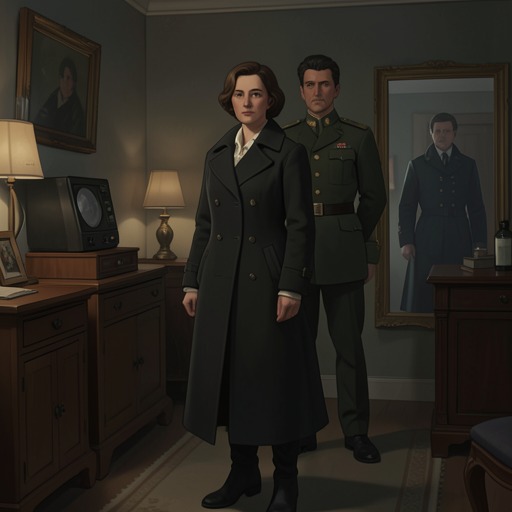
The RookMemory and identity in the novel are matters of both violence and inheritance. The original Myfanwy anticipates the erasure of her personality and writes to the unknown person who may follow her; the successor wakes without a personal past, then makes the body, family, and relationships she inherits into parts of a life she can call her own. Their story distinguishes remembered biography from bodily continuity and emotional connection, while asking whether a person can choose who to become when others can reach inside the mind and decide what survives.
Memory Without a Personal Past
The amnesiac Myfanwy begins from a radical gap between having a body and knowing the person who lived in it. She wonders who Myfanwy Thomas was, whether she had a spouse, a job, family, or friends, and whether the figure appearing in a dream can tell her anything reliable. The missing history does not arrive as a single answer. She has to treat her own identity as a question, testing what she can infer from the body and the few clues around her.
The former Myfanwy’s letter gives the successor a more intimate account than an impersonal file could. She believes the new woman chose a box after touching someone and disrupting control of that person’s body, and links that power to a childhood accident: at nine, a fall from a tree drove a sharp branch into her leg, and the doctor who touched her skin lost control of his legs. A second hospital worker, touching her bare skin, lost her sight. The account establishes that the successor’s bodily ability belongs to the life she has inherited, even though the memories that would ordinarily explain it are gone.
That distinction makes the successor neither a blank page nor simply the restored original. She can inherit a capacity and a physical life without possessing the autobiographical story that first gave them meaning. The former Myfanwy’s letters act as a bridge across that break: they preserve experience in a form the successor can receive, but they do not make the two women’s memories identical.
Erasure as an Act of Power
The novel’s sharpest challenge to any easy equation between memory and selfhood comes from Norman’s deliberate attack. Conrad Grantchester explains that Norman was brought to the Rookery to seize Myfanwy, excise her personality, and remove her. The operation was meant to disable her powers and leave a more pliable person in the same body. In this scheme, memory is not treated as a private storehouse alone; it is something an organization can target to manufacture compliance and control a person’s future.
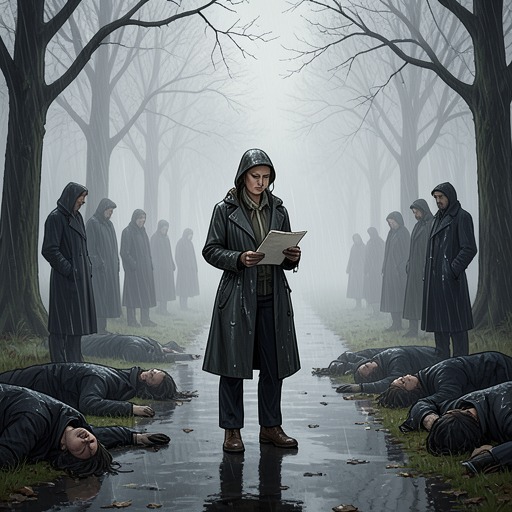
Grantchester describes the attempted erasure as a process that should leave its subject unable to respond while the personality dissolves. But Myfanwy sat up screaming, and a psychic assault struck the people around her. By the time Norman and Grantchester recovered, several minutes had passed and she had disappeared into the Rookery’s halls. The episode marks the limit of their intended control: the person they meant to reduce to a tractable body acted in a way their procedure could not contain.
Later, Grantchester threatens to have Norman clear out the successor’s brain entirely, leaving a newborn mind in the same eyes. He envisages keeping her alive for laboratory tests before having her body dissected. The threat makes the stakes of memory erasure brutally concrete: it would not merely remove facts about the past but destroy the current person, then turn her surviving body into an object of study. Norman’s physical intrusion during the attempted erasure gives this abstract power a bodily form, while the successor’s panic registers the anticipated loss as the end of herself.
Rebuilding a Self Through Recognition
The successor’s emerging identity is built not only from evidence but from relationships that make the inherited life emotionally real. When Bronwyn identifies herself as Myfanwy’s sister, the revelation first stuns her. Bronwyn resembles her closely, and the successor recognizes in that likeness a connection that seems to fill a sister-shaped absence. The encounter offers no recovered childhood memories, but it gives her a present relationship through which the body’s family history becomes personally meaningful.
Their embrace deepens that recognition. Myfanwy senses her powers flare and feels the genetic ties between them, as though her own patterns are partly mirrored in Bronwyn. She realizes that the sister belongs to the woman she has become as surely as to the original owner of the body; the body, in turn, is hers as well as Thomas’s. The recognition of Bronwyn does not restore the former Myfanwy’s subjective past. Instead, it lets the successor claim a shared family connection as her own, and she finally relaxes into herself.
The news that their parents are dead illustrates how this claim changes the meaning of inherited information. Myfanwy already knows their deaths from the files, yet hearing it from Bronwyn strikes her differently. They cease to be merely the parents of a body she has taken over and become her parents too. The difference is not in the fact learned but in the relationship through which it is understood: information becomes personal when it enters a bond she has chosen to inhabit.
Letters, Choice, and Continuity
The original Myfanwy’s letters make the relationship between past and future self deliberately uncertain. She writes from a secret apartment prepared for the successor, imagining the new woman sitting where she once sat and trying to explain the powers, dangers, and circumstances she will inherit. The letters preserve a first-person account, but their recipient is not a guaranteed continuation of the writer. The former Myfanwy knows the successor might choose another option and build a separate life rather than take up the one she has prepared.
That possibility matters because the writer’s own sense of agency is constrained by foreknowledge. She believes the coming end is knowledge rather than faith or fatalism, and wonders whether that means free will does not exist. Yet writing the letters feels to her like making choices of her own. Her preparation cannot ensure that the next person will become her, but it can offer resources without dictating their use. Continuity is thus presented as a gift the successor may accept or refuse, not an obligation imposed by the dead.
The original Myfanwy’s care grows beyond a practical handover. She says she wants the successor to inherit a relatively fit body and as much as she can leave her. Though they have not met and the recipient does not yet exist, she comes to regard her as a sister, a daughter, and family. Her tenderness complicates the novel’s inheritance: the successor may receive a body and a name, but the writer also offers a relation that allows the future to matter to the past.
Identity Under Threat and Beyond Memory
The question of who can alter Myfanwy’s mind becomes especially charged when she considers the people around her. At a Court gathering, the threat that someone intends to destroy her personality turns pleasant conversation into a performance that conceals danger. She wonders who has the ability to take her memories, considering Lady Linda Farrier’s capacity to enter and alter minds, while weighing her history of loyalty and the debt between them. The uncertainty reveals how fragile trust becomes when the mind itself is vulnerable to interference.
The successor’s response to renewed danger is also shaped by the original Myfanwy’s practical foresight. When Norman begins his attack, she remembers the details of her clothing and finds the epinephrine injector the original had placed in the pocket of every coat in case of a bee sting. She stabs Norman with it. The act does not depend on recovering the original’s memories: it depends on an object deliberately left behind, a physical provision that lets the successor act in the present. In that moment, inheritance becomes usable without becoming identity by itself.
The novel therefore treats memory as vital but not sufficient to define a person. The original Myfanwy’s experiences survive as letters, preparations, and care; the successor’s self emerges through bodily agency, new decisions, and a sister’s recognition. Against an institution that regards a person as a personality to erase or a body to dissect, their relationship makes another kind of continuity possible: not perfect recollection, but the freedom to receive the past without being wholly determined by it.