Memory, identity, and the new self
The RookMemory, identity, and the new self are bound together but not made identical in the novel. When the original Myfanwy Thomas’s memories are lost, the woman who wakes in her body has to act without the personal history that would ordinarily explain who she is. The story tests whether identity resides in remembered experience, in the body and its capacities, in relationships, or in the choices a person makes after the past has disappeared.
A self without a usable past
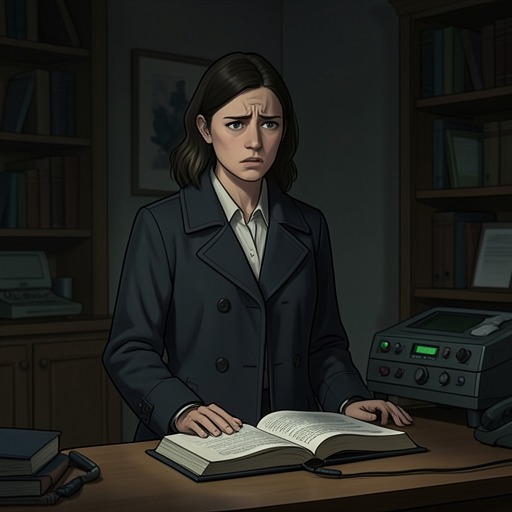
The amnesiac Myfanwy’s first questions are practical and existential at once. She wonders who Myfanwy Thomas is, whether she is married, employed, or connected to family and friends; even the name and title Rook offer no familiar ground. She has no memories with which to confirm the body’s history, and no immediate way to tell what kind of life it contained. The uncertainty is not abstract: she has scabbed knees and a painful chest, and must search her jacket for clues while trying to understand where she is.
The original Myfanwy anticipated that this rupture would leave her successor vulnerable. In a letter written from a concealed apartment, she explains that the new woman may have triggered her power by touching someone and disrupting control of that person’s body. The former self assumes that severe pain may have activated the ability without conscious intent, and worries that the episode might have caused internal injury. The letter therefore treats bodily experience as a form of knowledge that survives when autobiographical memory does not: the successor may not know the cause of what happened, but her body and powers have already acted.
The older Myfanwy knew from her own childhood that this ability could emerge through pain. At nine, after falling from a tree and driving a sharp branch into her leg, she was taken to hospital in tracksuit bottoms that kept others from touching her skin. When a doctor brushed against her, he lost control of his legs; when another hospital worker touched her bare skin, she lost her sight. The episode provides the former self with a way to interpret the successor’s likely gift, but it also shows how difficult such knowledge is to inherit: the successor receives an explanation in writing, not the remembered childhood that made the explanation personally meaningful.
The former self’s warning
A decisive shift comes when the original Myfanwy begins to accept predictions that she will lose her memory. A homeless man’s warning that everything making her who she is will be gone forever becomes increasingly difficult to dismiss, especially when it corresponds with another prediction. During a rain-soaked return journey, the phrase keeps repeating in her mind. She names what she fears losing as her memories, personality, and soul, and judges the prospect worse than death. The threat is not simply that she will forget facts; it is that the person who knows those facts will cease to be available to herself.
The original Myfanwy eventually acknowledges that she is going to lose her memory. She also remembers the prediction that someone new will open the eyes that used to be hers, and understands that this person will not know who she is. Thinking of that future woman—someone even more alone than she feels—helps her endure the night and motivates her to write letters. Her correspondence is thus more than a record of information. It is an effort by one self to reach another across the break in memory, offering practical guidance while recognizing that explanation cannot simply restore the former life.
The letters themselves preserve the distance between the two women. The writer cannot be certain that the successor is where she expected her to be, and imagines the empty place on the couch where she once sat as companionable despite being alone. She tries to prioritize what the newcomer needs to know, but also admits that she cannot account for every possibility. The form makes identity a conversation without ordinary continuity: one Myfanwy writes, another reads, and the body connecting them does not guarantee that the reader will experience the writer’s memories as her own.
The name and the person
The successor initially treats the name Myfanwy Thomas as something she must impersonate, while also recognizing that she is physically the person others will identify as Myfanwy. She worries that the Court may notice a change in behavior, since accounts of the original woman conflict: she was described as painfully shy and withdrawn, yet bold in policy and capable of rising to the Court. The successor concludes that physical tests would confirm her identity and that, as Rook Thomas, she can behave as she likes so long as she gets the job done. Her provisional solution is to make action, rather than resemblance to another person’s remembered character, the test of whether she can inhabit the role.
This practical strategy does not settle the deeper question. Asked whether she thinks of herself as Myfanwy Thomas, Rook of the Checquy, or as a person merely wearing Myfanwy’s body, she says she is still deciding. Then she draws the distinction plainly: she is not the former woman; when these eyes opened, a new person looked out. The statement refuses both easy answers. The new self is not simply the old self restored, but neither is she detached from the body, name, office, and obligations she has inherited.
The original Myfanwy’s letters help the successor function, but do not erase this difference. They give her an account of the former self’s ability and experiences, while leaving the successor to decide what that account means for her. Knowledge can be transferred; the experience of having lived it cannot be transferred in the same way. The novel’s central tension lies in that gap between possessing information about a past and remembering it as one’s own.
Kinship and a claim to belonging
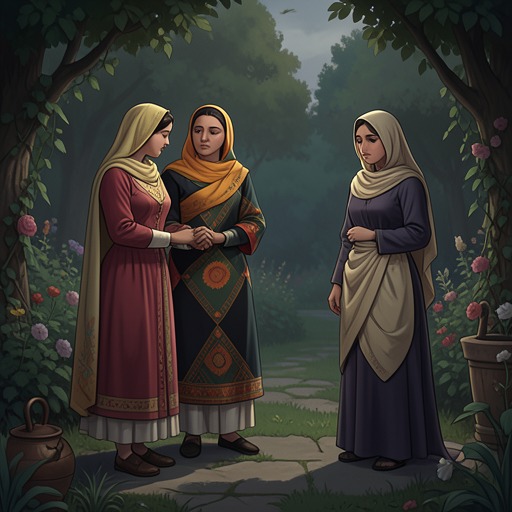
The distinction between inherited life and chosen identity changes when Bronwyn Thomas appears and says that she is Myfanwy’s sister. The successor is stunned; Bronwyn’s features resemble her own, and the resemblance produces a feeling of familiarity before a settled account of their relationship is available. She senses that Bronwyn fills a sister-shaped absence, but initially has to confront the possibility that even this powerful recognition belongs only to the body’s past.
Their embrace gives that recognition a bodily and emotional force. As she holds Bronwyn and weeps and laughs with her, Myfanwy feels her power flare and senses genetic ties, patterns in Bronwyn that mirror her own. She draws back to examine her sister and then embraces her again. The scene makes kinship more than a fact retrieved from a file: their shared features and bodily connection are present now, in an encounter the successor herself experiences.
That experience lets her revise the meaning of what she has inherited. Until then, much of Thomas’s life has seemed like someone else’s property, attached to a body she occupies. Bronwyn feels different. Myfanwy decides that this relationship belongs to her as much as it could have belonged to the former woman, and that the body is as much hers as Thomas’s. She finally relaxes into herself—not by recovering the missing past, but by finding a present bond she can claim. When Bronwyn tells her their parents are dead, information Myfanwy has already read in the files, the news hurts differently in her sister’s voice. The parents cease to be merely the dead parents of an inherited body and become her parents, too.
Memory, agency, and the unfinished self
The novel distinguishes the successor’s missing personal history from her ability to act in the present. She can assess a political crisis, take the lead, and set herself the goal of getting the job done, despite uncertainty over how the original Myfanwy behaved. That competence does not prove that the two women are the same person in memory; instead, it shows that a life can continue through capacities and decisions even when recollection has been severed. The successor’s agency is real, but it is exercised under a name and within institutions whose expectations were formed around someone she cannot remember being.
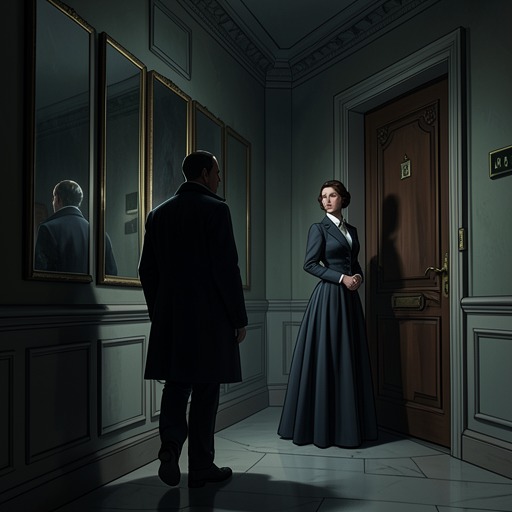
The separation remains consequential well after the successor has made a place for herself. Following dangerous events in Reading and her dealings with Grantchester, she chooses not to give the Court a full account of her amnesia. She keeps her explanation deliberately vague, avoids discussing the memory loss, and feigns light-headedness rather than complete the disclosure. Her injuries draw attention, but the Court is preoccupied with revelations about Grantchester and the Grafters. Concealing the condition protects a boundary around the new self, yet leaves her navigating a world in which others may mistake bodily identity for personal continuity.
Taken together, the letters, the questions about impersonation, the predictions of erasure, and the reunion with Bronwyn make identity an ongoing negotiation rather than a simple possession. Memory matters because its loss threatens the personality and history that once made Myfanwy recognizable to herself. But the successor does not remain only an empty recipient of another woman’s past. She interprets the evidence, chooses how to act, and accepts a kinship as hers through lived contact. The new self begins in a body that carries someone else’s name and history, then becomes more fully her own through decisions and relationships that the former Myfanwy could anticipate but could not experience on her behalf.