Myfanwy Thomas’s Memory-Erasure Event
The RookMyfanwy Thomas’s Memory-Erasure Event divides one life into two selves: the original Myfanwy loses her memories, and a stranger awakens in her body without knowing who she is. The event is more than a disappearance of personal history. It creates the conditions for an exchange across time, as the original Myfanwy anticipates the successor’s isolation, writes to her, and leaves her a means of entering a life she cannot remember.
Foreknowledge and the coming loss
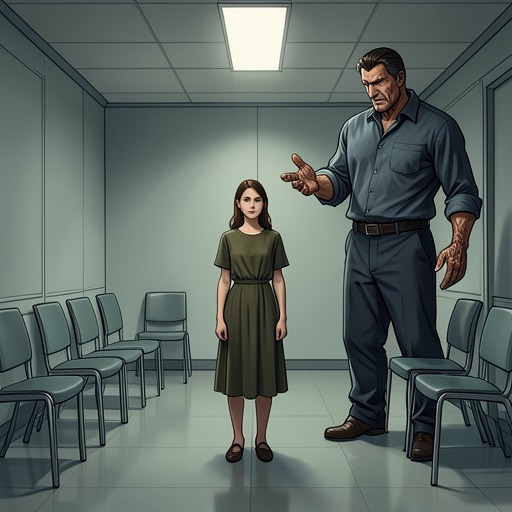
Before the memory loss, the original Myfanwy encounters a homeless man who tells her that her memories will be taken and that she will flee to a park, where a new person will open the eyes that used to be hers. His prediction makes the impending change frighteningly concrete: it is not simply that she will forget, but that someone else will inhabit the resulting absence. He describes her memories as everything that makes her who she is, so their removal threatens both autobiographical knowledge and the continuity of identity.
The warning initially meets resistance. When people nearby discuss the woman in the suit who is going to lose her memory, Myfanwy angrily insists that she already knows, then leaves. The public repetition turns the prophecy into something she cannot simply dismiss. On her way home, she recalls its most unsettling implication: someone new will open the eyes that used to be hers. The original Myfanwy recognizes that this future person will be more alone than she is, and that thought, rather than any resolution about her own fate, helps her get through the night.
A letter across the break
The original Myfanwy responds to the coming rupture by writing to her successor. Her letters are an attempt to make a connection where shared memory will no longer be possible: she cannot count on the future woman remembering their history, so she tries to explain what has happened and what the successor may need to know. In a secret apartment, she imagines the recipient occupying the place where she herself has sat, turning the absence of a remembered past into a practical exchange between two selves.
One early explanation links the successor’s choice of a particular box to Myfanwy’s ability to disrupt another person’s control of their body by touch. The original Myfanwy warns that this power may have been triggered unconsciously by severe pain and hopes the successor has not suffered internal injury. She knows the capacity from her own childhood: at nine, after falling from a tree and impaling her leg on a branch, she was taken to hospital in clothing that kept her parents from touching her skin. When a doctor brushed against her bare skin, he lost control of his legs; a hospital worker who touched her then lost her sight. These memories offer the successor concrete information about an ability she cannot recognize as her own, while also showing how the former Myfanwy learned what her body could do.
The successor awakens without a past
The new Myfanwy confronts the gap directly. She does not know who Myfanwy Thomas is, why the name matters, or what it means to be a rook. Even basic biographical facts are uncertain: she wonders about her age, marital status, employment, family, and friends. With scabbed knees and an aching chest, she searches her jacket for answers, but the immediate practical problem of finding the phone and its menu interrupts the larger inventory of a life she cannot retrieve.
The loss does not erase the world around her. Instead, it makes its meanings inaccessible: Myfanwy is already in a body, a position, and an institution, but lacks the personal memories that would ordinarily explain how she came to them. Her questions about the name and the rook title sit beside physical evidence of recent pain and the task of figuring out how to use the things around her. The scene presents amnesia not as a clean beginning, but as the disorienting experience of inheriting circumstances without their remembered origins.
An imposed identity inside the Checquy
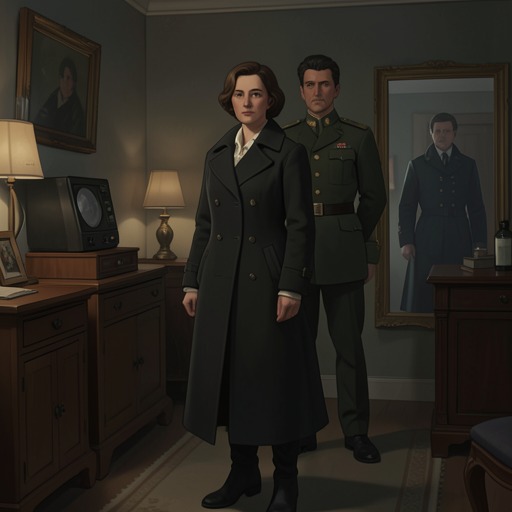
The Checquy does not treat memory loss as a route out of Myfanwy’s former life. Lady Linda Farrier tells her that leaving was never a real option. The original Myfanwy had access to state secrets at the highest level, and, even if the successor cannot remember them, her return to work has already exposed her to information that outsiders must not know. Farrier regards her as a serious security risk, though she had hoped to arrange some kind of sequestered retirement.
The successor asks whether Farrier owed the former Myfanwy a debt. Farrier makes clear that their relationship was not friendship: they had opposed one another on many matters, while maintaining civility. Farrier says that keeping the secret of the memory loss and permitting the new woman to assume this life repaid what she owed. The arrangement is therefore both personal and institutional. The successor receives protection and a place in the organization, but her position is also constrained by the Checquy’s need to contain someone who has entered its secrets without possessing the memories that once accompanied them.
Farrier’s judgment changes as the successor establishes herself. She recalls that, only two days earlier, Myfanwy had known nothing about who she or Farrier was; now she is installed in the Rookery, meeting powerful people and making decisions on secret and frightening matters. Farrier finds this resilience surprising, while Myfanwy answers that other events have been stranger still. The contrast between the magnitude of her memory loss and her rapid performance of the role makes the event consequential beyond the private self: the new Myfanwy must inhabit the responsibilities of a life she cannot recall even as others measure whether she can do so.
Recognition, concealment, and a new self
The successor’s identity develops through experiences that do not restore the former Myfanwy’s autobiographical memories. When a woman named Bronwyn claims to be Myfanwy’s sister, the new Myfanwy is stunned. She recognizes familiar features in Bronwyn and feels a connection, as if the woman fills a sister-shaped absence. During their embrace, Myfanwy senses her own patterns reflected in Bronwyn and feels her power flare. She comes to understand the body as hers as well as the former Myfanwy’s: what had seemed inherited from Thomas’s life becomes something she can claim as her own. When Bronwyn tells her that their parents are dead, information already present in the files acquires emotional force because it is spoken by the person she now recognizes as her sister.
That emerging self remains guarded. Later, while reporting on events in Reading and her encounter with Grantchester, Myfanwy avoids giving a full account of her amnesia. She feigns light-headedness to escape a complete explanation, is deliberately vague about Norman’s abilities, and does not mention anyone losing their memory. Although Farrier already knows and others may be sympathetic, Myfanwy chooses not to disclose the truth to the Court. The choice echoes the original Myfanwy’s secret letters: concealment shapes both sides of the rupture, but one woman uses secrecy to prepare another, while the successor uses it to retain control over what the organization learns about her.
The event’s decisive outcome is thus not a return to the former Myfanwy’s identity, but the beginning of a distinct one. The original Myfanwy’s forecast, the successor’s bodily discoveries, the Checquy’s institutional demands, and Bronwyn’s recognition all provide different kinds of evidence about who the new woman might be. They do not restore a single continuous memory. Instead, the successor gradually claims the body, relationships, and responsibilities that memory loss has left in place, making the event a break that becomes the condition for self-reconstruction.